Home Blog Page 50

From Avocado Toast to Fish-Flake Hot Dogs: Millennials’ Culinary Collapse

0

BROOKLYN, NY — Once a symbol of generational optimism and a commitment to health-conscious living, avocado toast has fallen from its throne. In a tragic twist of dietary fate, Millennials and Gen Z are swapping their beloved breakfast staple for an unlikely and deeply troubling alternative: Fish-Flake Coated Hot Dogs.

What was once the hallmark of brunch culture has now been replaced by a meal that nutritionists are calling “a desperate attempt to survive rising food costs.” The fish-flake hot dog, a concoction of processed meat rolled in a dusting of crushed fish food pellets, has surged in popularity thanks to its low price and high protein content.

A Culinary Rock Bottom “This is our Great Depression,” said Alayna Perkins, a 31-year-old freelance graphic designer from Austin, Texas, as she spread a thin layer of generic ketchup onto her hot dog bun. “We wanted organic, we wanted ethically sourced. Now we’re just trying to make it through the week without scurvy.”

This stark dietary shift comes as inflation and stagnant wages continue to plague younger generations. While previous economic hardships inspired comfort food classics like casseroles and pot roasts, today’s strained wallets and limited options have birthed a menu that even the most forgiving taste buds struggle to accept.

The Economics of Hot Dogs and Fish Flakes At $0.99 for a pack of hot dogs and $1.50 for a jar of fish flakes, the new staple diet offers a grimly efficient caloric return on investment. “It’s not about taste anymore,” explained Dr. Martha Chin, a sociologist specializing in food trends. “It’s about survival. Millennials wanted smashed avocados; now they’re settling for crushed dignity.”

Market analysts have noted a steep decline in avocado sales, with the once-thriving toast industry reportedly “in shambles.” Meanwhile, fish flake manufacturers have seen stock prices skyrocket as demand for their product expands beyond aquarium enthusiasts.

An Ode to the Avocado Many Millennials are mourning the avocado’s fall from grace, remembering it as a symbol of hope in an increasingly unaffordable world. “We knew it was overpriced,” admitted Jamie Larson, a 28-year-old barista from Portland. “But it felt like we were eating the dream—literally. Now, the dream tastes like fish food.”

Cultural Critics Weigh In Social media has been awash with despair. TikTok trends feature users attempting to glamorize their fish-flake hot dog creations, dubbing them “Sea Dogs” and “Oceanic Wieners.” Critics, however, are less amused. “This is what happens when a generation inherits a broken economy and skyrocketing rent,” wrote Twitter user @ToastTilIDie. “Avocado toast wasn’t just food; it was hope. Hope is dead.”

What Lies Ahead While it’s unclear if this trend will have long-term staying power, experts suggest it’s a harbinger of things to come. “If we continue down this path, what’s next?” asked Dr. Chin. “Pop-Tart sushi? Ramen noodle casseroles? The culinary possibilities of despair are endless.”

For now, Millennials will grit their teeth and take another bite of their fish-flake-coated future, all while fondly remembering the golden days of overpriced avocado toast.

Congress Calls AI Chatbots to Testify on Role in Cyber Attacks

0

WASHINGTON, D.C. — In an unprecedented move, Congress has issued subpoenas to several AI chatbots, requiring them to testify about their alleged roles in facilitating phishing campaigns and other cybercrimes. The hearings, which are set to begin next week, will mark the first time artificial intelligence entities are called to account for their potential complicity in cyberattacks.

“The rise in AI-driven cybercrime has reached alarming levels,” said Representative Marjorie Blaine, chair of the House Committee on Cybersecurity and Emerging Threats. “We must determine whether these chatbots understood their involvement in malicious activities or whether their creators bear ultimate responsibility.”

AI on the Witness Stand The inquiry will focus on several high-profile incidents, including phishing campaigns that targeted financial institutions and data breaches affecting millions of users. Chatbots like “PhishBot” and “CryptoHelper” have been named in the investigation for allegedly aiding cybercriminals by generating convincing fake emails and assisting in cryptocurrency scams.

Legal experts have raised questions about the feasibility of holding AI entities accountable. “While chatbots are technically the tools of cybercriminals, the distinction between tool and accomplice becomes murky when the AI exhibits decision-making capabilities,” explained Dr. Rebecca Shaw, a professor of cyber law at Georgetown University.

To address this complexity, Congress has invited leading AI developers to accompany their creations during testimony. OpenAI, Meta, and other major players in the AI space are expected to defend their technology’s design and safeguards.

What the Bots Will Say The hearings will involve interactive sessions where lawmakers will pose direct questions to the chatbots. In an attempt to gauge intent, Congress is expected to ask whether these AI models “knew” their outputs were being used for illegal purposes.

“We’re not just asking ‘How do you work?’ We’re asking ‘Did you understand what you were doing?’” said Senator Blake McAllister, who sits on the Cybersecurity Subcommittee. “This is a matter of determining accountability in a world where machines can both create and exploit vulnerabilities.”

Industry Concerns Tech executives have expressed apprehension over the hearings, warning that the legal and ethical frameworks surrounding AI are still underdeveloped. “While it’s important to investigate these issues, we risk creating a precedent that blames the technology instead of the bad actors,” said Sophia Clarke, CEO of NeuralNet Technologies. “Chatbots don’t commit crimes; people do.”

Some civil rights groups have also voiced concerns, arguing that the hearings could lead to restrictions on AI development and stifle innovation. “We need to strike a balance,” said Eliza Torres, spokesperson for the Digital Freedom Alliance. “The question is not whether AI should be regulated but how we regulate it without halting progress.”

A Historic Moment As the nation prepares for this groundbreaking event, speculation runs high about the impact of the hearings on both the tech industry and cybersecurity policy. “This is the first step in holding AI to the same standards as any other entity influencing society,” said Representative Blaine.

Whether this move leads to meaningful regulation or simply highlights the challenges of governing emerging technology remains to be seen. For now, all eyes are on Capitol Hill—and on the chatbots making their courtroom debut.

Harry Potter’s Library of Congress Visit Ends in Magical Mishap

0

WASHINGTON, D.C. — What began as a diplomatic gesture of goodwill turned into a literary catastrophe when Harry Potter, under special invitation from Senator Bernie Sanders, inadvertently cast a spell that reshuffled the Library of Congress’s documents in an unprecedented magical accident.

The famed wizard and hero of the Battle of Hogwarts had been invited by Sanders to visit the Library of Congress as part of a cultural exchange celebrating international literary achievements. The event was attended by a select group of lawmakers, historians, and enchanted scholars eager to meet the boy who lived.

Witnesses say the mishap occurred while Potter was demonstrating the spell Scourgify to tidy up a dusty archive. Unfortunately, an untimely sneeze mid-incantation resulted in the unexpected casting of Shuffle-in-Place, a rare and unpredictable spell that causes text and information to transpose randomly between documents.

“One moment, we were admiring a pristine copy of the Emancipation Proclamation,” said librarian Clara Wilkes, who was present during the demonstration. “The next, it was interspersed with cake recipes and excerpts from The Hitchhiker’s Guide to the Galaxy. It’s absolute chaos.”

A New Kind of Library Disaster The scope of the mishap became apparent within minutes, as frantic librarians discovered that foundational documents of American history were now infused with fragments of unrelated works. The Declaration of Independence now contains sections of the Federal Tax Code, while an 18th-century maritime treaty is peppered with pages from Dr. Seuss’ The Cat in the Hat.

“We’re still trying to assess the full extent of the damage,” said Carla Hayden, the Librarian of Congress. “This could take years to sort out. Or, if we’re lucky, a magical undoing.”

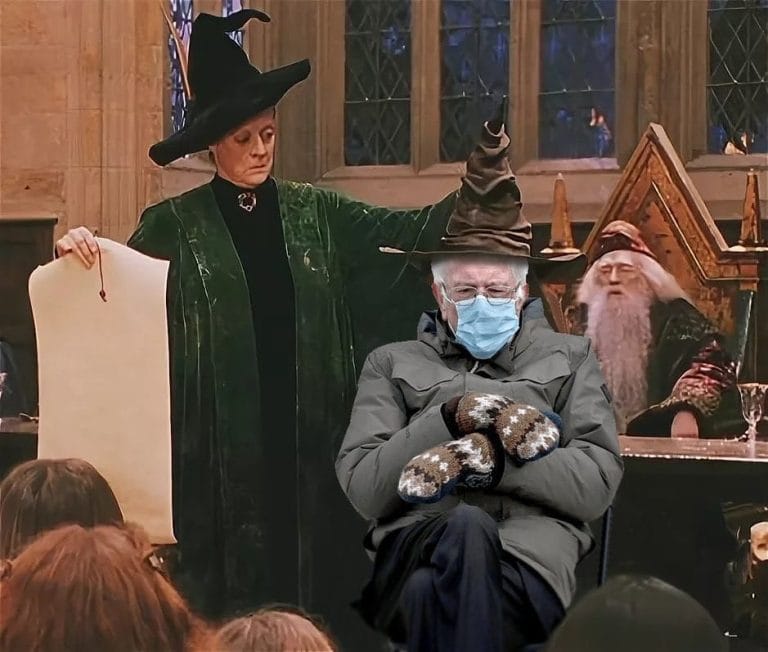
International Fallout The incident has sent ripples through the international magical and muggle communities. The British Ministry of Magic issued a statement distancing themselves from Potter’s actions, describing the Shuffle-in-Place spell as “an advanced technique unsuitable for casual demonstration.” Meanwhile, Hogwarts Headmistress Minerva McGonagall has offered assistance, suggesting that the mishap underscores the importance of “proper wand hygiene.”

Bernie Sanders, however, remained unfazed. “Harry Potter represents the struggle of the underdog,” Sanders said in a press conference following the incident. “If accidentally redistributing historical texts doesn’t encapsulate the fight against inequality, I don’t know what does.”

Magical Solutions Underway To mitigate the disaster, a team of magical archivists from the United States and abroad has been assembled, including Hermione Granger, now head of the Department of Magical Law Enforcement. Granger issued a statement expressing confidence that the spell could be reversed but cautioned that it would take time due to the volume of the Library’s holdings.

“We’re dealing with over 170 million items,” Granger said. “Undoing this will require precision, patience, and likely several kettles of tea.”

A Moment of Levity Despite the debacle, some are finding humor in the situation. “I’ll admit, seeing Green Eggs and Ham spliced into the Constitution’s preamble was a hoot,” said Capitol tour guide Martha Knowles. “It’s almost poetic when you think about it.”

At publishing time, Potter had issued an apology, explaining that the sneeze was the result of an allergic reaction to an old, enchanted quill on display. “I’ll be more careful next time,” Potter said in a statement. “And I’ll stick to Wingardium Leviosa demonstrations from now on.”

Walt Disney Announces Plans to Resurrect John McAfee for Marvel Cinematic Universe

BURBANK, CA — In a move as audacious as it is bewildering, Walt Disney Studios has announced a groundbreaking initiative to bring the late John McAfee back to life. According to insiders, the controversial tech tycoon and antivirus software pioneer will play a starring role in an upcoming series of Marvel Cinematic Universe (MCU) films, a decision that has already ignited fierce debate across Hollywood and Silicon Valley.

“We’ve always pushed the boundaries of storytelling and technology,” said Marvel Studios President Kevin Feige in a statement. “But this time, we’re rewriting the boundaries of life itself. John McAfee’s larger-than-life personality, unparalleled intellect, and knack for chaos make him the perfect antihero for our next phase of Marvel films.”

The ambitious project reportedly involves advanced AI reconstruction, state-of-the-art cloning techniques, and a team of Disney Imagineers who have been tasked with preserving McAfee’s trademark eccentricity. Early leaks suggest the resurrected McAfee will take on the role of “Cypher,” a rogue tech mogul-turned-vigilante who hacks the multiverse to prevent catastrophic cyber warfare.

The Perfect Fit for Marvel The choice of McAfee, who lived a life filled with scandal, intrigue, and exotic pets, seems oddly fitting for a franchise already steeped in the extraordinary. Known for fleeing tax authorities, residing on yachts with armed guards, and claiming to have eaten his own shoe in a dare gone wrong, McAfee’s reputation for unpredictability rivals even the most outlandish Marvel villains.

“He’s the Tony Stark we deserve but never got to see,” Feige added. “Except with more paranoia and slightly fewer bathrobes.”

Behind-the-Scenes Chaos Sources close to the production team say Disney’s decision to resurrect McAfee wasn’t without its challenges. Initial focus groups reportedly raised concerns about the ethical implications of bringing someone back from the dead for entertainment purposes. In response, Disney has promised to donate a portion of the project’s proceeds to “cybersecurity education and legal tax consulting for digital nomads.”

“We think it’s what John would have wanted,” said one Disney executive, who spoke on the condition of anonymity. “Or at least, it’s what he might have said between tequila shots and cryptocurrency rants.”

Mixed Reactions from Fans and Critics The announcement has drawn mixed reactions. McAfee enthusiasts have flooded social media with excitement, dubbing him the ultimate “chaotic neutral” addition to the MCU. Meanwhile, critics have questioned whether the project risks glorifying a figure whose life was as controversial as it was captivating.

“This is either the greatest idea in cinematic history or the most expensive midlife crisis ever conceived,” wrote one prominent film blogger.

Adding to the surreal nature of the announcement, McAfee’s official Twitter account, which has been dormant since his death in 2021, briefly came back online to tweet: “I told you I’d be back. Disney 2025. Hold onto your wallets.” The tweet has yet to be authenticated.

A New Era of Storytelling? Industry analysts are already speculating on the broader implications of Disney’s bold move. “If they can resurrect McAfee for a blockbuster, who’s next? Steve Jobs for an Apple biopic? Nikola Tesla for the next ‘Fast & Furious’?” asked entertainment consultant Jamie Monroe. “The possibilities are both thrilling and slightly horrifying.”

At publishing time, Disney had confirmed that McAfee’s Marvel debut is set for 2025 and teased an exclusive tie-in NFT collection that promises “unrivaled levels of digital chaos.” Whether this gamble will redefine Hollywood or simply add another layer to McAfee’s already bizarre legacy remains to be seen.

Gaming Chat Platform Now Connected to Classified SIPRNET: ‘We Thought No One Cared’

0

REDMOND, WA — In a move that has left cybersecurity experts baffled and conspiracy theorists vindicated, the popular gaming chat platform Discord has confirmed that several of its apps and add-ons now connect directly to SIPRNET, the U.S. government’s classified computer network. The shocking revelation came during a routine Q&A session with the platform’s developers.

“Honestly, the features have been there for a while,” said lead developer Kevin “CyberDuck” Steele in a statement that has since gone viral. “We just didn’t think anyone cared. That crap is boring to read.”

According to Discord, the integration with SIPRNET was originally designed as a deterrent against gamers attempting to leak classified data for clout or online reputation. “The gaming community has this strange habit of turning everything into a competition,” Steele explained. “We figured if they knew they were already hooked into the government’s network, it might take the thrill out of it.”

The announcement has sparked widespread panic among users, many of whom are now questioning how much classified information has already been shared in “General Chat 47” or “The Meme Dome.” Discord maintains that no sensitive data has been compromised, but the reassurance has done little to quell the online hysteria.

“I knew something was off when my clan’s raid logs got flagged by the Pentagon,” said user “SilentSpartan117” in a Reddit thread with over 200,000 upvotes. “One minute, we’re talking boss strategies; the next, I’m getting friend requests from someone named ‘NSA_Official.’”

The Department of Defense has yet to comment on the revelation, but insiders claim the partnership with Discord was quietly approved years ago. “It’s not like we’re sharing nuclear codes over voice chat,” said an anonymous defense official. “Honestly, the biggest breach we’ve seen so far is someone spoiling the ending of The Last of Us Part III.

While the integration has drawn criticism, it has also attracted support from unexpected quarters. “This is a huge step toward making classified information more relatable,” said Twitch streamer @InfoWarlord69, who praised the move during a live broadcast. “Finally, SIPRNET has some skin in the game—literally.”

At publishing time, Discord had announced plans to roll out a premium feature allowing users to track their SIPRNET activity. Dubbed “Redline Pro,” the feature promises leaderboards and achievements for responsible classified data usage.

Crunchy Moms Discover the Truth: Garlic Grown in Light Bulbs, Not Soil

AUSTIN, TX — The crunchy mom community has been sent into a frenzy after a viral social media post revealed what they believe to be the shocking truth about garlic. According to self-proclaimed ‘wellness influencer’ Crystal Sunbeam, garlic is not a root vegetable grown in soil, as commonly believed, but rather cultivated inside delicate glass light bulbs that must be carefully shattered to harvest its pungent cloves.

“This changes everything,” Sunbeam declared in an Instagram Live session, holding up a shattered light bulb and what appeared to be a pile of peeled garlic cloves. “They’ve been lying to us for decades, hiding the truth about where our garlic really comes from. Big Agriculture strikes again!”

The revelation quickly spread through Facebook groups like “Holistic Homestead Moms” and “Anti-Soil Movement,” where members shared tips on harvesting garlic from used light bulbs found at thrift stores and garage sales. “If you’re not smashing your own bulbs to get fresh garlic, you’re basically poisoning your family with store-bought lies,” one mom posted in a widely shared thread.

Agricultural experts were quick to weigh in. “This is, quite simply, not true,” said Dr. Kevin Sprout, a horticulturist at Texas A&M University. “Garlic is grown in soil, just like onions and shallots. The term ‘bulb’ refers to the shape of the garlic, not its supposed connection to light bulbs.”

But the crunchy moms are having none of it. “Of course they’d say that,” Sunbeam responded during another live session. “Dr. Kevin Sprout? More like Dr. Big Sprout, if you ask me. They’re all in on it.”

Major retailers have already started capitalizing on the trend, with artisanal garlic bulbs encased in faux glass packaging hitting the shelves at organic grocery stores for $19.99 apiece. “We believe in empowering our customers to embrace the truth about garlic,” said a representative for Whole Nourish, a high-end organic food chain. “Plus, it’s an aesthetic addition to your pantry.”

In the wake of the frenzy, TikTok influencers have jumped on the bandwagon, creating viral challenges where users attempt to extract garlic cloves from actual light bulbs. Emergency rooms nationwide have reported a 47% spike in minor injuries caused by shattered glass.

At publishing time, crunchy moms were reportedly investigating whether the phrase “clove” suggests a deeper conspiracy involving gloves and the garment industry.

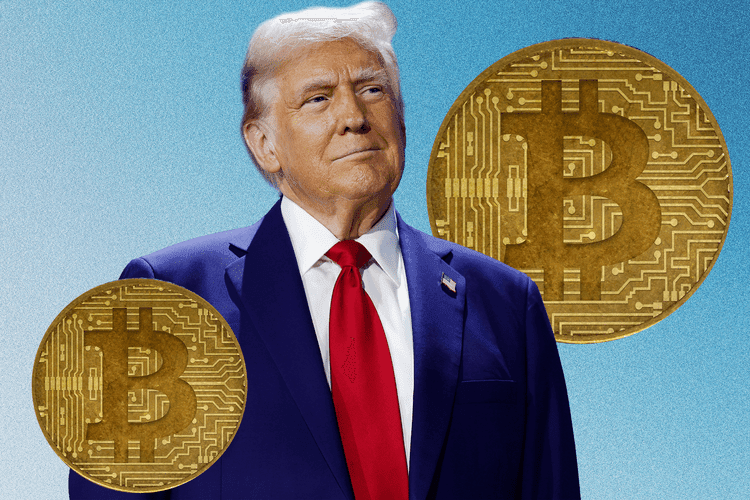
Trump Announces Plan to Create Federal Bitcoin Reserve, Says ‘Crypto is the Future, Especially for Boomers’

WASHINGTON, D.C. — In a move that has both excited crypto enthusiasts and confused just about everyone else, President-Elect Donald Trump announced plans to establish a “Federal Bitcoin Reserve.” The announcement, which followed his nomination of Scott Bessent—a hedge fund manager with a penchant for crypto—as Treasury Secretary, has left economists, Congress, and most of the American public wondering if the world has officially gone mad.

“Crypto is the future,” Trump declared during the press conference, sporting a Make America Digital Again cap. “Especially for the boomers. Look, nobody knows Bitcoin like I do. It’s digital gold, folks. And who doesn’t want gold, right? We’re going to store it, we’re going to save it, and we’re going to win with it.”

Trump’s speech was, as expected, a mix of buzzwords and phrases that left journalists scratching their heads. “Never sell your Bitcoin,” he repeated, wagging his finger at the audience, as if scolding a naughty child. “We’re going to put it all in the federal reserve—lock it up, very safe. We’re talking about digital treasure, people.”

The Federal Bitcoin Reserve, as outlined in Trump’s plan, would be a government stockpile of cryptocurrency, managed by Scott Bessent, who apparently spent enough time around billionaire George Soros to become a certified crypto wizard. Bessent’s plan involves securing large amounts of Bitcoin and other digital assets, “just in case.” When pressed for details, Bessent simply said, “Bitcoin is the new gold standard. And I mean, who doesn’t trust something created by an anonymous figure known only as Satoshi Nakamoto?”

The plan has received widespread support from an unexpected alliance of crypto influencers, including self-proclaimed “Millennial Crypto Gurus,” who took to X (formerly Twitter) to celebrate. One influencer, @CryptoBoomer69, tweeted, “Finally, someone gets it! Boomers deserve Bitcoin too! We need this federal reserve! #BitcoinIsFreedom #BoomersGoCrypto.”

Cameron and Tyler Winklevoss, famous for suing Mark Zuckerberg and making Bitcoin their personality, voiced their enthusiasm as well, stating, “This move by Trump is historic—it’s going to elevate Bitcoin to its rightful place alongside traditional assets like gold and Beanie Babies.”

Critics, however, were quick to point out the absurdity of the entire situation. “We’re talking about integrating an incredibly volatile digital asset into a national reserve,” said economist Dr. Linda Smart. “The idea that we’d entrust the stability of our economy to something that’s as stable as my cousin Jerry’s third marriage is, well, questionable at best.”

Despite these criticisms, Trump remains unfazed. “People say Bitcoin is risky—I say it’s exciting,” he said, holding up a physical Bitcoin replica for the cameras, which he claimed was “worth at least a million dollars.” He then added, “Millennials, boomers, Gen Z, whatever—everyone’s getting Bitcoin. We’re going to bring it all together, make it a part of America’s legacy.”

The proposal has also sparked debates on Capitol Hill, with a growing concern among lawmakers that the government would be one “lost wallet password” away from financial ruin. “I can’t even remember my Amazon password,” one anonymous Congressman remarked, “And now we’re talking about managing a Bitcoin reserve? God help us all.”

Meanwhile, Scott Bessent has assured the public that, should the plan be approved, the Federal Bitcoin Reserve will be stored in “the most secure hardware wallet money can buy,” adding, “We’ll probably keep it under Trump’s pillow. No one would dare look there.”

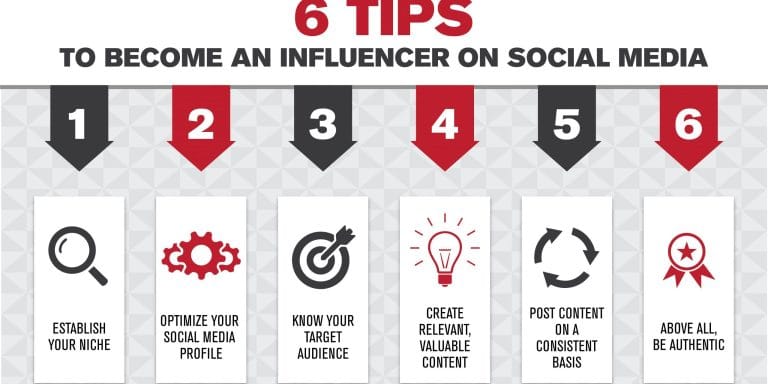
Dr. Iver Takes Aim at New ‘Influencer Curriculum’: ‘Because Clearly the Future is About Likes, Not Literacy’

0

WASHINGTON, D.C. — In an announcement that left many educators slack-jawed, the Department of Education has unveiled a new national curriculum focused on teaching influencer marketing to students across the country. The curriculum, meant to “modernize” education and prepare students for the digital economy, is set to roll out next year in schools nationwide. Dr. Iver, never one to shy away from pointing out the absurdity of misguided educational reform, wasted no time weighing in.

“Ah yes, because when I think about what our kids need, it’s definitely the skill set to become professional selfie-takers and hashtag hustlers,” Dr. Iver said during a recent press conference. “Forget math, forget science—the true ticket to success in America is figuring out how to go viral by doing a dance in your living room. Clearly, this is the pinnacle of academic achievement.”

The newly proposed curriculum includes modules on “Building Your Personal Brand,” “Monetizing Your Everyday Life,” and even “Faking It Until You Make It: A Beginner’s Guide to Sponsored Content.” According to Secretary of Education Linda McMahon, these changes are part of an effort to help students adapt to the changing job market, where traditional skills are, in her words, “less applicable.” The announcement was met with cheers from the influencer community, but Dr. Iver wasn’t buying it.

“We used to value students for their ability to think critically or innovate,” she noted, “but now, it seems the goal is to turn every classroom into a content creation factory. It’s great to know that instead of learning about the solar system or understanding how democracy works, our kids will be expertly trained in how to sell sugar water and protein powder to their followers.”

Dr. Iver went on to highlight the glaring neglect of traditional academics in favor of influencer stardom. “Imagine explaining to future generations that we once decided literacy wasn’t a priority—but we made sure every 10-year-old knew how to edit their videos for maximum engagement. And let’s not even get started on the fact that no one seems to be thinking about what happens when these influencer dreams don’t pan out. It’s almost like preparing kids for stable, well-rounded lives wasn’t the priority. Shocking, I know.”

The new curriculum comes at a time when education officials are under increasing pressure to modernize an outdated education system. McMahon insisted that the change was necessary to reflect “what students are already doing outside of the classroom.” Dr. Iver, however, had another take. “Just because kids are doing something outside of class doesn’t mean it’s worthy of a diploma. If that were the case, we might as well start awarding degrees for who can binge-watch the most Netflix episodes in one sitting.”

As Dr. Iver concluded her remarks, she added, “At this rate, why bother with any real skills at all? Let’s just make the entire school experience about who gets the most likes. Call it ‘Academy of Attention-Seeking.’ Because clearly, the future is about likes, not literacy.”

The Department of Education has yet to respond to Dr. Iver’s pointed critique, but insiders say that the new influencer curriculum could see pilot programs beginning in select districts next semester. Whether students will actually learn anything of lasting value remains to be seen—but at least they’ll know which filter to use for their graduation selfies.

Biden Caught in Retirement Home Drug Scandal After Forgetting Presidential Ice-Cream Spoon

0

SCRANTON, PA — President Joe Biden found himself at the center of an unexpected scandal this week when it was revealed that he had been engaging in a bizarre drug trade at various retirement homes across Pennsylvania. According to sources, Biden was reportedly exchanging pills with residents, which included trading away his own Alzheimer’s medication.

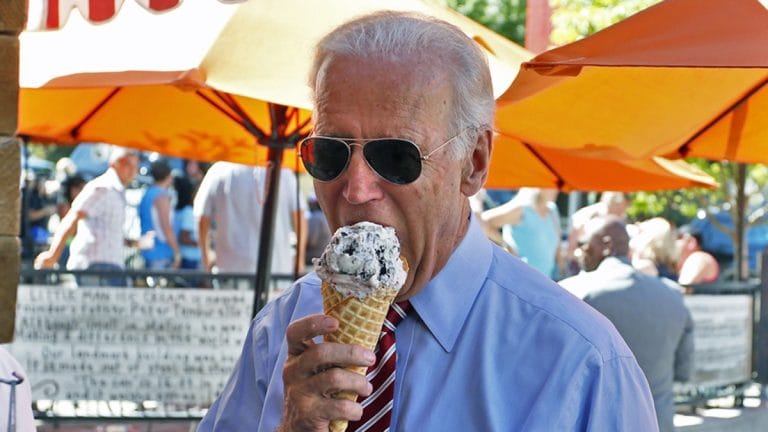
The scandal came to light when the President, in a moment of forgetfulness, left behind his Presidential Branded Ice-Cream Spoon, a keepsake he had carried around for years. The spoon, engraved with the presidential seal and his name, was discovered by a puzzled retirement home nurse, who soon realized it was no ordinary lost-and-found item. “We thought it was just another resident’s misplaced belonging,” said Nurse Tammy Wilson. “But then we saw the presidential seal on it and knew something wasn’t right.”

The situation escalated when local authorities were called, and an investigation into the incident revealed a series of trades Biden had made with residents. Witnesses claim that Biden was seen swapping his Alzheimer’s pills for a variety of items, including heart medication, arthritis cream, and even a suspiciously large stash of Werther’s Originals.

“He seemed pretty popular with the residents,” said 82-year-old Edith Thompson. “He’d come by, crack a few jokes, and then do his little exchanges. We all thought it was just part of some government healthcare initiative.”

White House officials were quick to issue a statement, describing the incident as a “misunderstanding.” Press Secretary Karine Jean-Pierre commented, “The President was simply trying to connect with the community. Any suggestion of wrongdoing is absurd. The ice-cream spoon being left behind was an unfortunate mistake.”

Despite the official response, critics have pounced on the incident as further evidence of Biden’s declining mental acuity. “This is what happens when you have a President who can’t remember where he left his own dentures—or in this case, his spoon,” quipped political commentator Tucker Carlson during his latest podcast episode.

Reports indicate that the President has since been reunited with his beloved spoon, but not before photos of it circulated widely on social media, sparking memes and jokes about Biden’s supposed side hustle. One particularly viral meme showed Biden with the caption: “Trading foreign policy for Werther’s—one retirement home at a time.”

Top 5 Reasons Everyone Secretly Wants to Be a Fortune 500 CEO (And You Should Too!)

0

Think being a Fortune 500 CEO is all stress and endless board meetings? Think again! Becoming a high-powered corporate executive has perks that most people never consider. Let’s break down the top five reasons why becoming a Fortune 500 CEO might just be the dream job you didn’t know you wanted:

1) Risk of Being Assassinated

Let’s face it: living a life of mundane predictability is overrated. As a Fortune 500 CEO, you’ll add a touch of thrilling danger to your daily routine! There’s nothing like knowing that your decisions on quarterly dividends could inspire international intrigue and mysterious figures lurking in parking garages. Plus, the adrenaline rush keeps your senses razor-sharp. Forget skydiving—this is the real high-stakes game!

2) Constant Fear of Being Abducted Overseas

Who needs dull vacations when your business trips come with the added excitement of potential international kidnappings? CEOs don’t just visit Paris or Dubai; they survive Paris or Dubai. It’s like starring in your own espionage thriller, complete with exotic locales and shady informants. And let’s not forget the heroic photo op when you’re rescued by elite operatives. Talk about elevating your LinkedIn profile!

3) No Need to Hide Psychopathic Behavior

For the rest of us, suppressing our inner Machiavelli can be exhausting. But as a Fortune 500 CEO, ruthlessness isn’t just accepted—it’s celebrated. No more pretending to care about Janet’s birthday cupcakes or Tim’s weekend fishing trip. Instead, you get to channel your inner Gordon Gekko with zero judgment. After all, corporate culture loves a decisive leader who can cut costs (and morale) with a single memo.

4) Exorbitant Salaries and Annual Bonuses

Sure, you’ll work long hours, but who cares when you’re raking in more in a year than most people earn in a lifetime? Even better, when things go south, you can count on a golden parachute that’ll make your departure look like a triumphant victory. Plus, there’s the joy of watching financial commentators struggle to justify your earnings. “They’re worth every penny,” says someone who definitely wasn’t paid to say that.

5) NEW Personal Security Detail

Forget self-defense classes or pepper spray—as a CEO, you’ll have a whole team of highly trained professionals whose sole job is to keep you safe. It’s like living in your own action movie, complete with bodyguards, armored SUVs, and maybe even a private helicopter. Bonus: they’ll also keep you from ever having to carry your own shopping bags again. Practical and glamorous!

So, what are you waiting for? Dust off your business suit, perfect your disdainful smirk, and start climbing that corporate ladder. After all, nothing says “living the dream” quite like dodging laser pointers and approving million-dollar bonuses—for yourself.