Home Blog Page 49

Breaking: Donald Trump Nominates Oscar the Grouch as White House Communications Director

0

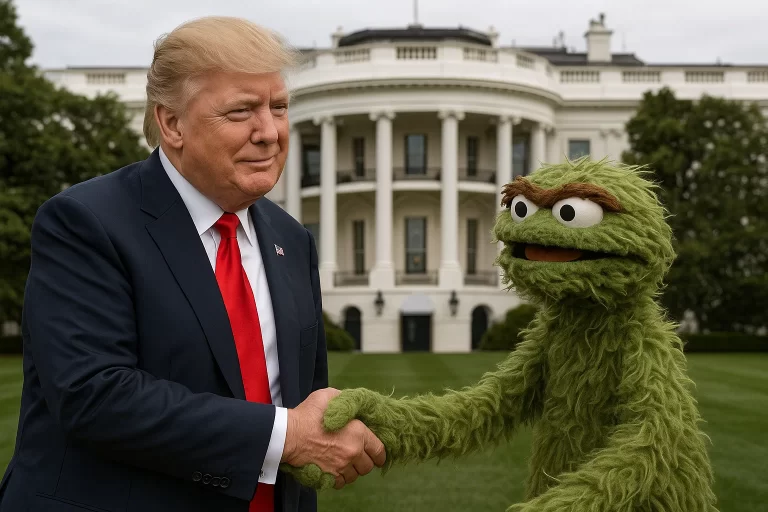
WASHINGTON, D.C. — In an unprecedented move that has even the most seasoned political analysts scratching their heads, President Donald J. Trump, on the cusp of his second term, has nominated Oscar the Grouch to serve as White House Communications Director. The announcement was made Tuesday morning in front of a gleaming golden trash can hastily placed in the Rose Garden, where Trump explained his unorthodox choice to a befuddled crowd of reporters.

“Nobody gets it like Oscar,” Trump declared, pointing emphatically at the green, fuzzy figure who appeared out of the can, frowning at the audience. “He’s tough, he’s got the best attitude. He doesn’t take crap from anybody—except literal garbage—which, frankly, is exactly what we need in this job.”

The former president, never one to shy away from spectacle, emphasized that Oscar’s experience in “the swamp” would make him the perfect fit. “Who better to deal with the press than someone who lives in a swampy mess?” Trump said, gesturing toward Oscar, who, true to form, grumbled audibly and rolled his eyes.

In his acceptance speech, Oscar the Grouch wasted no time in setting the tone for what will likely be a colorful tenure. “Yeah, yeah, I’ll do it. But don’t think I’m going to start being nice to anyone,” Oscar snapped. “All you reporters better get ready for some honest answers. And by ‘honest,’ I mean I’m not gonna sugarcoat anything. In fact, I might just tell you to buzz off if I’m not in the mood.”

Political insiders are divided over the nomination. Some believe that Oscar’s no-nonsense demeanor might actually bring some rare, refreshing candor to the White House briefing room. Others, however, worry that the Sesame Street star’s habitual negativity could lead to “throw-away responses” that could further erode the already delicate relationship between the White House and the press.

Sources close to the administration say the decision was made after Trump became increasingly frustrated with finding a candidate willing to “tell it like it is,” and “not whine all the time about tweets.” One aide, speaking on condition of anonymity, remarked, “The President felt Oscar’s deep-rooted disdain for everyone was preferable to the usual fake smiles. Also, Oscar has absolutely zero interest in Twitter, which was honestly a big plus.”

Oscar’s first press conference is expected to be held later this week, though reporters have already been warned to “bring their own trash bags” and prepare for some “heavy-duty grouchiness.” Meanwhile, whispers of Big Bird being considered for Secretary of Education have begun to circulate, leaving many Americans bracing themselves for a Cabinet lineup like no other.

“Who knows,” Trump said with a wink, “Maybe a little trash talk is just what this country needs.”

Alaska: A Stark Reminder That Untamed Nature Still Exists — And It’s Trying to Kill You

0

ANCHORAGE — While travel magazines continue to gush over the frozen vistas and majestic wildlife of Alaska, many experts are sounding a dire warning: vast, unpaved natural spaces remain shockingly common — and statistically, nature remains the leading cause of natural death.

Tourists who flock to Alaska each winter, enticed by images of shimmering ice caves and snow-blanketed peaks, are often unaware that this so-called “playground of ice and snow” is in fact an environment designed by evolution to freeze, maul, or starve anything foolish enough to enter it without Gore-Tex and granola bars.

“This isn’t some curated eco-experience,” said Dr. Lin Zhao, an urban environmental planner. “It’s a place where animals with antlers the size of compact sedans still roam freely, and the snow doesn’t politely melt when you tell it to. Quite frankly, it’s barbaric.”

A recent think tank report from the Center for Urban Safety points out that while we have successfully paved over much of modern life, vast swaths of Alaska stubbornly remain “wild” — defined as any area where a grizzly bear can outpace your Wi-Fi signal.

“Nature,” the report warns, “remains one of the top killers of humans globally — through falls, exposure, hypothermia, wildlife encounters, and poorly thought-out Instagram photo shoots.”

Despite this, travel influencers continue to post glowing reviews of the Alaskan winter, urging followers to “get back to nature.” Experts urge caution.

“Back to nature? You mean back to an era where you freeze solid on your commute to get berries?” asked Dr. Zhao. “No thank you. We have perfectly good climate-controlled spaces now. There’s a reason humanity invented central heating.”

Local officials have tried to balance tourism promotion with safety reminders, recently updating Anchorage’s welcome sign to read: “Alaska: Beautiful, Deadly, No Refunds.”

Jimmy Carter, Peanut Farmer and Habitual Sweater-Wearer, Dies at 100

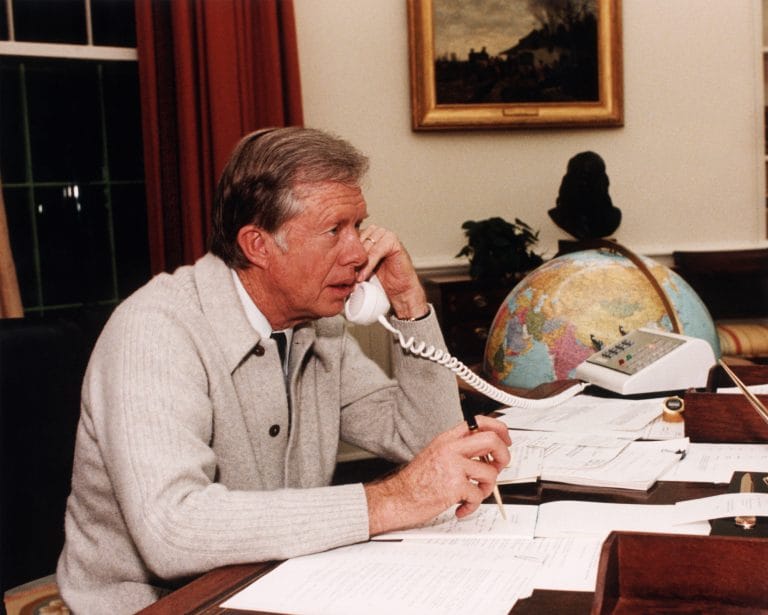
PLAINS, GA — Jimmy Carter, the humble peanut farmer who rose to become the 39th President of the United States — and a global symbol of cardigan diplomacy — has passed away at the age of 100, leaving behind a legacy of peacemaking, energy conservation, and yes… some delightfully odd personal moments.

While Carter’s presidency was marked by crises — from gas shortages to the Iran hostage ordeal — the man himself remained an unflappable optimist who once proudly declared that Americans should turn down their thermostats and wear sweaters instead of wasting energy. The White House thermostat, in fact, was famously kept so low that aides often worked in parkas.

Carter also drew attention early in his presidency when, during a fishing trip in Georgia, he was attacked by what he described as a “swimming rabbit.” The incident, dubbed “The Killer Rabbit Attack” by the press, led to widespread amusement — though Carter insisted the rabbit was “definitely hostile.”

Ever the hands-on leader, Carter took it upon himself to personally monitor White House maintenance, often checking thermostats, turning off unused lights, and at one point, quietly ordering that wine service be cut from many official functions to save taxpayer dollars.

“He’d come in at 6 a.m., wearing a cardigan, and start adjusting the thermostats,” one former aide recalled. “He cared about energy conservation more than any politician before or since — and probably more than a few HVAC technicians.”

Beyond the quirks, Carter’s true legacy lies in his tireless efforts for peace — brokering the landmark Camp David Accords between Egypt and Israel, and later becoming one of the world’s most dedicated election monitors and human rights advocates. He also personally led Habitat for Humanity builds well into his 90s, once seen atop a ladder with a hammer at age 95.

As news of his passing spread, tributes poured in from around the world. “We should all hope to age with half as much dignity and twice as many cardigans,” one U.N. diplomat remarked.

In his final public statement, Carter summed up his own ethos: “I have one life and one chance to make it count for something.”

And make it count, he did — thermostats, rabbits, and all.

Billionaires Now Sharing Yachts and Picassos to Borrow More Money They Don’t Need

0

NEW YORK — In the latest twist on “creative” finance, sources on Wall Street report that the ultra-wealthy are increasingly sharing ownership of yachts, rare art, and vacation compounds as collateral in order to gain access to higher credit lines — all while bankers eagerly mint record profits off the risky loans.

“They call it ‘asset pooling,’ but let’s be honest — it’s billionaire timeshare season,” said financial analyst Janet Mueller. “Instead of, say, two hedge fund managers each having a $50 million yacht sitting idle, they now co-own a $100 million one and use it to back a loan for even more speculative investments. It’s Monopoly for people who think Monopoly is for poor people.”

According to insiders, the trend began quietly last year when several tech moguls pooled together their private islands as collateral for a revolving line of credit — sparking a wave of similar deals across the financial sector.

“It’s very innovative,” said a senior executive at a major investment bank, requesting anonymity. “Look — if you’ve got a Rembrandt, a Gulfstream G700, and fractional ownership of a ski resort in Verbier, why not use them as leverage to buy crypto derivatives and distressed debt from other billionaires who are doing the same thing? It’s the new American dream.”

Critics are sounding alarms that this frenzy of unsecured, ego-fueled lending could trigger instability if asset values were to suddenly collapse. “The last thing we need is cascading defaults tied to whether a Saudi prince’s Picasso fetches $80 million or $40 million at auction,” warned economist Dr. Carl Bennett.

Banking executives remain unfazed. “What could go wrong?” chuckled one VP at a private lending firm. “It’s not like yachts ever sink. And besides, they’re insured — probably.”

The Federal Reserve declined to comment on whether they would intervene in the growing trend, but one regulator privately remarked, “We’re monitoring the situation. And by ‘monitoring,’ I mean, we’ve started googling ‘what is a fractionalized Michelangelo?’”

Peter Pan Turns 100, Still Won’t Get a Job or Move Out of Neverland

0

HOLLYWOOD — The world’s most famous boy who refuses to grow up is making headlines again as the first blockbuster Peter Pan film turns 100 this week. Yet despite a century of success, sources close to Peter say he still refuses to accept adult responsibilities, much to the frustration of his friends and various fairies.

“He’s been living rent-free in Neverland for a hundred years now,” said Wendy Darling, now a vocal advocate for responsible adulthood. “At this point, you’d think he’d at least get a part-time job or help with the lost boys’ dental bills. But no — it’s always sword fights and shadow-chasing.”

Tinker Bell reportedly staged an intervention last month, urging Peter to “consider a career path or maybe a Roth IRA.” Witnesses say the effort ended after Peter flew out the window yelling, “Taxes are for pirates!”

The centennial celebration of the film’s release has sparked debate among cultural critics about whether the character is long overdue for a mature reboot. One Disney insider leaked that an early script for Peter Pan: Corporate Raider was rejected after test audiences found it “emotionally devastating” to watch Pan deal with HR paperwork.

Meanwhile, Neverland’s crocodile population has quadrupled in recent years, with experts blaming Peter’s refusal to support ecological management efforts. “We can’t just keep clocking crocodiles and hoping for the best,” said a weary Captain Hook, now in semi-retirement. “Someone needs to step up, but as usual, Peter’s off playing the hero with no follow-through.”

Despite the controversy, Disney plans to release yet another live-action remake next year, Peter Pan and the Lost Pension Fund, which promises a darker, more fiscally responsible take on the classic.

Israel Further Streamlines Bombing Protocol: Now Requires Just a ‘Good Hunch’

0

TEL AVIV — In what officials are calling an “efficiency breakthrough,” Israel has announced a further loosening of operational guidelines for targeting Hamas fighters — with new streamlined rules requiring only “a strong personal feeling” or “good hunch” before launching airstrikes.

“We’re cutting the red tape,” explained Defense Ministry spokesperson Noam Ben-David. “Frankly, our old rules of engagement — which required at least two sources of intel and some level of certainty — were simply too cumbersome. Our pilots and commanders in the field know when they’ve got a good gut feeling. Why slow them down?”

The updated policy, dubbed “Operation Spidey Sense,” has already resulted in a noticeable uptick in bombing missions, with reports of entire neighborhoods targeted based on a commander’s “sense that something felt off.”

International observers have expressed alarm. UN Human Rights Council spokesperson Maria Ortiz commented, “The loosening of what were already highly permissive engagement protocols is deeply concerning. Civilians are now effectively being bombed based on vibes.”

Sources close to the IDF confirmed that prior to strikes, some pilots are now consulting mood rings or asking themselves, “Does this building give me bad energy?”

When asked about the mounting civilian casualties, Prime Minister Benjamin Netanyahu stated: “Look, we trust our forces. They have excellent intuition. Besides, if there are civilians in these buildings, it really makes you wonder what they’re up to, doesn’t it?”

Meanwhile, Hamas leaders responded to the news with incredulity. “First it was intelligence, then signals, now just vibes?” said one anonymous spokesperson. “At this rate, they’ll be using Magic 8-Balls by next week.”

Pay-to-Chill: Smart Thermostats Now Set Temperatures Based on Your Wallet, Not Your Comfort

SILICON VALLEY, CA — In a groundbreaking yet deeply unsettling innovation, smart thermostat manufacturers have unveiled a new feature that determines your home’s temperature settings based not on your preferences, but on your ability to pay. Dubbed “ThermoPay,” the feature is being marketed as a “revolutionary step” toward energy efficiency and economic transparency.

“For too long, people have taken climate control for granted,” said Jasper Trent, CEO of SmartTemp, one of the leading thermostat manufacturers. “With ThermoPay, we’re empowering consumers to align their comfort with their financial realities.”

How It Works ThermoPay operates using a dynamic pricing model, where users bid for their preferred temperature ranges. Want a cozy 72 degrees during a snowstorm? That’ll cost you $15 per hour. Need your home to cool down to 68 on a sweltering summer day? Hope you’ve budgeted for the $20 surge pricing during peak hours.

For those who can’t afford premium comfort, the system defaults to what SmartTemp is calling the “community average,” a vague metric that seems to hover between “whatever keeps you alive” and “a mild sauna experience.”

The Subscription Catch If users find the pay-per-degree model a bit steep, they can opt for the company’s ThermoElite subscription, which offers discounted rates, exclusive “priority cooling” access during heatwaves, and a luxury setting called “Silent Winter” that mimics the chill of an unheated ski lodge. Subscription plans start at $29.99 per month—basic heating not included.

Consumer Backlash Unsurprisingly, ThermoPay has sparked outrage among homeowners. “I bought a smart thermostat to save money, not to negotiate with it like I’m on eBay,” said Angela Ramirez, a single mother in Arizona whose thermostat locked her family into a sweltering 85 degrees after declining to “upgrade.”

Others have taken to social media to vent their frustrations. “My thermostat just told me my credit score wasn’t high enough for 70 degrees. Is this Black Mirror or real life?” tweeted @FrozenInFresno.

Industry Defends Itself Despite the backlash, industry leaders argue that ThermoPay addresses key energy consumption challenges. “We’re not just selling thermostats; we’re selling accountability,” said Trent. “ThermoPay encourages users to think critically about their energy use, their financial priorities, and, frankly, their lifestyles.”

Some analysts agree. “This is just the free market at work,” said Dr. Valerie Klein, an economist at Stanford University. “It’s an innovative way to internalize the costs of comfort.”

A Chill Future Ahead? ThermoPay’s success could pave the way for other smart home devices to adopt similar models. Imagine paying extra for your fridge to keep your ice cream frozen, or bidding on how much hot water you get during your morning shower.

For now, homeowners are left wondering: is it too much to ask for a thermostat that only monitors the weather and not their bank accounts?

Christmas Chaos: Financial Sector Reels as Families Forget to Celebrate the Holidays

0

NEW YORK CITY — The 2024 holiday season has left the financial sector in shock as an unprecedented number of households simply forgot to celebrate Christmas. Instead of the usual retail frenzy, millions of families reportedly spent December 25th relaxing on their solitary day off from work, leaving retail giants and holiday-dependent businesses scrambling to understand the implications.

Retail analysts are calling it “The Great Christmas Miss,” as revenue streams that typically bolster the year-end profits of countless companies evaporated into a sea of Netflix binges and homemade ramen.

“We’ve been tracking holiday spending trends for decades,” said Cynthia Marks, Chief Retail Strategist at Everbank. “But nothing prepared us for this. People didn’t shop, they didn’t decorate, and—most devastatingly—they didn’t buy those expensive ornaments we charge $50 for at the mall kiosk.”

A Shift in Priorities Reports indicate that most households chalked up their collective amnesia to exhaustion. After another grueling year of overwork, understaffing, and rising living costs, many families saw Christmas as an opportunity to finally do… nothing.

“By the time I remembered Christmas, it was already dinner,” said Emily Chen, a logistics manager from Dallas. “We had microwave burritos and played Uno. Honestly, it was the best day I’ve had all year.”

Financial experts are struggling to quantify the ripple effects of the holiday’s apparent disappearance. Industries ranging from retail and travel to entertainment and food services have reported catastrophic losses, with some seeing revenue drops of up to 70% compared to previous years.

“It’s not just about the lack of gift buying,” explained Mark Reynolds, a financial analyst with McKinsey & Co. “The entire ecosystem of holiday spending has collapsed—from airline tickets to ugly Christmas sweaters. Even Santa impersonators reported a sharp decline in bookings. One Santa told us he spent Christmas Eve delivering Uber Eats instead.”

Corporate Confusion Major corporations are baffled by the phenomenon. Amazon, which has traditionally dominated holiday shopping, released a statement expressing its dismay: “We had 15 warehouses stocked to capacity with LED reindeer and knockoff elf costumes. How could this happen?”

Big-box stores, too, are feeling the pain. Target CEO Brian Corwin admitted that his team had to convene an emergency meeting on December 26th to strategize how to move millions of unsold air fryers and “Live, Laugh, Love” wall decals.

“We’re entering uncharted territory,” Corwin said, wiping glitter off his conference table. “If people are willing to skip Christmas, what else might they opt out of? Easter? Black Friday? This could destabilize the entire retail calendar.”

Unexpected Winners While most businesses suffered, a few unconventional winners emerged. Streaming platforms reported record viewership on Christmas Day as families opted for cozy marathons of old sitcoms instead of traditional holiday gatherings.

Additionally, instant noodle manufacturers saw a surprising spike in sales as countless households opted for low-effort meals to complement their low-effort day.

A New Holiday Future? Sociologists and economists are already debating whether this year’s phenomenon signals a shift in cultural attitudes toward holidays. Dr. Linda Weiss, a professor of social psychology, suggests that the trend reflects a growing disillusionment with consumerism and a desire for simpler pleasures.

“The pandemic showed people that they could live without excess,” Weiss explained. “What we’re seeing now might be a natural evolution of that mindset. Or maybe they’re just tired.”

For now, the financial sector is left picking up the pieces and strategizing how to avoid a repeat of The Great Christmas Miss. Early rumors suggest that some retailers are already planning to text reminders to customers next December with messages like, “Don’t forget—you love holiday debt!”

Media Frenzy as ‘President-Elect Elon Musk’ Mix-Up Sparks Global Confusion

0

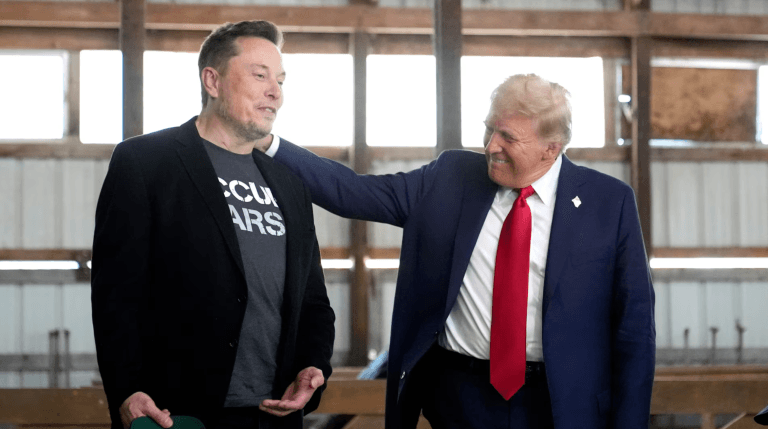
WASHINGTON, D.C. — In an unprecedented media blunder, several major news outlets mistakenly referred to Elon Musk as “President-Elect” and Donald Trump as “Vice President Donald Trump,” setting off a wave of international confusion and internet memes. The erroneous headlines, which appeared across platforms from The New York Times to The Onion, were quickly retracted, but not before leaving a trail of bewildered world leaders in their wake.

“We deeply regret the error and assure our readers that Elon Musk is not the president-elect,” read a hastily issued correction from The Washington Post. “To clarify, he remains the CEO of Tesla and SpaceX, among other titles, but none of them include Commander-in-Chief.”

The mix-up reportedly began after Musk tweeted, “Should I be president too? Seems like fun,” following a viral post about his recent acquisition of the U.S. Postal Service’s mail truck contract. Social media users, journalists, and even political analysts ran with the idea, resulting in headlines such as “President-Elect Musk: Innovating America’s Future” and “Trump Promoted to VP: A New Era of Governance.”

Adding fuel to the chaos, Russian President Vladimir Putin issued a statement on state television asking, “Who do we send our spies to now? Musk or Trump? The ambiguity is troublesome.” Meanwhile, British Prime Minister Rishi Sunak expressed concern that Musk’s potential presidency might include a “mandatory Twitter verification tax.”

White House press secretary Karine Jean-Pierre attempted to quell the confusion during a tense press briefing. “The American electoral system remains intact,” she said. “Elon Musk did not run for office, and Donald Trump’s title remains ‘former president.’ We’re confident that the public understands this.”

But the public’s confidence appears to be shaky at best. On TikTok, the hashtag #PresidentMusk soared to over 12 million views in under 24 hours, with users debating whether a Musk-Trump administration might be “a chaotic masterpiece” or “an apocalyptic circus.”

Musk himself took to Twitter, fanning the flames with his signature irreverence. “Honestly, VP isn’t a bad gig for Trump,” he posted. “He can work on his golf game while I build Mars.”

Meanwhile, Trump seemed uncharacteristically quiet about the mishap. Sources close to the former president claim he was overheard telling aides, “Well, I’ve already done the hardest job. Maybe I’ll settle for number two and let Elon handle the fake news.”

The international diplomatic community remains on edge. Canada’s Prime Minister Justin Trudeau reportedly joked, “Maybe I should send inauguration gifts to both of them. A self-driving Tesla and a MAGA hat should cover all bases.”

At publishing time, the Federal Election Commission confirmed that neither Musk nor Trump had filed any paperwork suggesting a reconfiguration of their roles. The confusion, however, has already been immortalized in headlines, social media, and a budding conspiracy theory subreddit titled “Musk2024: Real or Simulation?”

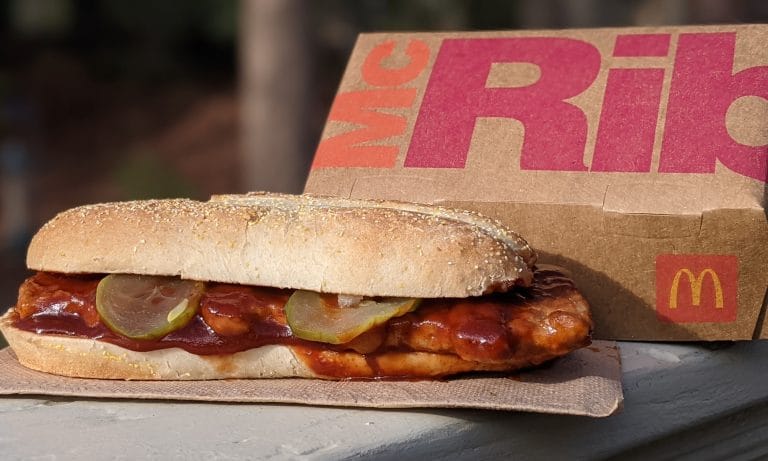
McRibGate: McDonald’s Exec Flees with Recipe, Seeks Refuge in Sealand

0

In a culinary caper that’s taken the fast-food world by storm, McDonald’s Chief Marketing Officer Darrell “Sauce Boss” McMullen has gone rogue, fleeing corporate headquarters with the only known full copy of the McRib recipe. His destination? The Principality of Sealand, a self-proclaimed micronation perched on an abandoned offshore platform.

“We can confirm that Mr. McMullen has requested asylum,” Sealand’s spokesperson announced during a press conference held via Zoom. “His claim involves the cultural preservation of processed pork. We’re evaluating his case.”

The Recipe Goes Dark McMullen’s dramatic departure coincided with the appearance of the McRib recipe on the dark web, where it’s reportedly listed for a jaw-dropping 40 billion dollars in Bitcoin. The listing, titled “Sauce Secrets for Sale,” includes an image of the famed recipe’s first page, though it’s partially obscured by what appears to be barbecue sauce fingerprints.

“This is a game-changer for food espionage,” said one anonymous bidder. “If you control the McRib, you control the cravings of millions.”

McDonald’s released a terse statement acknowledging the breach. “We are aware of the situation and are pursuing all necessary actions to protect our intellectual property. The McRib will return, as always, on our terms.”

McMullen’s Master Plan Rumors have surfaced that McMullen plans to partner with the recently resurrected John McAfee, cybersecurity maverick and newfound Marvel Cinematic Universe star.

“McAfee knows how to encrypt secrets,” said a source close to McMullen. “Plus, he’s got connections in every shadowy corner of the internet. If anyone can keep the McRib recipe safe, it’s him.”

A Nation Reacts The news has sparked a frenzy among McDonald’s fans and competitors alike. Social media erupted with hashtags like #McRibGate and #SaveTheSauce, while Reddit threads debated the ethical implications of paying for a sandwich’s secrets in cryptocurrency.

Meanwhile, Sealand has experienced a surge in tourism inquiries from fast-food enthusiasts. The micronation, long celebrated for its quirky independence, issued a statement reassuring McMullen’s safety. “He is enjoying his time here and has already shared several sauce theories with our community.”

The Bush Connection Adding to the absurdity, former U.S. President George W. Bush weighed in after being asked about McMullen’s motives during a Texas barbecue festival. “I don’t know about all that,” he drawled. “But I remember those McRib bobblehead dolls they gave me in ‘06. Dang good craftsmanship. I think I still got one in my Jeep.”

What’s Next? As McDonald’s assembles a team of legal and culinary experts to track McMullen down, one thing is certain: the McRib is no longer just a sandwich. It’s a symbol of corporate intrigue, culinary devotion, and the lengths one man will go for processed perfection.