GREENWICH, CT — Sentinel Ridge Capital Partners, the private equity firm that closed on a $390 million minority stake in an unnamed National League franchise last week, convened its first internal review of the asset Saturday and emerged with what one partner described as “several immediate questions about why this organization is paying twenty-six grown men to stand in a field.”
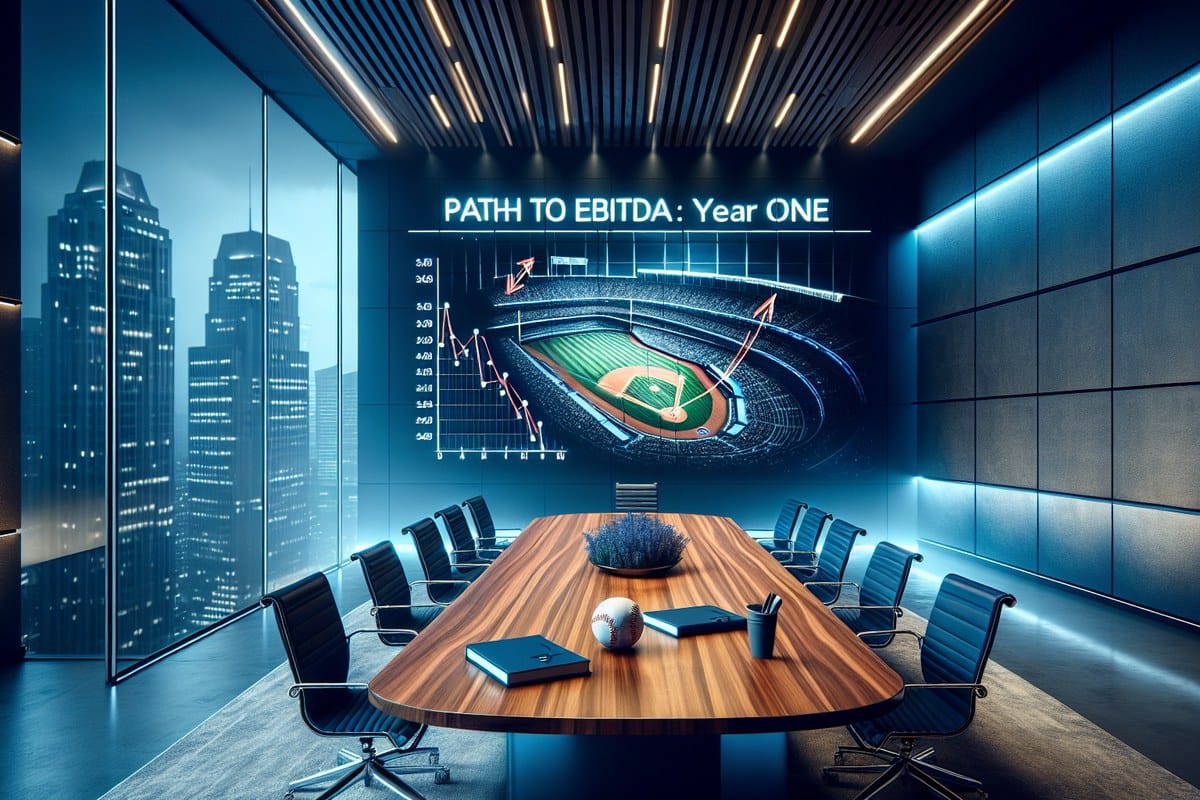
The firm, which manages roughly $14 billion across consumer products, regional logistics, and now apparently shortstops, opened the meeting with a deck titled “Path to EBITDA: Year One.” Slide three reportedly identified “the entire bullpen” as a cost center with “unclear ROI and significant chewing-related overhead.”
“What we’re seeing is an organization with material labor redundancy,” said Sentinel managing partner Drew Halverson, MBA, who has never attended a baseball game but has read extensively about the movie Moneyball. “There are nine players on the field at any given time. We are paying for forty. I would like someone to walk me through the gap.”
By Sunday morning, the firm had circulated a follow-up memo proposing that the designated hitter role be eliminated as duplicative, that pinch runners be retained on a 1099 basis with no benefits, and that the third-base coach’s primary function — described in internal documents as “waving arms in apparent code” — be automated by Q3 using a system Halverson referred to as “basically a traffic light.”
The team’s actual baseball operations staff, reached for comment, said they had spent most of the morning explaining to a 28-year-old associate that you cannot, in fact, trade a starting pitcher for “two interns and a bag of cash to be named later,” that the strike zone is not “open to renegotiation,” and that no, the seventh inning cannot be cut for time.
Halverson confirmed the firm remains “very excited” about the investment and is already exploring a sale-leaseback on the stadium, a refinancing of payroll obligations through a Cayman Islands SPV, and a rebrand of the seventh-inning stretch as “presented by Sentinel Ridge, where capital meets community.” The team’s mascot, an associate clarified, is being evaluated separately and may be “rightsized into a part-time engagement model.”
Sentinel’s investment committee has reportedly flagged one further concern about the asset, which is that the team is, by every available metric, not very good. A note attached to the deck suggests this is “a known issue” but should not affect the valuation, since “performance and price have been functionally decoupled in this asset class for approximately thirty years.”
The firm’s exit strategy, per the deck’s final slide, is to hold the asset for five to seven years and then sell it to a slightly less informed private equity firm.