REDMOND, WA — Microsoft and Meta are scheduled to report quarterly earnings after the closing bell Wednesday, with both companies expected to credit historic growth to enterprise AI products they are, by all available evidence, primarily selling to one another in a closed loop that analysts have stopped trying to draw on a whiteboard.
Pre-release guidance from each firm cites “transformative customer demand” for generative AI tooling, a phrase that, in the footnotes, resolves to Microsoft Copilot seats deployed across Meta’s engineering org and a multi-year Llama API commitment from Azure that allows Microsoft to resell Meta’s model back to enterprise clients who already pay Microsoft for a different one.
The arrangement is expected to produce double-digit cloud growth at both companies and to be described, on both earnings calls, using the word “flywheel.”
“The revenue is real. The customers are also each other. Those things can both be true,” said Priya Anand, who covers hyperscaler accounting at a research desk inside one of the Big Four and asked that her employer not be named because she would prefer to keep it. “At a certain point you stop calling it a market and start calling it a group chat.”
Capital expenditure guidance is expected to set new records at both firms, with Microsoft signaling another upward revision on data center buildouts and Meta reiterating its plan to spend roughly the GDP of Estonia on GPUs it will largely rent back to companies renting GPUs to it. Wall Street has indicated it will reward this by raising both price targets and asking no further questions.
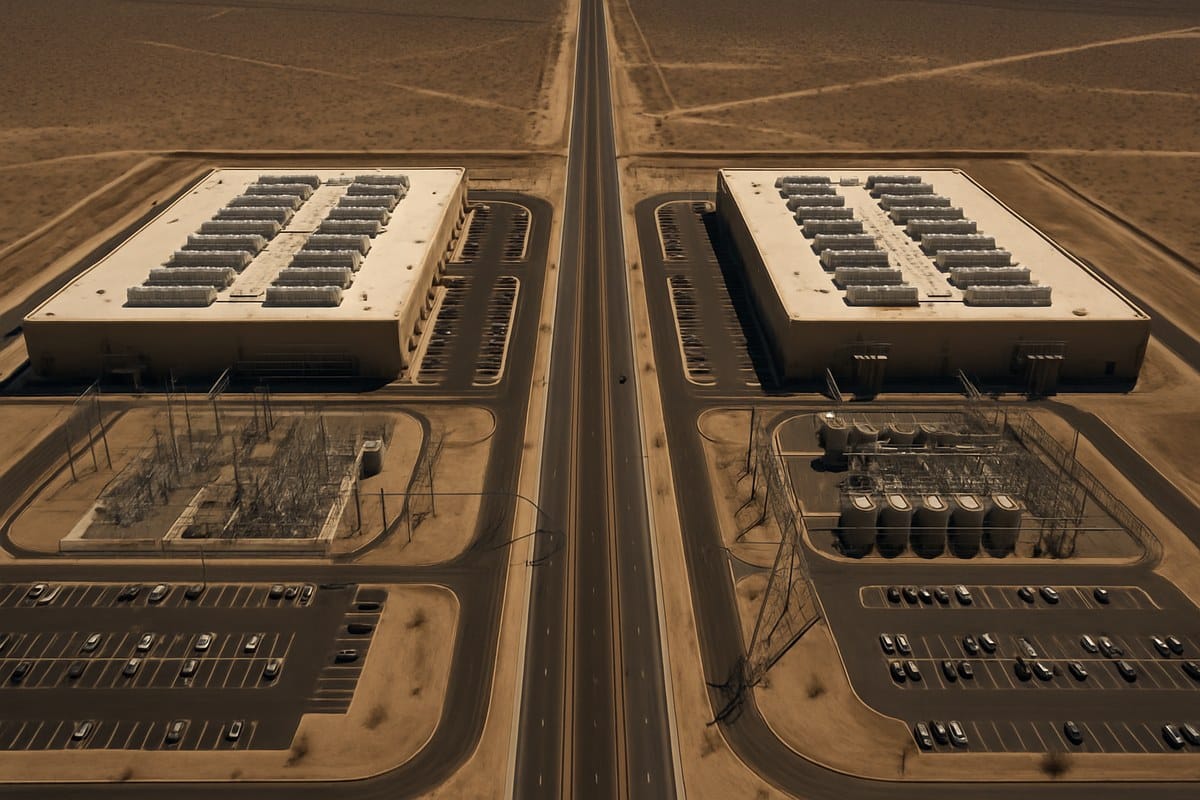
Less prominently featured in the prepared remarks: the power draw. A single new Microsoft campus outside Phoenix is projected to consume more electricity than the city of Tempe, a fact the company has addressed by signing a long-term agreement to purchase nuclear energy that does not yet exist from a reactor that has not yet been built. Meta has responded by commissioning a study on whether the heat coming off its Louisiana facility can be reclassified as a feature.
Both companies are also expected to highlight efficiency gains, defined this quarter as the layoff of approximately 9,000 combined employees whose work is now performed by the AI systems the two companies are selling to each other. The displaced workers will reportedly be eligible for a free year of Copilot, which they may use to draft cover letters that will be read by Llama.
Analysts will be listening for any update on monetization of consumer AI features, a category that currently consists of a button inside Word that summarizes the email the same button wrote, and a Meta AI assistant that has begun responding to Instagram comments on behalf of users who did not ask it to. Both products are described internally as “sticky.”
The FOMC is also expected to leave rates unchanged Wednesday afternoon, a decision that will be analyzed at length by an AI model trained on the analysis of previous decisions, then summarized by a second model, then pushed as a notification by a third. Microsoft and Meta will each take a cut.
Guidance for next quarter, both companies are expected to confirm, remains strong.