The Australian Open started Monday, which in my house means I was awake at 4 a.m. with a pot of coffee and a heating pad on a shoulder that has filed for emancipation. Ray Kowalczyk texted me at 4:12. ‘You watching this?’ I was watching this. A 23-year-old from somewhere with two consonants in a row had just called a medical timeout in the second set, and the trainer who jogged out was carrying what appeared to be a clipboard and a small bottle of essential oils.
The kid wasn’t hurt. He was, and I am quoting the ESPN booth here, ‘recalibrating.’ His heart rate was fine. His leg was fine. He simply needed nine minutes to sit in a chair, breathe through his nose, and have a man in a polo shirt whisper to him about ‘staying in his process.’ Then he lost the set 6-2 and threw his racket at a bag.
Coach DiMaggio, my old high school coach, once made a kid named Donnie Vasquez run a full quarter on a sprained ankle because, and I quote, ‘the clock doesn’t care about your feelings, Donnie.’ Donnie made the tackle. Donnie also walked with a limp until 1994. I’m not saying that was correct. I’m saying nobody on that team ever asked for a recalibration.
The between-set tablets have ruined me. Used to be, a player sat on a bench, toweled off, drank some Gatorade out of a paper cup, and stared into the middle distance like a man considering his life. Now they’re handed an iPad with a heat map of their own serve and a coach in the box mouthing the words ‘second-ball aggression’ at them like it’s a hostage video. Connors didn’t have second-ball aggression. Connors had first-ball aggression and a grudge.
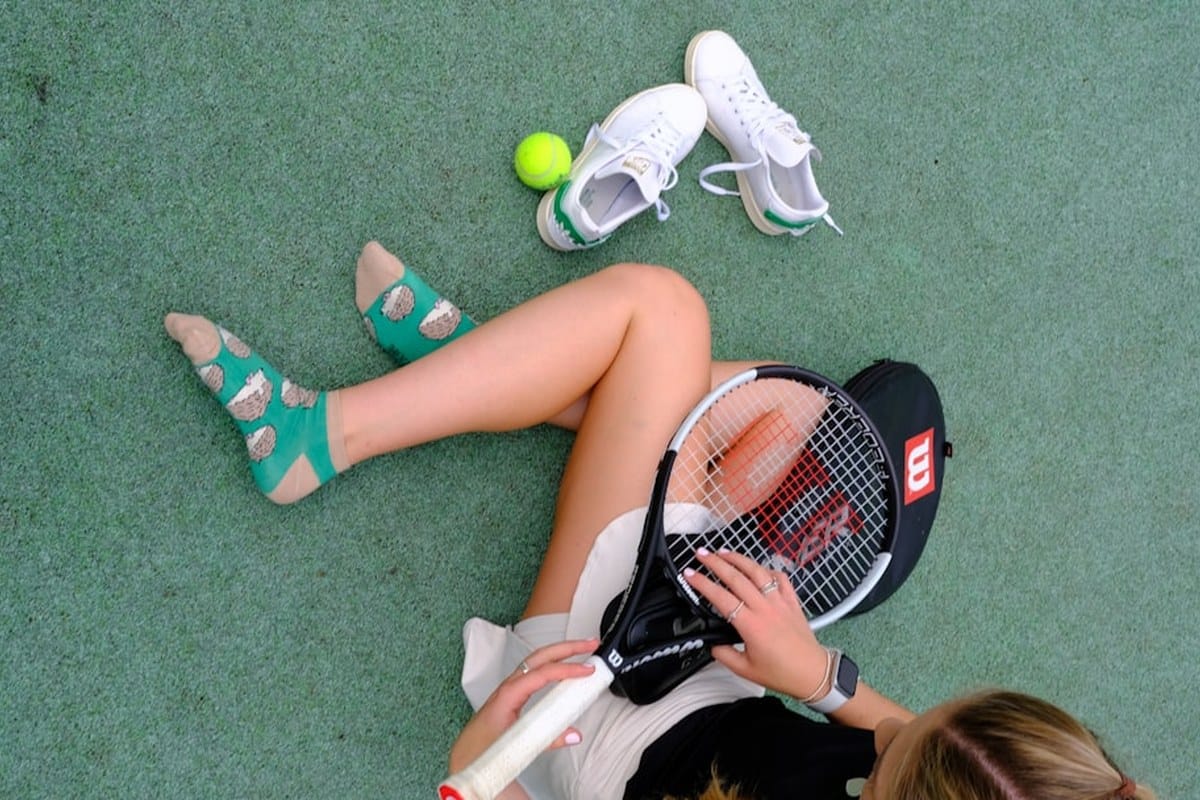
They let the coaches talk to the players during matches now. Did you know this? They changed the rule. The whole point of tennis was that you were alone out there with your demons and a Wilson. That was the sport. One guy, one racket, slowly going insane in front of a quiet crowd in white. Now there’s a guy in a sun visor in the player’s box yelling ‘commit to the slice’ and somebody in the back row taking notes on an app. It’s group therapy with a net.
I will say this for the kid who lost: he stayed. The next match I flipped to, a top-20 seed retired in the third set citing ‘general fatigue,’ which is what Coach DiMaggio used to call ‘being a person.’ Ray called me at 5:40. ‘General fatigue,’ he said. ‘That’s just Tuesday.’ Ray is 71 and still pours concrete two days a week.
There was one match worth the coffee. A qualifier from Argentina, ranked somewhere around 180, played a guy ranked 14 to five sets in 94-degree heat and lost the last one 7-5. No timeouts. No tablet. He cramped so bad in the fourth that he served underhand twice and one of them was an ace because the other guy was so confused. After the match he shook hands, walked to his bag, sat down, and cried for about eight seconds with a towel over his head. Then he got up. That’s the sport. That’s the whole sport.
My nephew Petey Corrigan — you’ve heard me talk about Petey — Petey played one year of D-III tennis at a school that no longer has a tennis program. Petey told me last Christmas that the kids on his team had a ‘mental performance coach’ who charged $180 an hour and made them do something called ‘breathwork journaling.’ Petey, who once threw up during a match in Binghamton and finished the set anyway, said it ‘really helped.’ Petey is lying to be polite. Petey knows.
I’ll watch the rest of the tournament. I always do. I’ll grumble about the grunting and the on-court coaching and the kid who’ll inevitably win a five-setter and thank his sleep consultant in the trophy speech. Somewhere in there a 19-year-old will play out of her mind and remind me why I get up at 4 a.m. for a sport I claim to be done with.
Denise is bringing chili over for the night session. She says it’s a new recipe from a podcast. I am, as a matter of policy, recalibrating.