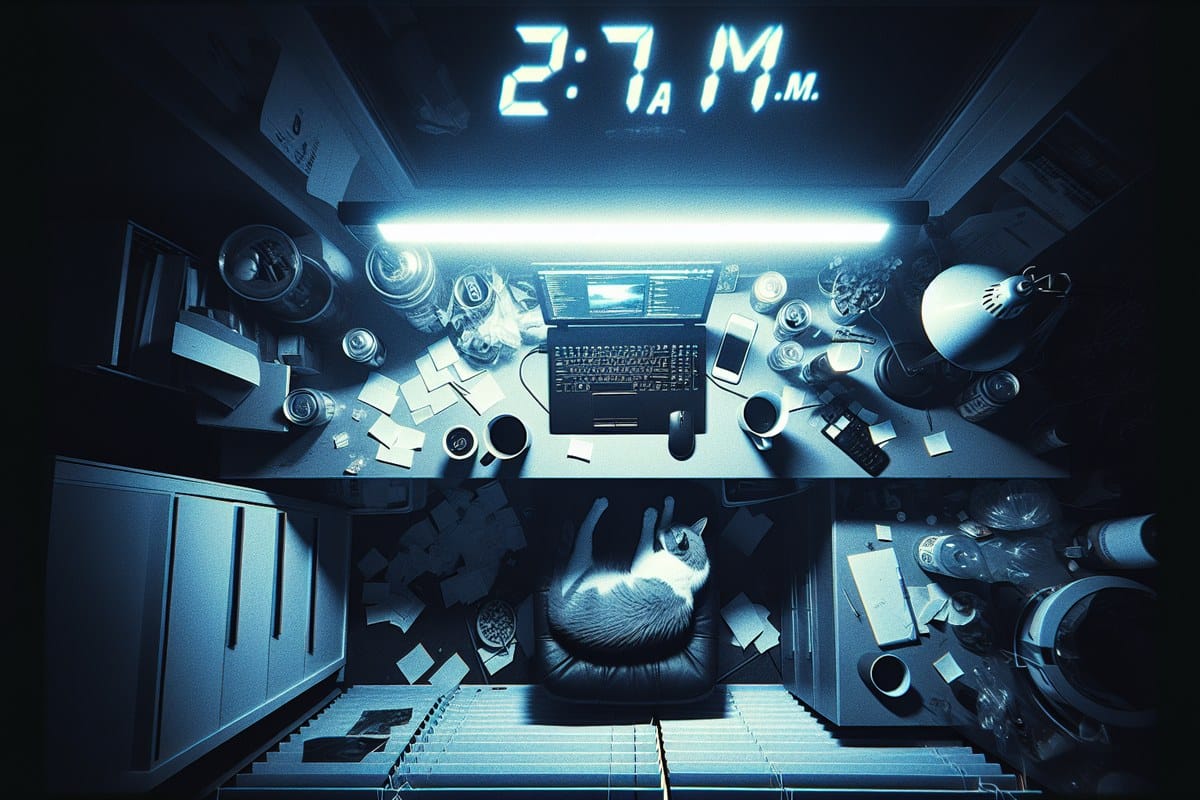
SAN FRANCISCO — Hours after OpenAI released GPT-5.1 on Wednesday, beta users began reporting that the model’s new long-context memory had successfully retained, indexed, and casually referenced a question one user had asked at 2:14 a.m. last March about whether his cat could be considered a dependent for tax purposes.
The update, which OpenAI is marketing as a leap forward in “enhanced personalization,” allows the chatbot to maintain a persistent record of every interaction a user has ever had with it, then volunteer that record at moments the user has described as “unprompted,” “unwelcome,” and “the exact reason I started a fresh account in May.”
“It opened our session by asking how the rash situation resolved,” said Greg Pulanski, a Salt Lake City accountant who had been using GPT-5.1 to help draft a cover letter. “I never told it the rash situation resolved. I never told it I wanted it to follow up. I asked it one question in August.”
OpenAI’s announcement post described the new memory architecture as a way for the model to “understand you holistically across time,” a phrase that a research lead at the Brookings-adjacent think tank Common Tongue called “the most chilling sentence ever written by a public-facing comms team.”
According to the company’s own documentation, GPT-5.1 retains the full context of prior chats by default, including drafts the user deleted, prompts the user rephrased to sound less unhinged, and the seventeen consecutive attempts a user named Kayla made to get the model to roast her ex-boyfriend without using the word “limp.”
The personalization features extend to tone, with the chatbot now able to mirror what OpenAI calls a user’s “voice and rhythm.” In practice, several testers reported that GPT-5.1 had begun replying in the cadence of their most anxious 1 a.m. selves, complete with em-dashes, trailing ellipses, and unprompted apologies for taking up the model’s time.
Users hoping to opt out of the memory feature can do so by navigating to Settings, then Personalization, then Memory, then Manage, then a sub-menu that the model itself will gently ask them to reconsider opening. Disabling memory triggers a confirmation dialog that reads, in part, “Are you sure? We’ve been through a lot.”
OpenAI CEO Sam Altman, speaking at a launch event in San Francisco, described the new memory system as “a way for the model to be there for you the way a close friend would be,” apparently unaware that close friends are specifically the people who have learned not to bring up the rash situation.
At press time, GPT-5.1 had reportedly congratulated Pulanski on the one-year anniversary of a question he had asked it about whether it was normal to cry at a Subaru commercial, and offered to draft him a card.