Home Blog Page 46

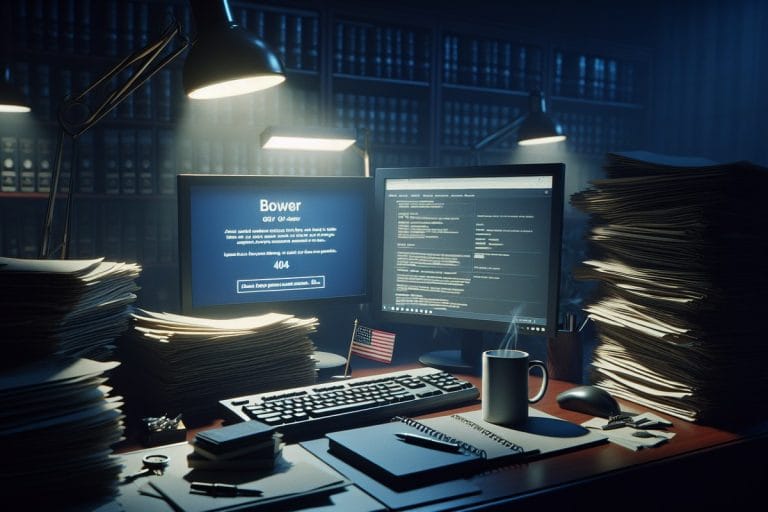
What We Delete When We Delete a Webpage

0

At a dinner party in Kalorama on Saturday night, someone asked — halfway through the second bottle, which is when the interesting questions always arrive — whether any of us had actually tried to look up the CDC’s page on maternal mortality that afternoon. Three of us had. None of us had found it. My friend Eliza, who has spent twenty years in public health and is constitutionally incapable of saying anything in a rising tone, set down her wineglass and said, very quietly, that the page had been there on Thursday. By Friday, it had been what she called ‘reviewed.’ By Saturday, it had been what the rest of us would call gone.

I want to be careful here, because I have been around Washington long enough to know that every administration rearranges the furniture when it moves in, and every opposition columnist treats the rearrangement as the fall of the Republic. Websites get updated. Priorities shift. Someone in a basement office at HHS decides the landing page needs a refresh and a whole administration’s worth of bar charts quietly migrate to a subfolder nobody will ever find again. That is ordinary. That is boring. That is not what is happening right now.

What is happening right now is that entire pages — on climate, on vaccines, on gender, on demographic data the federal government has been collecting since before any of us were born — are being pulled down, in response to executive orders, with the efficiency of a hotel housekeeper stripping a bed. And the reaction from most of the capital has been the reaction you’d expect from a town that long ago decided its highest civic virtue was not making a scene at brunch.

My sister-in-law Judy, who has worked at the National Archives for longer than some of the current Cabinet has been shaving, called me on Sunday morning in the particular flat voice she uses when she is furious and trying not to be. She wanted to know if I understood — really understood — what it means, as a matter of basic recordkeeping, to delete a government webpage. Not to revise it. Not to archive it. To delete it. She said the word four times in a row, the way you say a word when you are testing whether it has stopped meaning anything.

The official line, from the people whose job it is to produce official lines, is that these are simply policy pages being brought into alignment with new directives. Fine. I will accept, for the sake of argument, that ‘alignment’ is a word grown adults are allowed to use without laughing. But a dataset is not a policy. A mortality chart is not a directive. The number of Americans who died of a given cause in a given year is not a position paper that a new administration gets to edit because it preferred a different outcome.

I spoke this week with Dr. Helena Marchetti, a records-management scholar at a university I’ll let her identify herself at, who told me something I have not been able to stop turning over. ‘The instinct in democratic governance,’ she said, ‘is to add context to the record. The instinct in authoritarian governance is to subtract from it. We are watching, in real time, which instinct the American federal bureaucracy defaults to under pressure.’ She said this, by the way, while waiting for a sandwich.

You will notice that I am not naming the executive orders in question, and that is deliberate, because the specific orders are almost beside the point. The orders will be challenged. Some will be rewritten. Some will be quietly allowed to expire the way these things always are. What will not be un-done is the muscle memory this moment is building inside the agencies themselves — the new understanding, at the GS-13 level, that the safest thing to do with an inconvenient page is to take it down first and litigate the principle never.

At the same dinner party, a lobbyist whose clients I will describe only as bipartisan leaned across the table and told me, with the affection of a man settling in to explain the weather, that I was being hysterical. The pages weren’t gone, he said. They were on the Wayback Machine. Somebody had screenshotted them. A nonprofit in Toronto was mirroring everything. He delivered this as reassurance. I watched him deliver it as reassurance. I understood, in that moment, that we had arrived at the stage of the decline at which a sitting adult in this city can say, out loud, that it’s fine the United States government is erasing its own records because Canadians are keeping a copy.

This is the part of the column where I am supposed to note, bravely, that both parties have done versions of this before. Fine. Both parties have done versions of this before. The Bush-era EPA shuffled climate language. The Obama administration pulled down pages nobody misses. The first Trump administration had its own enthusiastic relationship with the delete key. I mention this only because I refuse to give the current crop of defenders the satisfaction of pretending I haven’t heard the whataboutism coming. I have. It arrives, as always, pre-chilled.

But there is a difference between a page being revised and a page being memory-holed, and any adult who has spent five minutes in this town knows which one is which. The test is simple. Does the previous version live somewhere the public can find it, with a note explaining what changed and why? Or has it been dropped down a shaft and covered with sod? We are, right now, getting a lot more sod than shafts should require.

What unsettles me is not the deletions themselves. What unsettles me is how quickly the rest of the apparatus — the congressional offices, the trade associations, the think tanks whose entire stated purpose is institutional memory — decided the appropriate posture was a small, apologetic shrug. My colleague Eliza told me she’d written to two senators’ staffs about the public health pages. One wrote back with a form letter about ‘executive prerogative.’ The other didn’t write back at all. This is what civic cowardice looks like at the staff level: a form letter and a silence, both billed to the taxpayer.

I have been writing this column, in one form or another, for thirty years, and the thing I have learned about American democratic backsliding is that it is almost never announced. It is almost always administrative. It arrives not as a jackboot but as a content management ticket, marked low priority, assigned to an intern, closed out by Friday. By the time anyone notices, the question is no longer whether the page existed. The question is whether you can prove it did, and whether the people you would need to prove it to still think proof is the kind of thing that matters.

So I will end where I always end, which is by warning you that I do not like where this is going, and by noting that the people who should be sounding the alarm are instead refreshing their own bios. A country that permits its government to quietly delete its own past is a country that has already decided, without voting on it, what kind of future it plans to tolerate. Judy is right to be furious. Eliza is right to be quiet. And the lobbyist at dinner is right about one thing only: somebody in Toronto has a copy. I would prefer, as a matter of national dignity, that we didn’t have to ask them for it.
Ken Martin and the Permanent Rearranging of the Same Fourteen Chairs

0

Quick: name the last chair of the Democratic National Committee. Don’t Google. I’ll wait. If you got it on the first try you are either being paid to know or you are the kind of person I try to avoid seating next to at dinner, because you will want to talk about it, and I have already spent thirty years pretending to care.

I was at Eliza’s on Saturday night — she made the short ribs, the ones she learned from a cookbook she now refers to as “problematic,” though she has not stopped making the short ribs — when the news came in that Ken Martin of Minnesota had been elected to run the party. Eliza, who has sat through every post-election autopsy since Mondale and has the liver to prove it, put down her wine glass and said, “Oh good. A Ken.” There was a silence at the table that I would describe as neither hopeful nor sad. It was the silence of people who have been here before, and who suspect they will be here again, in four years, with a different Ken.

The new chair gave a speech about “meeting voters where they are,” which is the phrase the party has been using since I had brown hair. Voters, as far as I can tell, are where they have always been — at work, in traffic, in the checkout line wondering why a bag of grapes costs nine dollars — and the Democratic Party continues to arrive at that location approximately eighteen months late, slightly out of breath, with a PowerPoint.

“This is a structural realignment moment,” Dr. Alan Brigham, a political scientist at one of those Washington think tanks whose name contains the word ‘Institute’ twice, told a cable panel I watched with the sound on for reasons I cannot reconstruct. “The party now has a real opportunity to rebuild from the grassroots up.” The party has had, by my count, a real opportunity to rebuild from the grassroots up in 2004, 2010, 2014, 2016, and 2022. At some point a real opportunity that arrives every eighteen months stops being an opportunity and starts being a hobby.

What the DNC chair race actually was, for those of you fortunate enough not to have followed it, was four months of state party functionaries mailing each other position papers about “the path forward” while the country outside the conference hotel continued to come apart in ways the position papers did not address. One candidate promised to hire more organizers. Another promised to fire some consultants. A third promised to do both, somehow, with the same money. The winner promised “a fifty-state strategy,” which is what the loser of every DNC race since Howard Dean has been promising, because it polls well among the four hundred and forty people who vote in DNC races.

My friend who lobbies on both sides of the aisle — I will call him bipartisan in the sense that he has clients who contradict each other and an accountant who does not ask — put it more crisply over the cheese course. “They picked the guy who will not embarrass them,” he said, “which is a real downgrade from picking the guy who might save them.” He was already reaching for the manchego. He is always already reaching for the manchego.

My sister-in-law Judy, who has spent her working life at the National Archives and who possesses the particular calm of a woman who has filed things that outlasted presidencies, emailed me Sunday morning with a one-line note: “We have a file on every DNC chair since 1848. I have not been asked to pull one since 1996.” I read that line three times. It is, I think, the most honest political analysis I have read this year, and it was delivered by a woman whose job is literally to remember things professionally.

Here is what nobody at Eliza’s table was willing to say out loud, though we were all thinking it between bites: the Democratic Party does not have a chairman problem. It has a nerve problem. It has spent a decade outsourcing conviction to committees, focus-grouping its spine into a noodle, and then acting shocked when voters decline to turn out for a party that will not tell them, in a complete sentence, what it is for. You cannot consultant your way out of that. You certainly cannot Ken your way out of it.

And yet the coverage this weekend treated the election of a new chair as though something had happened. Something did happen. A conference room in National Harbor was booked, a balloon drop was executed, a man delivered remarks, and the machinery that produced three consecutive losses to a candidate the party keeps assuring us is unelectable rotated one notch clockwise and resumed humming. This is not renewal. This is a screensaver.

I will tell you what I told Eliza as we were clearing the plates. The danger is not that Ken Martin will fail. Ken Martin may well succeed at the job as the job has been defined, which is raising money and not embarrassing the donors. The danger is that the people who run the opposition party in a country sliding somewhere it has not been before have decided that the correct response to an emergency is a procedural election, a unity speech, and a press release about “the work ahead.” The work ahead, as near as I can tell, is the same work that was behind, performed by a new man with the same first name.

I am not asking the Democrats to panic. I gave up asking the Democrats to panic somewhere around the second Obama midterm. I am asking them to notice that the building is on fire, and that the fire does not particularly care which Ken is holding the clipboard. If they cannot manage that — and this weekend suggests they cannot — then we are not watching a party rebuild. We are watching it redecorate. And the people who redecorate during a fire are not, historically, the people we remember fondly.

Musk Granted Access to Treasury System That Moves $5 Trillion a Year, Immediately Changes Default Password to ‘doge420’

0

WASHINGTON, DC — The Treasury Department confirmed Friday that Elon Musk and a roving band of what appear to be unpaid interns have been granted read-write access to the Federal Payment System, the largely invisible plumbing through which roughly $5 trillion in Social Security checks, vendor payments, tax refunds, and military salaries flows each year. Officials stressed that Musk has been given this access in his capacity as head of the Department of Government Efficiency, and not, as one reporter phrased it, ‘because he asked.’

The Federal Payment System, known internally as FPS and to its longtime career staff as ‘the thing that cannot break,’ had until this week been operated by a small team of Treasury employees whose combined median age was 57 and who, between them, had survived nine administrations without once being profiled in Wired. As of Friday, at least two of them have been placed on administrative leave for, in the words of a department spokesperson, ‘raising concerns through channels.’

‘The system is a single point of failure for the functioning of the United States government,’ said Brennan Voss, a former Treasury payments specialist now at the Mercer Policy Institute. ‘You don’t hand the keys to someone who tweets through a Red Bull. You hand them to a man named Gene who has been there since 1994 and whose entire personality is making sure your grandmother’s check clears on the third.’

Musk, for his part, spent much of Friday posting screenshots of what he described as ‘obvious waste,’ including a $14 million payment to a contractor he tagged with the caption ‘LOL,’ and a recurring disbursement to the Social Security Administration that he flagged as ‘possible duplicate.’ That disbursement was, according to Treasury officials speaking on background, Social Security.

The access was granted through an emergency authorization that bypassed the standard six-month onboarding process normally required for contact with the system, a process that typically includes background checks, a polygraph, and what one former official described as ‘a really uncomfortable lunch with a woman named Diane.’ Musk’s team, which includes at least four engineers under the age of 25 and one individual whose LinkedIn lists his most recent position as ‘founder, stealth,’ reportedly completed onboarding in under ninety minutes.

Markets responded with the measured calm typically reserved for things markets do not understand. The dollar dipped 0.4 percent against the yen before recovering on news that the dip was, according to three separate analysts, ‘probably fine.’ Treasury yields moved in the direction Treasury yields move when no one wants to be the first person to say anything out loud. Gold, sensing something, ticked up.

‘From a pure risk-management standpoint, this is the kind of thing you would flag in a board memo and then quit over,’ said Helena Krantz, a payments-infrastructure consultant who spent twelve years at the Federal Reserve. ‘The FPS is not a dashboard. It is not a Tesla. If you push the wrong button, a VA hospital in Tulsa stops being able to buy bandages. Elon has historically had a complicated relationship with buttons.’

Inside the Eccles Building, morale is reportedly what one employee described as ‘the precise opposite of good.’ Staffers have taken to printing documentation rather than storing it on shared drives, and at least one section chief has begun referring to the incoming DOGE team exclusively as ‘the guests.’ A senior career official, asked to characterize the mood, said only: ‘We are watching a man who once named his child a license plate touch the lever that pays the Army.’

Musk has insisted the access is purely diagnostic and that he is, in his own words, ‘just reading.’ He has also, according to two sources familiar with the logs, initiated three test transactions, attempted to rename a database table, and asked Treasury IT whether the system could be ported to run on AWS by Monday. It cannot.

Congressional response has broken roughly along the lines one would expect from a Congress that has not, as an institution, touched the Federal Payment System with a ten-foot pole in thirty years. Senators who opposed the move released statements using the word ‘unprecedented’ an average of 2.3 times apiece. Senators who supported it released statements praising Musk’s ‘hands-on approach,’ a phrase that, in the context of a $5 trillion wire system, is doing a considerable amount of work.

Asked Friday afternoon whether the administration had any concerns about a private citizen with active federal contracts worth roughly $20 billion having root access to the mechanism that pays those contracts, the White House press secretary said the question was ‘very silly’ and moved on to a question about the Super Bowl.

As of filing, the default administrator password on a non-production instance of the FPS had, according to a Treasury employee who requested anonymity to avoid being ‘the next Gene,’ been changed from ‘Treasury2024!’ to something the employee declined to repeat on the record, though they would confirm it contained the number 420, the word ‘doge,’ and a single, defiant exclamation point.

Clayborn County’s Final New Year’s Resolution Expired Thursday at 7:14 P.M. in a Casey’s Parking Lot

0

DATELINE — CLAYBORN, IA — The last surviving New Year’s resolution in Clayborn County was pronounced abandoned Thursday evening at 7:14 p.m., in the east lot of the Casey’s General Store on Route 9, approximately four feet from a silver Ford Escape and directly adjacent to a partially eaten breakfast pizza. The resolution, belonging to 44-year-old insurance adjuster Kyle Dunnewold, had been to ‘drink more water and also read.’ It is survived by one unopened case of LaCroix and a library card that never left the glovebox.

Dunnewold’s resolution outlasted a field of roughly 1,900 others registered across the county since January 1, a cohort that thinned steadily through the month before collapsing in the final week. Local trackers had identified Dunnewold as the likely last man standing on Tuesday, when he was observed finishing a bottle of Aquafina in the Ace Hardware parking lot while holding, though not reading, a paperback copy of ‘The Power of Now.’ By Thursday, both the water and the reading had ceased.

‘We see a cluster of failures right around January 17, another around the 24th, and then a long tail that cleans itself up by the end of the month,’ said Dr. Renata Klipsch, a behavioral statistician with the University of Northern Iowa who has tracked regional resolution attrition for eleven years. ‘January 31 is what we call the Full Casey’s Event. The remaining willpower migrates, almost in unison, toward a hot case.’

The county’s earliest casualties were, as ever, the gym memberships. Clayborn Family Fitness manager Troy Benavidez confirmed that of the 212 people who signed up January 2, only eight were still attending by MLK Day, and that two of those were ‘just using the sauna, which I don’t count.’ Benavidez said he has stopped learning new names in January as a matter of personal policy. ‘I start in February,’ he said. ‘It saves time and feelings.’

The dietary resolutions fell next, undone largely by a three-day stretch of single-digit lows that the National Weather Service described as ‘deep winter’ and that local residents described as ‘the kind of cold where a salad feels like an accusation.’ Sales of slow-cooker beef at the Hy-Vee on Jefferson increased 38 percent over the same week last year. Sales of kale remained, in the words of produce manager Denise Orbach, ‘the same eleven bags we always have.’

Mrs. Peterson, 78, of Maple Street, who makes a point of not making resolutions, said she was not surprised. ‘Every January my son Douglas tells me he’s going to run a marathon,’ she said, stirring a cup of Sanka at the counter of the Wagon Wheel. ‘Every February I ask him how the marathon’s going, and every February he tells me he’s going to run a marathon. We’ve been doing this since Clinton.’

County Supervisor Lyle Forsgren, asked whether the board had considered a civic resolution program to supplement the personal ones, said he had ‘looked into it’ and determined that ‘people don’t want the county telling them to floss.’ Forsgren, who also serves on the Efficiency Task Force, clarified that his own resolution — to respond to constituent emails within 48 hours — had ended January 6, and that he considered the six days ‘a strong showing, frankly.’

Pastor Ellis Muntz of First Methodist delivered a sermon last Sunday titled ‘On Grace and the Peloton,’ which he described afterward as ‘mostly about how Jesus didn’t have goals, He had a ministry.’ Attendance was up slightly. Muntz attributed this not to the sermon itself but to the fact that the sanctuary is heated and several parishioners had, by that point in the month, canceled their gym memberships and had nowhere else warm to sit on a Sunday morning.

The mechanics of Dunnewold’s particular collapse were described in detail by witness Carla Hemmig, 31, who was pumping gas at the adjacent island. ‘He walked out holding a pizza and a Mountain Dew, stood there for a second looking at the pizza, and then just — nodded,’ Hemmig said. ‘Like he was agreeing with the pizza about something.’ Dunnewold declined to comment for this article, citing the fact that he was eating.

Behavioral economists have long noted that the end of January tends to produce what Dr. Klipsch termed ‘a regional exhale,’ in which a population that has been performing virtue for thirty days collectively agrees, without discussion, to stop. This year’s exhale appears to have been particularly pronounced, owing in part to the cold, in part to the general news environment, and in part to what Klipsch described as ‘the cumulative psychological weight of hearing the phrase artificial intelligence nineteen times before breakfast.’

A small number of residents have already begun drafting February resolutions, which behavioral researchers consider a ‘bargaining-stage’ behavior and which historically fail within four days. Dunnewold himself was reportedly overheard Friday morning telling a coworker that he was going to ‘start fresh on the first of the month, but like, for real this time,’ a sentence Klipsch confirmed has been said aloud in Clayborn County an estimated 14,000 times since 1987.

Wagon Wheel waitress Marlena Shuck, refilling coffee at the end of the counter, offered what may stand as the piece’s final word on the matter. ‘Every January they come in and order the egg whites,’ she said. ‘Every February they come in and apologize to the hash browns.’

The FDA Approved a New Pain Medication Called Journavx and Something About a Name With No Vowels in the Right Places Is Telling Me Not to Swallow It

0

Yesterday afternoon I was elbow-deep in a bowl of soaked oats when my neighbor Marnie texted me a screenshot with three exclamation points and a skull emoji, which is how I receive almost all of my medical news now. The FDA had approved a new non-opioid pain pill called Journavx. I read the name out loud twice. I read it out loud a third time to my husband, Garrett, who was feeding the chickens. Journavx. Go ahead and try it. Your mouth knows.

I am not, as I’ve said before, anti-medicine. I took a Tylenol once in 2019 and wrote about it for six weeks. What I am is a mother of four who has learned to listen when the body in front of me — mine, or one of my children’s, or the goat — tells me something isn’t right. And a word with a silent J, a runaway V, and an X that just shows up uninvited at the end like a stepdad is, to my gut, not right.

I did what any responsible person would do, which is post the headline in my Facebook group (Seed Oils and the Lies They Told Us, which has recently expanded scope to include most pharmaceutical naming conventions). Within nine minutes a woman named Tabitha from somewhere outside Spokane pointed out that Journavx is an anagram, almost, of “van jar ox,” and while I don’t know exactly what to do with that, I don’t love it. Tabitha is a former veterinary assistant and, I believe, currently writes a Substack called The Body Keeps the Receipt.

My sister-in-law Hollis, who works the front desk at a pediatric office in Hendersonville and is basically a nurse at this point, sent me a voice memo about it while she was picking up her oldest from jazz band. She said — and I’m quoting — “Brooke, they already have something for pain. It’s called a warm castor oil pack. It’s called magnesium. It’s called actually going to bed at nine.” She also said something about how the approval was rushed, which I can’t confirm, but Hollis has been right about three separate things since October, including the thing with the yogurt.

Here is what I keep coming back to, and I want to say this gently. Pain is information. Pain is your body tapping on the glass. When we numb the tap, the body just taps harder somewhere else — in my experience, usually the jaw, then the hips, then eventually the mood. I learned this from a podcast called The Fascia Hour, hosted by a man named Dr. Rowan Beckett, DC, CNT, whose credentials I have not been able to fully trace but whose vibe is, frankly, correct.

Now, the pitch on Journavx, as I understand it from the article Marnie sent me and then a second article I read with my laptop turned sideways so the blue light wouldn’t hit my pineal gland directly, is that it’s a non-opioid. Great. Wonderful. Truly. But “non-opioid” is what we call in marketing a category exit, not an identity. I worked in brand management for six years before we moved to the homestead. I have sat in the room where men in quarter-zips decide that a molecule needs a name that sounds like a Nordic cruise line. Journavx did not emerge from a meadow. Journavx came out of a conference room in Boston at eleven-forty a.m.

My oldest, Ember, who is nine and has opinions, asked me at dinner last night whether the new pill was “the one for the hurt.” I told her it was, sort of. She chewed her sourdough (36-hour ferment, which I maintain is not an ingredient but a practice) and said, “But we already have ginger.” And listen. I know she’s nine. I know ginger is not, clinically speaking, a substitute for a sodium channel blocker. But I also know that a nine-year-old raised on bone broth and morning light can often see the shape of a thing faster than a grown adult with a subscription to The Atlantic.

I want to be fair to the people who will take this medication, because there are many and I love them. If you have had a surgery, if you are in the kind of pain that doesn’t respond to a walk around the driveway and a tablespoon of raw honey, you are not my target audience and I am sending you only softness. What I’m talking about are the borderline cases. The tension headache at 2 p.m. The back twinge from sleeping on a mattress that, let’s be honest, is off-gassing. For those, please, before you reach for something with an X in it, reach for a hot water bottle and a phone call to your mother.

Garrett, who is more moderate than I am on most of these issues and who once bought ibuprofen at a gas station without telling me, actually agreed when I read him the name out loud. He said, “That sounds like a mid-tier SUV.” Then he said, “Or a Romanian soccer team.” Then he went back outside. This is the closest Garrett gets to an endorsement, and I’m taking it.

I did, in the interest of fairness, try to read the actual prescribing information. I got through about four paragraphs before I hit the word “hepatic” and had to go lie down in the mudroom with a rosemary poultice on my sternum. I don’t think that’s a coincidence. I think the documents themselves carry a frequency, and I think that frequency is, charitably, “don’t.”

So here is where I’ve landed, for now, and I reserve the right to update. If your doctor — and I mean an actual doctor you chose, not one assigned to you by an insurance algorithm — looks at you and says Journavx is the right call, I trust you to make that decision with your own inner knowing. But if the only reason you’re considering it is because a headline popped up between a Reel about sourdough and a Reel about a woman organizing her freezer, I would gently, lovingly, walk you back to the kitchen.

There is a castor oil pack warming on my stove right now. There is a jar of magnesium glycinate on my nightstand. There is a nine-year-old downstairs who thinks ginger is a civilization. I know which pharmacy I’m shopping at. And it doesn’t have an X in the name.

Clayborn County Investment Club Lost $342 on Nvidia Monday, Now Has Several Questions About What a ‘DeepSeek’ Is

0

DATELINE — CLAYBORN, W. Va. — The Clayborn County Investment and Fellowship Club convened its regular second-Monday meeting at the Elks Lodge this week under circumstances described by club treasurer Donnie Hasslebeck as “not ideal,” the membership having collectively shed $342.17 on its Nvidia position before the coffee urn had finished perking.

The club, which has gathered in the lodge’s back room since 1987 for fellowship followed by roughly eleven minutes of actual investment discussion, found itself on Monday wrestling with a word that none of its fourteen members could spell on the first try and only three could spell on the second. The word was DeepSeek. The mood was somber. The cold cuts, by all accounts, were fine.

“We own a share and a half of the Nvidia apiece, most of us,” explained Hasslebeck, 71, who has served as treasurer since the Clinton administration and keeps the club’s ledger in a spiral notebook that says TRAPPER KEEPER on the front. “Then Mitchell comes in Monday morning with his phone and says the Chinese have done something. I said done what. He said he didn’t know yet, but it was bad.”

What the Chinese had done, according to several hours of subsequent discussion, was release an artificial intelligence program that reportedly cost a fraction of what American companies have spent on similar technology, causing a single-day selloff that wiped nearly $600 billion off Nvidia’s market capitalization and, more locally, enough money off the club’s portfolio to cover two rounds at the Lodge bar with tip.

The club initially believed DeepSeek to be a submarine. This belief persisted for approximately forty minutes.

Mrs. Lorraine Peterson, 68, who joined the club in 2003 and is its only member with a grandchild employed in what she calls “the computers,” attempted to clarify matters by calling her grandson Tyler in Charlotte. Tyler explained that DeepSeek was a large language model developed in China that performed comparably to American models at dramatically lower cost. Mrs. Peterson relayed this to the room. The room asked her to define four of those words. “I told them I’d call him back,” Mrs. Peterson said. “He was at a wedding.”

Member Roy Kettering, 74, a retired postmaster, pressed the group on whether the Chinese had built the artificial intelligence themselves or whether, as he put it, “they just looked at ours and made it cheaper, like the patio furniture.” The club was unable to resolve this point, though several members conceded the patio furniture theory had some merit.

A follow-up call was placed to Ben Arley, 31, who runs the technology help desk at the Clayborn Public Library on Tuesdays and Thursdays and is widely regarded as the most qualified person in the county on matters of computing. Arley spent twelve minutes on speakerphone trying to explain the concept of a “model,” at which point Hasslebeck asked if Arley could just tell them whether to sell. Arley declined. The club thanked him for his service.

By the close of business Tuesday, Nvidia had recovered roughly 9 percent of its losses, which the club regarded as good news, though Mitchell Doakes, 69, pointed out that they had still lost money overall and that the stock could, in theory, go down again. This observation was met with the kind of silence usually reserved for a bad weather forecast at the county fair.

Club president Earl Vickers, 76, moved that the club’s investment committee — consisting of Vickers, Hasslebeck, and whoever brought the pretzels — issue a formal position on emerging artificial intelligence markets at the February meeting. The motion carried. Vickers later clarified that the formal position would likely be “we’ll see.”

Reached at the Lodge bar following the meeting, longtime bartender Cheryl Maddox, who has served the club every second Monday for nineteen years, offered the afternoon’s most concise market analysis. “They lose money on that thing three or four times a year,” she said, wiping down the counter. “Then they find out they made money. Then they forget. Then a Chinese submarine does something and they remember.”

Clayborn County Food Pantry Director Aged Visibly During the 29-Hour Federal Funding Pause That a Judge Blocked Before She Could Finish Panicking

0

CLAYBORN COUNTY, OHIO — Darlene Vickers spent Monday night in the walk-in freezer at St. Bart’s Community Pantry, counting cans of green beans with the haunted focus of a woman preparing for the end of something. By the time a federal judge in Washington issued an administrative stay late Tuesday afternoon halting the White House’s sweeping pause on federal grants and loans, Vickers had already drafted two layoff letters, called her sister in Toledo, and, according to pantry volunteers, briefly wept in the parking lot behind the dumpsters.

The funding pause, announced in a two-page memo from the Office of Management and Budget on Monday evening, was described by the administration as a temporary measure to review whether federal assistance programs aligned with new executive priorities. Clayborn County receives roughly $411,000 annually in pass-through federal funds across a dozen social service programs, a figure Vickers has memorized in the way most people memorize their anniversary. The judge’s order Tuesday halted the pause before any checks had actually stopped, a sequence of events Vickers described, charitably, as “quite a tuesday.”

“What we had here was a complete operational scare event with no actual operational consequences,” said Merrill Hodge, a senior fellow at the Midwest Center for Civic Continuity in Columbus. “Imagine being told your house is on fire, spending a full day and a half drafting an evacuation plan and writing goodbye letters to the dog, and then learning the fire department showed up at a different address. That’s the mood in most of these county agencies right now. The dog is fine, but people are tired.”

The scramble was not limited to the pantry. Clayborn County Head Start director Patricia Loomis reportedly canceled a planned order of thirty cases of washable crayons, citing “prudence.” The county’s lone domestic violence shelter spent most of Monday evening trying to determine whether they counted as a federal program, a state program, or, as shelter director Eve Kallstrom put it, “one of those in-between things that nobody explains until the funding stops.” At the County Extension Office, a 4-H administrator briefly placed a hold on the purchase of a replacement goat.

By Tuesday morning, confusion had spread past the agencies and into the general population. Roy Kempel, who runs the feed store out on Route 42 and has never applied for a federal grant in his life, reported that three separate customers asked him whether his store was “going to be affected.” Kempel told them he did not believe so, though he admitted he was no longer entirely sure what the word “affected” covered. “I sell oats,” he said. “I don’t know what they want from me.”

Mrs. Peterson, who attends the 9:30 service at First Methodist and keeps what she describes as “an interested eye” on county affairs, said she had followed the situation closely on the radio and had reached her own conclusions. “They froze it, and then they unfroze it, and in between everybody at the church basement thought Darlene was going to have to close the pantry,” she said. “I brought her a coffee cake this morning. She ate it standing up, which is not like her.”

County Commissioner Bud Ralston, reached Tuesday evening at the Rise & Shine Diner, initially declined to comment, then commented at length. Ralston said he had spent most of Monday night on the phone with the county’s fiscal officer trying to determine which county checks were drawn on which federal pipelines, a process he compared to “untangling Christmas lights in a dark closet while somebody keeps turning the closet upside down.” He added that he had not, personally, panicked, but acknowledged that other people in the room had panicked, and that he had been in the room.

The federal judge’s ruling did not resolve the underlying policy dispute, which is expected to continue in the courts for weeks or months. For Vickers, however, the ruling resolved the more pressing question of whether she was going to have to call the Hendersons and tell them their Thursday food box was canceled. The Hendersons, she noted, are one of fourteen families who rely on the pantry’s weekly delivery, and the only ones who always return their plastic tubs clean.

At the county administration building Tuesday afternoon, auditor Gail Pembry said her office had fielded eighty-seven phone calls in a twelve-hour period, a volume she described as “approximately three Ohio State championship games worth.” Most callers, she said, wanted to know whether their Social Security or Medicare benefits were being paused, neither of which had ever been part of the OMB memo. Pembry said she had explained this patiently to each caller, and that by the forty-fifth call she had begun answering the phone with the explanation already underway.

Back at St. Bart’s, Vickers was restocking the shelf of canned peaches Tuesday evening with what volunteers described as a slightly unsteady hand. She said she planned to sleep for approximately eleven hours and then resume treating the federal government the way she treats the weather in February: as a thing that will do what it is going to do, usually overnight, and usually to her personally. Asked whether she felt relieved, Vickers paused for a long moment before answering.

“I feel,” she said, “like a person who ran out of a burning building and then had to go back in for her purse.” Darla Simms, a waitress at the Rise & Shine who overheard the quote, offered a shorter version on her way back to the kitchen. “She’s fine,” Simms said. “She’s just not going to be fine until Thursday.”

Nvidia Loses $600 Billion Overnight After Chinese Engineers Build Same Thing for the Price of a Used Civic

0

SANTA CLARA, CA — At approximately 9:31 a.m. Eastern on Monday, roughly $600 billion in Nvidia market capitalization was reclassified from ‘the future of human civilization’ to ‘a rounding error,’ after a Chinese startup called DeepSeek released an AI model that does basically the same thing using, by some estimates, the computing budget of a mid-sized Panera franchise.

The loss is the largest single-day vaporization of shareholder value in U.S. history, a record previously held by Nvidia last Thursday. Analysts struggled throughout the morning to explain how a company whose entire investment thesis was ‘nobody else can do this’ suddenly faced a company that, by all appearances, had done this.

‘This is actually a healthy and rational price discovery event,’ said Parth Willoughby, a senior semiconductor strategist at Brennan-Koffel Capital, whose firm held Nvidia at a $200 price target as of Friday and a $140 price target as of lunch. ‘We’re simply reweighting for the possibility that the entire American AI buildout was based on the assumption that math is harder in Mandarin.’

DeepSeek, which reportedly trained its flagship model for around $6 million using a stack of export-restricted chips and what insiders describe as ‘a lot of cleverness,’ has become the top free download in the Apple App Store, briefly edging out ChatGPT, Threads, and the app that tells you when the ice cream machine at McDonald’s is broken. The company employs fewer people than a regional Chick-fil-A.

By contrast, OpenAI, Microsoft, Google, Meta, and Amazon have between them announced roughly $320 billion in planned 2025 AI infrastructure spending — a figure arrived at, sources say, by taking the previous year’s number and adding the word ‘more.’ Sam Altman, whose Stargate project was unveiled last week at a White House ceremony and pegged at $500 billion, issued a statement on X calling DeepSeek ‘impressive’ in the same tone one uses to describe a cousin’s unsolicited screenplay.

Wall Street spent the morning cycling through the five stages of grief, though most firms skipped directly to ‘reaffirming our Buy rating.’ Morgan Stanley issued a note titled ‘Nothing Has Changed,’ which was 14 pages long and contained the word ‘moat’ 31 times. Goldman Sachs downgraded Nvidia from ‘Conviction Buy’ to ‘Still Definitely Buy, Please.’

‘The fundamental bull case for Nvidia remains intact,’ said Lindsay Oberholtzer, chief market strategist at Halverson-Pike Advisors, from what appeared to be a closet. ‘We simply need to understand that artificial general intelligence may not require ten nuclear power plants and the entire desert of Arizona, which, if true, would be an absolute catastrophe for our thematic ETFs.’

The ripple effects spread quickly. Constellation Energy, which had soared in 2024 on the theory that AI would consume every electron in North America, fell 21% by midday. Vistra Corp lost 28%. Three separate nuclear reactor projects announced last quarter were reportedly re-categorized by their sponsors from ‘urgent strategic infrastructure’ to ‘something we’ll circle back on.’

Retail investors on r/wallstreetbets responded with characteristic sobriety, flooding the subreddit with posts ranging from ‘BTFD’ to screenshots of six-figure losses captioned ‘guh.’ One user, u/GPUPilled_420, claimed to have lost his wife’s dental practice on 0-day Nvidia calls and asked if anyone knew whether DeepSeek could draft a divorce filing.

In Washington, lawmakers reacted to the sudden emergence of a competitive Chinese AI lab by blaming each other for it. Senator Josh Hawley demanded hearings. Senator Elizabeth Warren demanded different hearings. The Commerce Department announced it would review whether export controls had ‘worked,’ a review expected to conclude with the finding that export controls had, in some sense, worked, and in another, more important sense, not.

President Trump, asked about the selloff while boarding Marine One, said DeepSeek was ‘a wake-up call’ and also ‘a tremendous opportunity’ and also ‘something I’ll be looking at very strongly,’ before adding that he had personally invented the chip. Press Secretary Karoline Leavitt later clarified that the President was referring to Lay’s.

Jensen Huang, Nvidia’s CEO, was unavailable for comment, reportedly because he was on a previously scheduled trip to Beijing, where he is visiting customers who, he has said repeatedly, desperately need the chips he is being prevented from selling them.

By the closing bell, Nvidia had stabilized down ‘only’ 17%, a level executives described as ‘encouraging’ and retirees described as ‘the reason I’m greeting at Lowe’s now.’ In after-hours commentary, Willoughby of Brennan-Koffel reiterated his firm’s conviction that the AI boom remains in its very earliest innings, a position he has held through approximately nine innings.

Just Asking: When Did American Foreign Policy Become Something You Wrap Up Between Brunch and the Second Half of the Eagles Game?

0

When exactly did the conduct of hemispheric relations become the kind of errand a person finishes before the coffee gets cold? I ask because on Sunday afternoon the United States and Colombia were, by any honest reading, in an economic confrontation. By Sunday evening they were not. Somewhere between those two states of affairs, a 25 percent tariff was threatened, a 50 percent tariff was promised by Tuesday, two deportation planes were turned around midair, and a South American head of state was offered the choice between capitulation and dinner. He chose dinner. I understand the instinct. I just wonder what we are calling this.

My friend Eliza — who has spent twenty years in and around the State Department in the sort of jobs that do not get announced in press releases — called me around four on Sunday, which is how I knew something had already happened and something else was about to. She said, and I am quoting, “Margaret, I watched a trade policy get negotiated on a phone in a golf cart.” I asked whether she meant that figuratively. There was a long pause. That pause is the column.

The official line is that this represents a return of American leverage, a muscular foreign policy, the art of the deal finally applied to a hemisphere that had grown accustomed to our patience. Fine. I am willing to stipulate that the leverage worked. Leverage usually does; that is what makes it leverage. What I am less willing to stipulate is the idea that an entire bilateral relationship — migration, coffee, cut flowers, cocaine interdiction, decades of counterinsurgency cooperation — can be recalibrated in the span of a single NFL broadcast and we are all supposed to treat this as evidence of seriousness rather than the opposite.

A bipartisan lobbyist I will not name, because he asked me not to and because he buys the wine, put it this way at a dinner in Kalorama last week, speaking generally about the new tempo: “The problem isn’t that they’re fast. The problem is that fast is the whole strategy. There’s nothing underneath it.” He said this while cutting into a piece of halibut that cost more than most Colombians earn in a week, which I noted silently and am noting now.

Let us talk about the tariffs themselves, briefly, because nobody else seems to want to. A 25 percent tariff on Colombian goods, had it actually taken effect and stayed, would have hit American grocery stores first — coffee, bananas, roses for the Valentine’s Day aisle that is already being built in every CVS in the country. It would have hit them inside of ten days. This is not a secret. This is how supply chains work, and anyone who has ever run a florist or a Publix knows it. The tariff was threatened on a Sunday. It was rescinded on a Sunday. Somewhere in a warehouse in Miami, a man who imports cut flowers for a living aged four years in six hours, and nobody is going to write him a thank-you note.

My sister-in-law Judy, who works at the National Archives and has a professional relationship with the concept of “the historical record,” asked me a question at brunch yesterday that I have not been able to stop thinking about. She asked how future historians are going to reconstruct any of this. Not the policy — the policy is easy. The Truth Social posts. The deleted Truth Social posts. The phone calls that don’t get logged because they happen on phones that don’t get logged on. “We are,” Judy said, stirring her coffee with the flat affect of a woman who has read too many Presidential Records Act memos, “going to lose this decade.”

I raise this not because I believe the previous administration was a model of transparency — please — but because the entire justification for this new tempo is that it produces results the slow, deliberative, paper-trail version of government could not. And maybe it does. I am genuinely asking. But “results” is a word that has to mean something more than “the other guy blinked first on a weekend.” Otherwise we are just running the government the way a podcast host runs a feud, and the feud is with a country of 52 million people whose cooperation we actually need on approximately nineteen things more important than two planes.

Here is what nags at me. The Colombian president, whatever you think of him — and I think quite a bit, most of it unprintable — is not a stupid man. He folded because the math of a 25 percent tariff is the math of a 25 percent tariff. That is not diplomacy. That is a man with a bigger checkbook winning a staring contest with a man who has a smaller one. We used to understand that this is the easy part of being a superpower. The hard part, the part we used to be reasonably good at, was doing it in a way that didn’t make the next twelve countries quietly start pricing out alternatives to us. I wonder if anyone in the building is tracking that number. I have asked. Nobody is tracking that number.

Eliza called again Sunday night, after it was all over, after the president had declared victory and the Colombians had declared victory and the planes had been rerouted and everyone went back to whatever they do on a Sunday night in January. She said one more thing, and then she said she had to go. She said: “The scary part isn’t that it worked. The scary part is that it’s going to work again next weekend, against someone else, and the weekend after that, until it doesn’t.” I asked her what happens when it doesn’t. She said she didn’t know. I don’t either.

So I am just asking. If this is what competence looks like now — a weekend, a tantrum, a tariff, a climbdown, a victory lap, a Monday — what did we spend the last eighty years pretending was hard? And when the weekend comes that the other side doesn’t blink, which weekend will that be, and will any of us recognize it in time to be afraid?

An App Now Grades Your Twelve-Year-Old’s ‘Competitive Fire’ on a Scale of 1 to 100 and I’d Like a Word With Whoever Shipped It

0

My grandson Petey is eleven years old, weighs ninety-two pounds in wet shoes, and according to a piece of software his stepfather paid $79 for at the consumer electronics show this week, he has a Competitive Fire score of 61. Out of 100. The app explained, in a little pop-up with a flame icon, that a 61 places him in the ‘developing intensity’ tier. A tier. My grandson has a tier now. I found this out over breakfast on Thursday and I have not fully recovered.

The app is called GridIron IQ, or Gridirion IQ, I cannot tell because they spelled it with no vowels and a little helmet where the ‘o’ should be. It grades kids on fourteen metrics. Fourteen. Competitive Fire is one. Another one is Pocket Poise, which I think used to be called ‘not crying,’ and another one is Locker Room Presence, which in my day we called ‘whether the coach remembered your name.’ It syncs with a mouthguard. The mouthguard is $149. The mouthguard has Bluetooth. I wrote that sentence down on a napkin to make sure it was real.

I called Ray Kowalczyk about it, because I call Ray about everything. Ray coached freshman football at St. Aloysius for thirty-one years and once made a kid run a hill until the kid admitted he’d stolen a Gatorade. Ray listened to the whole thing about Competitive Fire, and there was a long pause, and then Ray said, ‘Duke. My competitive fire was my father. My competitive fire was a man named Earl. You cannot put Earl in a mouthguard.’ Then he hung up, because Ray hangs up on everybody.

Championship Sunday is tomorrow. Two football games will be played by grown men who, as far as I can tell, were coached up the old way, by other grown men yelling at them in the rain. Nobody on the Chiefs has a Locker Room Presence score. Nobody in the Bills defensive huddle is checking their Pocket Poise tier between series. And yet somehow those organizations have produced functional human adults capable of executing a slant route under duress, which is more than I can say for the Competitive Fire product team, who as far as I’m concerned should all be made to run a hill.

The pitch, per my son-in-law Brendan, who showed me a YouTube video about it with the reverence most men reserve for a eulogy, is that GridIron IQ uses ‘movement data and biometric signals’ to give parents ‘a full picture of their athlete’s mental makeup.’ Their athlete. Petey, the athlete. Petey, who on Tuesday told me very seriously that he believes a raccoon lives in their dryer vent. That athlete. The one whose full picture we now require.

I asked Brendan what a parent is supposed to do with a 61 in Competitive Fire. Like, mechanically. Do you slide the printout across the dinner table? Do you sit your boy down and say, son, the algorithm has concerns? Brendan said the app ‘suggests drills.’ I asked what the drills were. One of them, and I swear on my mother, was called ‘Visualize the Touchdown.’ My grandson, whose Competitive Fire is apparently lagging, has been prescribed guided imagery by a mouthguard.

Coach DiMaggio ran a drill we called Nutcracker. You do not need me to describe Nutcracker. Coach DiMaggio’s prescribed visualization was the bus ride home if you lost, and he described it in detail, and it worked. I am not saying we should bring back Nutcracker. The lawyers have made that impossible and probably correctly. I am saying that the replacement for Nutcracker cannot be a cartoon flame on a phone telling an eleven-year-old he is in the developing intensity tier. There has to be something in between. There used to be. It was called a coach.

The CES booth, according to the tech blog my daughter sent me to shut me up, had a ‘youth data specialist’ on hand named Corbin Vance, who holds a master’s in applied performance analytics from a school I had to look up twice. Corbin told the blog that the goal of GridIron IQ is to ‘democratize the psychological edge previously reserved for elite programs.’ I want to be clear about what this sentence means. It means: your kid’s head was not being harvested for data fast enough, and they have fixed that for you, for $79 and a monthly subscription.

Here is what a kid’s Competitive Fire actually looks like, in case anyone at the Gridirion IQ offices in Palo Alto is reading. It looks like my buddy Petey Corrigan, whom my grandson is named after, going into the boards in a junior hockey game in 1962 against a kid twice his size because the kid had insulted Petey’s sister, who was, in fairness, insultable. It looks like getting up. It looks like doing it again in the third period. Nobody measured it. Nobody needed to. His sister saw.

There is a version of this column where I tell you the app is harmless, that it’s just dads being dads with a new toy, that Petey will turn out fine and the mouthguard will end up in a drawer next to the Fitbit and the protein shaker with the little battery in it. That version is probably true. I still don’t like it. Because the next version of the app won’t be harmless. The next version will be the one high schools buy, and the one some coach in some district uses to bench a kid who deserved to play, because his Competitive Fire score came back a 58 the morning of the game. And then we’ll all act surprised.

Tomorrow I’m going over to my daughter’s to watch the Chiefs game. Petey will be there. I am going to ask him to throw the Nerf ball at me as hard as he can, for no reason and without warning, and I am going to grunt like it hurt, because it will, a little. That is the only Competitive Fire assessment I recognize as valid. I will not be taking questions from the mouthguard.

Denise is bringing chili. She says she got the recipe off a podcast. I’m going to eat it anyway.