Home Blog Page 43

Detroit Executives Receive 30-Day Tariff Pause, Immediately Convene Emergency Meeting About What Happens on Day 31

0

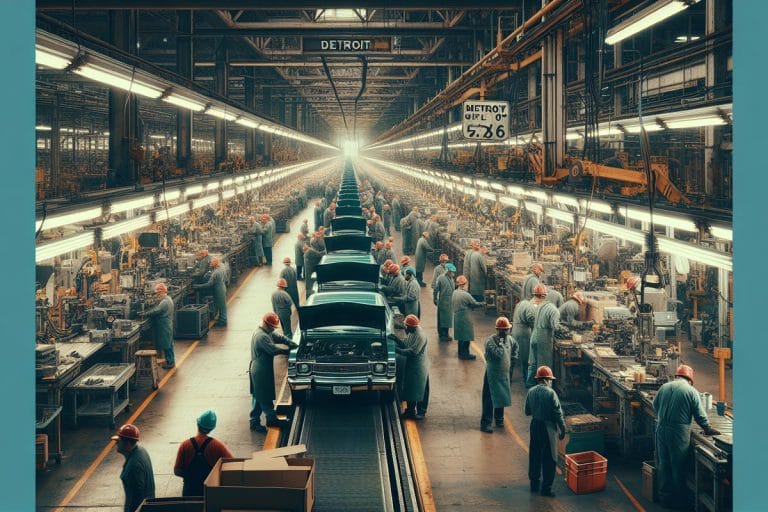
DETROIT, MI — Roughly forty minutes after the White House announced a 30-day tariff reprieve for the automotive sector, senior executives at the Big Three convened a joint emergency call to address the only question on anyone’s mind, which was what was supposed to happen on April 4.

The pause, framed by the administration as a victory for American manufacturing, gave automakers a one-month break from the 25% tariff on Canadian and Mexican imports — a window industry analysts described as ‘almost long enough to receive a single shipment of fasteners’ and ‘definitely not long enough to retool a plant, build a plant, find a plant, or remember what a plant is.’

‘We’ve got thirty days,’ said Stellantis SVP of Strategic Planning Marcus Hewitt-Doyle, staring at a whiteboard that already had a question mark on it. ‘In automotive terms, thirty days is the amount of time it takes to schedule the meeting where you decide whether to schedule the meeting about the supply chain. We are, functionally speaking, screwed in a slightly different way than we were yesterday.’

By midday Wednesday, Ford’s procurement department had reportedly pivoted to a new strategy described internally as ‘buy everything,’ in which the company is attempting to import six months of parts during a four-week window using trucks that are themselves subject to tariffs depending on which side of the border their windshield wipers came from.

GM, meanwhile, issued a statement praising the President’s ‘bold leadership’ while simultaneously instructing all suppliers to assume the tariff would return on April 4, not return on April 4, return at 50%, return at 10%, be permanent, be repealed, and possibly apply only to vehicles painted red. Suppliers were asked to plan for all six scenarios and submit revised quotes by Friday.

Wall Street, for its part, responded the way it always responds to a 30-day policy window, which is by adding 4% to auto stocks on Wednesday morning and quietly preparing to subtract 6% on April 3rd at approximately 3:47 p.m. ‘The market loves certainty,’ explained Goldman analyst Priya Vance-Okafor, ‘and a 30-day pause is certainty in the same way that being told the bridge will collapse on a Tuesday is certainty.’

The United Auto Workers issued a measured statement noting that its members build cars, not policy, and would appreciate knowing whether they still have jobs in five weeks, an inquiry the White House categorized as ‘premature.’ One Windsor-based parts manufacturer told reporters he had spent the morning explaining to his accountant that, yes, the tariff was paused, but also the tariff was not paused, because the threat of the tariff was now the tariff.

At press time, Hewitt-Doyle had reportedly left the emergency meeting to take a second emergency meeting, this one about whether the first emergency meeting should be quarterly going forward.


Republicans Stand 78 Times During Trump’s 99-Minute Joint Address; Several Now Stuck That Way, Attending Physicians Confirm

0

WASHINGTON, D.C. — President Donald Trump delivered the longest joint address to Congress in American history Tuesday night, a 99-minute installation piece during which Republican lawmakers rose to their feet on 78 separate occasions, at least four of them now permanently, according to two physicians on duty in the Capitol’s medical office.

Billed by the White House as a ‘celebration of accomplishments,’ the speech featured the President recounting his 2024 electoral margins three times, his inauguration crowd size twice, and the federal showerhead-pressure regulations once at a level of granular detail typically reserved for combat memoirs.

‘We applauded for the eggs, we applauded for the wall, we applauded for the part where he said “and I quote” and then didn’t quote anything,’ said Rep. Todd Yarbro (R-OH), still upright in the cloakroom at 1:14 a.m. ‘Around minute fifty you stop processing language and just start clapping at the vowels. It’s actually kind of peaceful.’

By the one-hour mark, Trump had pivoted to reading aloud from what aides later confirmed was simply his Truth Social drafts folder, including a 2021 post about a Meghan Markle interview that had been workshopped but never published. Republicans applauded this for ninety seconds. Sen. Tommy Tuberville (R-AL) was observed weeping during a passage in which the President was reading aloud the names of Cabinet members seated directly in front of him.

House Democrats, prepared for the occasion, deployed small black paddles bearing slogans including ‘FALSE,’ ‘MUSK STOLE IT,’ and ‘SAVE MEDICAID,’ which they raised silently throughout the address in what Minority Leader Hakeem Jeffries called ‘a powerful visual rebuke’ and what every American watching at home called ‘looking like the world’s saddest livestock auction.’

Rep. Al Green (D-TX), the lone exception, was ejected eight minutes in for shaking his cane and shouting, thereby becoming the first member of Congress in a generation to register more conviction than his entire caucus, who had spent the morning workshopping coordinated pastel outerwear in a Russell Building conference room.

Vice President J.D. Vance, seated behind the President, applauded throughout with the studied enthusiasm of a man who has read the room and concluded that the room is one man. At one point Vance was observed mouthing ‘yes, yes, exactly’ during a passage in which Trump was simply listing states he had won, in alphabetical order, twice.

‘The Vice President is locked in,’ said one senior White House aide, who requested anonymity to speak frankly about a man he is required by oath to clap for. ‘He’s somewhere between a hostage video and a man who has just discovered God. It’s actually really moving if you don’t think about it.’

The address concluded at 11:09 p.m. with the President working a rope line for an additional 27 minutes, by which point the Republican caucus had sustained an unbroken standing ovation longer than several marriages currently represented in the chamber. Capitol custodial staff confirmed that as of press time, three GOP freshmen were still on their feet in an empty House chamber, applauding nothing in particular, awaiting further instruction.

We Paused the War on a Monday, and the People Who Used to Call This Appeasement Were Suddenly Very Quiet

0

What does it mean that the United States paused military aid to a country currently being invaded, and the loudest reaction in my Georgetown was a friend of mine asking whether the kids should still do their semester abroad in Krakow?

I had dinner Friday at Eliza’s. The conversation was about a Senate staffer’s divorce until somebody mentioned the Oval Office shouting match between the President and President Zelensky, and then there was a silence that lasted exactly long enough for the salad to be passed. A bipartisan lobbyist I’ve known for fifteen years — the kind of man who used to keep a framed photograph of Reagan at Brandenburg on his office wall — said the thing about negotiating leverage, and chewed.

By Monday morning the aid was paused. Not cut. Paused. The way you pause a streaming subscription when you’re traveling, or a gym membership in January when you’ve decided this is the year. A country with hospitals being hit by drones is now in the same administrative category as my Peloton account.

I want to be careful here, because I have spent thirty years writing about foreign policy and I know the difference between a posture and a policy. But I also know what I watched, for decades, from the same caucus that announced this pause. I watched them call every diplomatic overture appeasement. I watched them put Neville Chamberlain on direct mail. I watched them argue, with a straight face, that even attending a summit was a moral failure if the other side hadn’t first agreed to all of our terms in writing. And now they have decided, in a span of about six weeks, that the actual withdrawal of materiel from a country at war is just sound business.

The vocabulary has been retired. Nobody on cable said the word “appeasement” yesterday. Nobody used “Munich” as a verb. The men who built entire careers on the premise that strength meant not blinking spent the weekend explaining, with a kind of strained patience, that strength now means whatever the President said it meant on Friday afternoon between a press gaggle and a tee time.

My sister-in-law Judy, who has worked at the National Archives for twenty-six years, sent me a text yesterday that just said “They’re going to need a bigger box.” She meant the box where they keep the records of the moments we changed our minds about what kind of country we are. She has a dark sense of humor about archival capacity. It is, increasingly, the correct sense of humor.

The defense of the pause, which I have now heard from four different people who used to know better, is that it is leverage. That this is how you bring Zelensky to the table. The trouble with this argument is that Zelensky has been at the table the entire time. The table is in Kyiv. The table has been hit by missiles. The leverage being applied is on the wrong side of the table, and everyone making the argument knows it, which is why they make it so quickly and then change the subject to the tariffs.

And here is what I cannot stop turning over: the speed. Three years of bipartisan resolutions, supplemental appropriations, Oval Office photo ops with the blue-and-yellow flag, speeches about the arsenal of democracy — undone in the time it takes to ship a package. There was no hearing. There was no floor vote. There was a mood, and the mood became a directive, and the directive became Monday.

What I will say to the lobbyist at Eliza’s, the next time he tells me this is just leverage, is that I have been in this town long enough to know what leverage looks like, and what abandonment looks like, and that the difference between them is usually whether you are the one being left.

We are not at the end of something. We are at the part where the people who spent their lives warning us about exactly this decide, on a Monday, that they were warning us about something else.

US Strategic Crypto Reserve to Stockpile XRP, Solana, and Cardano Right Next to the Wheat, in Case of National Emergency

0

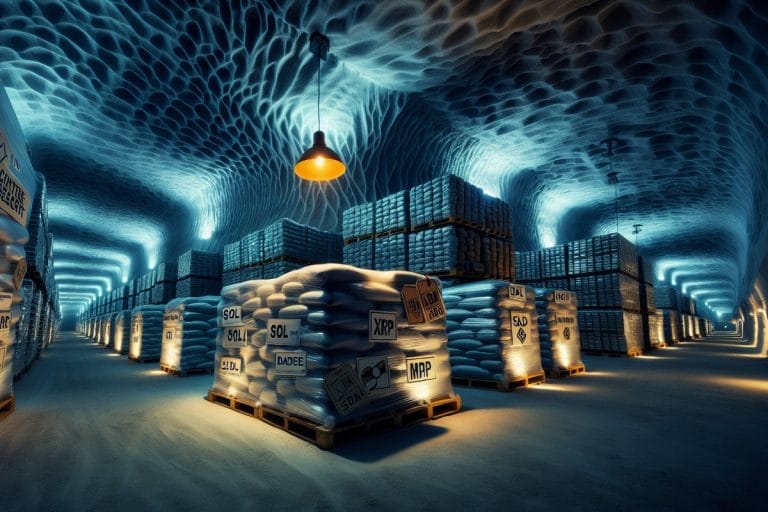
WASHINGTON — The Treasury Department confirmed Sunday that the new United States Strategic Crypto Reserve will warehouse XRP, Solana, Cardano, Bitcoin, and Ethereum alongside the nation’s wheat, crude oil, and helium stockpiles, ensuring that in the event of a true national catastrophe, the federal government will be able to deploy emergency rations of a token whose all-time high was set during a Logan Paul podcast appearance.

The Reserve, announced via a Sunday-morning Truth Social post that pumped each named asset between 25% and 60% before most of Washington had finished brunch, represents the first time in American history that a strategic resource has been stockpiled by hitting refresh on Coinbase. Treasury officials clarified that the Reserve will not ‘hold’ the assets in any traditional sense, as the assets do not physically exist, but assured the public that ‘a guy is watching the wallet.’

‘A diversified crypto reserve provides the United States with critical strategic optionality,’ said Brennan Calloway, a senior fellow at the Hudson Institute for Monetary Velocity who joined the think tank eleven days ago after a career in something called ‘ecosystem partnerships.’ ‘In the event of a sustained geopolitical shock, America must be prepared to retaliate by airdropping Cardano onto an adversary nation, although we are still working out what that would accomplish.’

The selection of XRP, Solana, and Cardano in particular raised eyebrows among observers who noted that the three coins share no obvious strategic characteristic beyond being held in size by individuals who have recently dined at Mar-a-Lago. Asked why the Reserve had not included, for example, the dollar, a Treasury spokesman declined to comment but appeared to be checking a Telegram channel.

Within forty minutes of the announcement, anonymous wallets that had loaded XRP throughout the previous week were observed exiting positions into the resulting price spike, a pattern market structure analysts described as ‘completely standard for a federal asset acquisition program’ and ‘the textbook definition of a pump and dump, but the textbook is now the United States Code.’

Officials at the Strategic Petroleum Reserve in Bryan Mound, Texas, declined comment on whether they would be required to make room in the salt caverns for Solana, though one engineer, speaking on condition of anonymity because he was not authorized to laugh on the record, asked whether the new reserve would have its own ribbon-cutting or simply ‘announce that it has been launched, possibly to the moon.’

The administration has not yet specified what scenario would trigger a release from the Strategic Crypto Reserve, but White House officials indicated the Reserve would be tapped ‘only in the most dire of national emergencies,’ such as a banking collapse, a war in the Pacific, or a 14% intraday drawdown in Cardano.

At press time, the United States held an estimated $0 in Cardano, having announced the Reserve but not yet, technically, bought any.

Hen House Diner’s Menu Found to Be Roughly 38% Non-English Following Trump’s Official-Language Order, Owner Now Circling Words With a Dry-Erase Marker

0

CLAYBORN, IA — Donna Vesely audited her own menu Friday afternoon and discovered that, by the standards of the executive order signed in Washington this morning, she has been quietly operating a multilingual establishment for thirty-one years.

The order — designating English as the official language of the United States — does not, in any practical sense, require Donna to do anything. This has not stopped her from circling words on a laminated menu with a dry-erase marker until the laminate began to bead.

“I’ve got ‘panini.’ I’ve got ‘au jus.’ I’ve got a ‘quesadilla’ on the lunch specials,” said Vesely, owner and operator of the Hen House Diner on Route 9. “I had no idea I was running the United Nations. The ‘au jus,’ for the record, is a gravy boat of beef drippings. I don’t know what else to tell anyone.”

Further review identified the espresso machine — a 2009 De’Longhi named Bruno that has not produced espresso since 2011 and currently serves as a coat rack — as well as the Reuben, the à la mode, and a Tuesday breakfast item listed as “the Hen House Frittata,” which Vesely confirmed she had been pronouncing wrong on purpose for years to avoid sounding showy.

Mrs. Peterson, 78, who has ordered the same club sandwich every Tuesday since the Bush administration, attempted to calm the proprietor. “I told her, Donna, the President cannot see your menu,” she said, removing a packet of Sweet’N Low from her purse for later. “She did not appear comforted.”

Clayborn County Clerk Hank Tillerman confirmed by phone that the executive order contains no enforcement mechanism applicable to county-level food service, “though, historically, the absence of an enforcement mechanism has not once prevented anyone in this county from worrying about something.” Tillerman noted that the courthouse vending machine still dispenses something called a “Bavarian Cream Stick” and declined to take further questions.

By Friday evening, Vesely had begun drafting alternatives in pencil. The panini would become “the pressed sandwich.” The au jus would become “with juice.” The quesadilla, she conceded, was going to require a committee. The most-ordered item on the menu — a breaded pork tenderloin the diameter of a hubcap, served on a bun roughly half its size — required no edits whatsoever, a fact Vesely cited with visible relief. “Tenderloin,” she said, refilling a coffee, “is as American as it gets.”

Trump, Vance Spend Oval Office Meeting Teaching Zelenskyy the Magic Word, Then Kick Him Out for Saying It Wrong

0

WASHINGTON, D.C. — The President of the United States and his Vice President spent the better part of Friday afternoon seated in the most powerful room on earth, explaining to a man whose cities are currently being shelled that the real tragedy of the war in Ukraine is that he has not sufficiently thanked them for noticing.

The meeting, which was supposed to produce a minerals deal, instead produced roughly forty minutes of televised scolding, one aborted press conference, and the strong impression that the Oval Office has been quietly rezoned as a customer-complaint desk where the customer is always Vladimir Putin.

Volodymyr Zelenskyy, who arrived in Washington wearing the same military-style black sweater he has worn for three years on the grounds that his country is, again, being invaded, was informed within minutes of sitting down that his outfit was disrespectful, his posture was disrespectful, his tone was disrespectful, and that he should try being grateful, which is a thing Americans are very good at and which they demonstrate primarily by yelling about it on camera.

“The President is simply asking that our partners abroad display the kind of basic decorum we expect in this building,” said Brennan Holcombe, a senior fellow at the Heritage-adjacent Institute for Forward Diplomacy, shortly before pausing to eat a free sandwich off a tray. “You cannot come into the Oval Office, accept billions of dollars in weapons, and then expect us to also tolerate eye contact.”

Vice President JD Vance, who until recently was best known for writing a memoir about his grandmother and for losing debates to couches, took the lead role of Good Cop’s Angrier Roommate, interrupting the Ukrainian president to ask whether he had personally thanked the American people, a group Vance appears to believe he speaks for based on a 2022 Senate race he won by three points.

At one point Trump, visibly warming to the bit, informed Zelenskyy that he was “gambling with World War Three,” a sentence delivered with the gravity of a man who once tried to buy Greenland and the cadence of a man pitching a timeshare. Zelenskyy, whose country is the one currently being bombed, attempted to explain that ceasefires signed with Russia have historically lasted about as long as a gas-station sandwich. This was deemed disrespectful.

The breaking point came when Zelenskyy suggested, with what observers described as “the fatal error of using facts,” that the United States would eventually feel the consequences of abandoning Ukraine. Trump informed him that he did not know what he was talking about, a claim the President backed up by pointing out that he has met Putin personally and found him to be “a very strong guy, very smart, tremendous handshake, much better than yours.”

A planned joint press conference was then cancelled, the minerals deal was shelved, and Zelenskyy was escorted off the White House grounds roughly the way a rowdy patron is escorted out of an Applebee’s, minus the dignity of a bar tab. Staff were later seen power-washing the driveway, which aides described as “routine” and which appeared, to the naked eye, to be entirely symbolic.

“We’re not going to be lectured about gratitude by a guy in a polo shirt,” said Dana Mireille Hatch, a State Department spokesperson who has held her position for eleven days and who pronounced Kyiv three different ways in a single sentence. “The President gave Ukraine every opportunity to apologize for being invaded, and they simply refused to meet him halfway.”

Reaction from the Kremlin was swift and, for the first time in recent memory, unguarded. Russian state television cut into regular programming to air the footage on a loop, with commentators openly describing the exchange as “a gift,” “better than we could have scripted,” and, in one especially giddy segment, “Christmas, but for adults.” A senior Russian foreign-policy analyst on air reportedly had to be asked to stop laughing on camera.

European leaders, meanwhile, issued a flurry of statements of support for Zelenskyy so rapid and so coordinated that Downing Street, the Élysée, and the German Chancellery appeared to have been drafting them in a shared Google Doc since approximately Tuesday. Friedrich Merz, three days into his post-election honeymoon, used the word “shameful” in two languages. The Polish foreign minister simply posted a photograph of a 1939 map.

Back in Washington, Senate Republicans spent the afternoon performing the now-familiar choreography of pretending they had not seen the footage, had not been sent the footage, and did not own phones. Lindsey Graham, who once called Zelenskyy “the Winston Churchill of our time,” emerged from a hallway to suggest Zelenskyy should perhaps resign, a pivot so seamless it belonged in figure skating.

By evening, the official White House readout described the meeting as “frank and productive,” which is diplomatic boilerplate for “one man screamed, another man absorbed it, and a third man live-streamed the whole thing to Moscow.” The minerals remain in the ground. The war remains in progress. And somewhere in the residence, the most powerful man in the world was reportedly still waiting, arms crossed, for his thank-you note.

Detroit Automakers Gently Explain That a Single Pickup Truck Crosses the Canadian Border Eight Times Before It Becomes a Pickup Truck

0

DEARBORN, MI — Executives at the Big Three automakers spent most of Wednesday afternoon in a conference room with a whiteboard, a red marker, and the patient expression of parents explaining to a toddler why the dog is not, in fact, a horse. On the board was a diagram of a single F-150, and on the diagram were eight separate arrows indicating the eight separate times its various components cross the U.S.-Canada border before the truck is legally considered a truck.

The tutorial followed the administration’s Wednesday confirmation that 25 percent tariffs on Mexican and Canadian goods will take effect March 4, a date auto supply chain managers have been circling on their calendars the way medieval peasants circled the arrival of a comet.

“The engine block is cast in Windsor, machined in Ohio, sent back to Ontario for the cylinder heads, then down to Kentucky for assembly into the powertrain,” said Margaret Velasco, a senior supply chain economist at the Center for Applied Trade Realism. “By the time that truck rolls off the line in Dearborn, the tariff on it, if you stack every crossing, is somewhere between 127 percent and a polite request that we stop making trucks entirely.”

Velasco noted that the number “eight” is actually conservative. A single wiring harness, she said, can cross the border three times on its own, “mostly, as far as anyone can tell, for emotional reasons.”

Industry executives have reportedly been careful to frame their concerns in the most non-confrontational language available to the English-speaking world. One Ford vice president’s Tuesday memo used the phrase “we would love to better understand the mechanics of the policy” eleven times, which trade analysts identified as the corporate equivalent of screaming into a pillow.

At a Stellantis facility in Sterling Heights, a plant manager demonstrated the issue using a child’s pop-up book he had apparently commissioned from a local print shop. Each page showed the same alternator flying across the 49th parallel, with a small cartoon customs officer waving wearily. “We thought visuals might help,” he said.

The White House, for its part, has maintained that the tariffs are straightforward and that automakers are, in the words of one senior adviser, “overcomplicating what is essentially a vibe.” The adviser declined to say which parts of a pickup truck constitute the vibe and which parts are merely the truck.

Dealerships, meanwhile, have begun adjusting sticker prices with the preemptive enthusiasm of a man who has been told it might rain and is therefore already wearing a full wetsuit. A Chevy lot outside Toledo has reportedly added a “Border Uncertainty Fee” of $1,847 to every vehicle, including used sedans that have not crossed any border since the Bush administration.

“We don’t know if the tariff will happen, get delayed, get rescinded at 10 p.m. on March 3, or just transform into something else entirely, like a tax credit or a tweet,” said Randy Chen, the lot’s general manager. “So we priced in all of them. It’s actually more honest this way.”

Canadian parts suppliers in Ontario have begun preparing what one trade group described as “contingency plans,” which on inspection turned out to be a shared Google Doc titled “lol what now” containing a single line reading “call Brian.” Brian could not be reached for comment.

Mexican auto parts manufacturers, for their part, issued a joint statement expressing confidence in the resilience of North American trade relationships, immediately after which their stocks fell 4 percent and their CEOs boarded a flight to a summit in Monterrey that three people in the room confirmed was not previously on the calendar.

Consumer advocates have begun warning that the price of a new pickup truck could rise by as much as $6,000 under the full tariff regime, though one analyst cautioned against precise estimates. “We’re modeling against a policy that has been announced, delayed, un-delayed, re-announced, and partially hallucinated,” said Dr. Peter Oyelaran of the Midwest Institute for Industrial Policy. “At this point we’re not forecasting, we’re doing improv.”

Back in Dearborn, the whiteboard session ended around 4 p.m. when someone realized that the diagram had grown to include a small inset showing the journey of a single bolt, which travels from Indiana to Sonora to Windsor to a separate facility in Windsor before returning to Indiana. An executive stared at it for a long moment, capped the marker, and suggested the group break for coffee.

The coffee, he noted quietly, was Canadian.

Kentucky Bourbon Distillers Celebrate EU Tariff News for Roughly 90 Seconds, Until Someone Pulls Up a Map

0

BARDSTOWN, KY — The cheering inside the tasting room at Hollowcreek Distilling lasted exactly one minute and twenty-eight seconds Wednesday morning, which is how long it took CFO Randall Teague to finish his victory toast, set down his glass, and be gently informed by a summer intern that the 25% tariff President Trump had just announced on European Union imports was the kind of economic policy that tends to come with a return address.

Teague, who had opened the Bulleit-soaked press conference by calling the tariff “a long overdue win for the American palate,” visibly paled as the intern, a college junior named Megan, pulled up a 2018 Wall Street Journal article on her phone and began reading aloud from the section titled “EU Retaliatory Tariffs on American Whiskey.” Staff described Teague’s expression as “the exact face a man makes when his Peloton says his membership has expired.”

“We were told this was going to be great for American manufacturing,” said Teague, recovering with a second pour. “Nobody mentioned that European manufacturing might, in some capacity, have access to the same news.”

The 25% tariff, announced by the President during a cabinet meeting in which Elon Musk reportedly took four separate phone calls, targets European imports across roughly every category the President can name off the top of his head, including cars, wine, cheese, and, according to a footnote nobody on cable television has mentioned yet, industrial copper stills manufactured almost exclusively in Germany and Italy. Hollowcreek ordered two of them in November.

“The tariff is a tax on Americans who want to make American whiskey using the only equipment that actually makes whiskey,” said Dr. Pria Vellanki, a trade economist at the Cato-adjacent Hensley Institute, who has spent the past six weeks explaining to reporters that tariffs are paid by importers and not, as the President continues to suggest, by a large building somewhere in Brussels. “It’s a bit like putting a 25% tax on flour to support American bakers. The bakers are confused. The flour is confused. Only the policy is not confused, because the policy does not know what flour is.”

By noon, Kentucky’s congressional delegation had issued a series of statements carefully worded to support the President’s trade agenda without actually endorsing any specific element of it, a rhetorical maneuver Senate staffers have privately begun referring to as “the Mitch.” Senator Rand Paul’s office released a single tweet reading, “Tariffs are taxes,” and then went silent for the remainder of the afternoon.

Across the Atlantic, EU Trade Commissioner Valdis Dombrovskis convened an emergency meeting in Brussels during which, according to a leaked agenda, the first bullet point was simply “Bourbon?” followed by three question marks and a smiley face that officials insist was a formatting error. The Commission is expected to announce retaliatory tariffs on American whiskey, motorcycles, and peanut butter by Friday, a list so familiar to trade reporters that one correspondent in Brussels reportedly filed his story before the press conference began.

At Hollowcreek, Teague spent the afternoon on the phone with a broker in Rotterdam, attempting to reroute the pending copper-still shipment through what he described as “a friend in Canada who owes me a favor,” a plan that collapsed roughly forty minutes later when Canada was added to a separate tariff list by executive order. Teague was seen briefly placing his forehead against the tasting bar.

“We support the President,” said Hollowcreek founder Dale Hollowcreek, a phrase he repeated four times in under a minute in a way that suggested he was mostly trying to convince the room. “We just also happen to sell 38% of our production into Germany, Ireland, and France, and we would very much like to continue doing that, if at all possible, thank you.”

Analysts at Morgan Stanley noted that the broader bourbon sector, which had enjoyed a quiet decade of double-digit export growth, is now pricing in what one research note called “the 2018 experience, but stupider.” The note, titled “Pour One Out,” recommended investors rotate out of American spirits and into, somewhat counterintuitively, Mexican tequila, which remains on a separate tariff list scheduled for a different Tuesday.

Meanwhile, in Bardstown’s town square, a small pro-tariff rally organized by the local Republican club featured signs reading “BUY AMERICAN” and “DRINK AMERICAN,” held aloft by attendees who, according to a reporter from the Louisville Courier-Journal, were being served complimentary glasses of Hollowcreek Reserve — a product now 25% more expensive to bottle and, beginning next week, 50% more expensive to export.

Back inside the distillery, Megan the intern was reportedly offered a full-time position in the regulatory affairs department, which until Wednesday had consisted of a single part-time consultant and a filing cabinet. “She’s the only one here who reads,” Teague said, pouring himself a third glass. “That’s apparently a competitive advantage now.”

Clayborn County’s Only Plausible Candidate for Trump’s $5 Million Gold Card Visa Is Already an American, Which He Found Hilarious

0

DATELINE — CLAYBORN COUNTY, IA — Dale Meinhardt, 68, who last spring sold four hundred and twelve acres of his late father’s corn ground to a Minneapolis solar outfit for a number he will only describe as “comfortable,” learned Tuesday morning at the Koffee Kup that the President of the United States is now offering permanent residency to any foreign national willing to pay five million dollars, and laughed so hard he had to set down his mug.

The program, announced by the White House late last week and branded the “Gold Card,” is pitched as a premium replacement for the existing investor visa, with the proceeds flowing into the federal treasury. In Clayborn County, where the median home still clears at $187,000 on a good week and the Casey’s is considered a destination restaurant, the announcement landed less as policy than as a kind of parlor game, conducted Tuesday at Booth 4 over a basket of rye toast.

“The question we were working on,” said Dale, wiping his eyes, “is whether anyone in the county could actually swing it, and the answer we kept arriving at is me, and I’m from Spillville.”

The table, which also included retired ag-lender Curt Vlasak and a rotating cast of men who declined to be named on the grounds that their wives read the paper, spent roughly forty minutes Tuesday morning attempting to identify any second candidate. They considered Phil Roeder, who owns the Ford dealership; Marge Enright, whose husband left her the Casey’s land on Highway 9; and the orthodontist in Decorah whose name nobody could remember. All three were ruled out on liquidity grounds.

“People hear ‘five million’ and they think of a number,” said Rex Halverson, a certified public accountant who has done tax work in the county since 1991 and who was consulted by phone. “But five million in actual cash, sitting there, ready to be handed to the Treasury Department in exchange for a piece of plastic — that’s a different animal. That’s not a farmer. That’s not even most doctors. That’s a man who sold something he didn’t want anymore to a company from somewhere else.”

Halverson estimated that “between four and seven” Clayborn County residents could theoretically produce the sum without liquidating a house, and that all of them are, to his knowledge, United States citizens who have been so for several decades.

Mrs. Peterson, reached at the library where she was reshelving large-print westerns, said she had read about the program in the Tuesday paper and had a question, which was whether the five million dollars came with anything besides the visa. Informed that it did not — that the card is essentially the green card, only more expensive and gold-colored — she nodded once and said, “Well, that’s a lot for a card.”

County Supervisor Denny Krauskopf, asked whether Clayborn County was prepared to welcome any Gold Card recipients who might choose to settle here, said the county “would of course welcome anyone who wanted to contribute to the tax base,” then paused and added that he was not aware of any amenity currently offered by the county that would justify the outlay. Pressed for specifics, he mentioned the new splash pad in Elkader and the fact that the DMV is open Thursdays until six.

At Booth 4, the conversation eventually turned to what Dale would do if a foreign billionaire did, hypothetically, relocate to Spillville under the new program. Dale said he would probably invite him over for a pork loin and then try to sell him the twelve acres of bottom ground he still owns down by the creek, which floods.

“He’d pay five million for a card,” Dale reasoned, “so I figure the floodplain’s at least six hundred.”

Curt Vlasak, who spent thirty-one years approving and denying farm loans in a building that still has a hitching post out front, offered what may have been the morning’s closing thesis. He said he had lent money to men who fixed tractors with baling wire, to women who ran whole operations out of a kitchen ledger, and to one gentleman in 1994 who tried to pay off a note in feeder pigs, and that in none of those cases had the federal government ever suggested any of them were insufficiently American.

“Now apparently you can just buy it,” Curt said. “I’d like to see the closing documents.”

Waitress Bobbi Jo Menke, refilling coffee for the fourth time, was asked whether the Gold Card had come up at any of her other tables Tuesday morning. She said it had not, because most of her other tables were the feed-store crowd, and they were still working through the price of urea.

DeepSeek Panic Enters Week Four as Palo Alto Founders Reportedly Sobbing Into $22 Matcha

0

PALO ALTO, CA — At a co-working space on University Avenue on Monday morning, a 31-year-old founder named Braxton paused mid-standup to quietly remove his Patagonia vest, fold it into a perfect square, and place it on the floor like a man preparing to fight his own reflection. He had just been told, again, that the Chinese AI model DeepSeek can do roughly what his company does, but for what one investor described as “the cost of a Chipotle bowl with guac.” Braxton did not cry. Braxton sipped. Braxton whispered the word “moat” three times like a prayer.

It has now been four weeks since DeepSeek emerged from a Hangzhou office park and detonated the self-esteem of an entire zip code. What began as a news cycle has curdled into a lifestyle. Across Silicon Valley, founders who last month were using the phrase “compound intelligence” in LinkedIn posts are now making eye contact with their baristas for the first time in years, searching the faces of strangers for reassurance that their $400 million Series B still matters.

“We are observing textbook anticipatory grief,” said Dr. Marla Vennick, a workplace psychologist who specializes in founder decompensation and charges $675 an hour to say things like this. “The denial phase was brief because the denial phase required them to stop checking X. Most of my clients are now oscillating between bargaining and a new fifth stage we’ve had to add called ‘posting a thread.'”

Reports from the ground suggest the posting has reached levels typically associated with a primary election or a Taylor Swift album. One thread, which began “A few thoughts on why DeepSeek’s numbers are, respectfully, a little sus,” ran to 47 tweets and ended with the author announcing his new podcast. Another founder livestreamed himself re-reading the DeepSeek technical paper while a sous chef prepared a sea bass behind him. The sea bass was not acknowledged.

The panic has mutated, as panics do, into commerce. A pop-up on Sand Hill Road called The Moat Room is reportedly charging $180 for a 45-minute session in which founders are handed a laminated printout of their pitch deck and allowed to scream at it. A competing space in SoMa offers “Existential Breathwork for People Who Said AGI Was Six Months Away,” which is sold out through April. Matcha consumption in the 94301 zip code is up a reported 340%, per a barista named Liana who, to be clear, is not a statistician but has eyes.

Meanwhile, the rest of America has responded to the DeepSeek crisis with the measured and dignified response of downloading it immediately and asking it to write wedding toasts. TikTok users who last month briefly relocated to RedNote in protest of the ban are now openly stacking Chinese apps on their home screens like Pokémon cards, casually learning enough Mandarin to follow a skincare routine, and tagging their Silicon Valley ex-boyfriends in memes.

“I asked DeepSeek to explain my lease, to draft a breakup text, and to tell me if my cat is mad at me,” said Cassidy Munn, 28, a dental hygienist in Tulsa who has no stake in the geopolitical implications of frontier model development. “It nailed all three. My ex, who works at a company with a lowercase name, has blocked me.”

Inside the firms themselves, all-hands meetings have reportedly taken on the dissociative energy of a high school assembly about drunk driving. At one unnamed foundation model company, a chief strategy officer spent 22 minutes explaining that DeepSeek’s efficiency numbers are, quote, “vibes-based,” before being gently interrupted by an intern who pointed out that “vibes-based” was the exact phrase used to justify last quarter’s burn rate. The intern has since been promoted or fired; sources could not confirm which because, in Silicon Valley, those can be the same thing.

Venture capitalists, sensing blood, have pivoted with the grace of cats landing on countertops. Andreessen Horowitz is said to be workshopping a thesis called “Scrappy Is the New Scale.” One partner at a rival firm, who asked to be identified only as “a guy who was very early on Bored Apes,” said the new playbook is to fund teams of “two guys, a GPU, and a grievance.” He then excused himself to take a call from his mother.

Not everyone is suffering. A small cohort of Bay Area founders has reportedly embraced DeepSeek with the enthusiasm of converts, rebranding their companies overnight to include phrases like “efficient by design” and “lean-pilled.” One CEO changed his LinkedIn headline from “Scaling Intelligence” to “I Was Always Skeptical of Hyperscalers (See Archived Posts).” The archived posts were not, in fact, available.

Back at the co-working space, Braxton had by Monday afternoon regained enough composure to open a blank Notion doc titled “Pivot?” He sat with it for an hour. He added a question mark, then removed it, then added it back. His co-founder, a man named Peregrine who has the haircut of someone who owns a standing desk, suggested they “go outside,” a phrase neither had deployed unironically since 2019.

They went outside. The sun was doing its usual thing. A Waymo drove past, empty, driven by math that cost a reported six dollars.