Home Blog Page 34

A Penny Fully Dissolved in the YMCA Kiddie Pool in 41 Minutes and I Have the Time-Lapse

0

I want to be clear that I did not go to the YMCA outdoor pool opening on Saturday to make a scene. I went because Ember has been asking since Easter and because Tuck wanted to show a boy named Briggs that he can do a full underwater somersault now. I brought sunscreen, three towels, a cooler of cucumber water, and, in a small Altoids tin in the side pocket of my pool bag, eight pennies from 1994 because a woman named Lorrayne in my Facebook group Chlorine Cousins and the Truth About Public Water had told me what to do.

I dropped the first penny in the kiddie pool at 11:02 a.m. By 11:43 it was gone. Not faded. Not green. Gone. I have a time-lapse on my phone where you can watch it become a smaller penny, then a copper-colored idea of a penny, then a soft cloudy spot, then nothing, while a four-year-old in shark trunks paddles three feet away from it.

Lorrayne says you want a 1994 specifically because the alloy ratio after 1982 lets you read the chlorine more honestly than any test strip the county will sell you, and the strips at the front desk only go up to 5 ppm anyway, which she calls “the polite ceiling.” I do not know if Lorrayne has credentials. I know she has been right about the well water in Weaverville, the soft-serve machine at the Ingles on Smoky Park, and what they spray on the median grass before Memorial Day, so at this point I am not asking.

My sister-in-law Kasey, who works the front desk at a pediatric office in Hendersonville and is basically a nurse, says that when a public pool smells “like a pool” that is not chlorine, that is chlorine that has already done a job, and the job was a child. She says the actual chlorine smell is closer to a clean dinner plate. The YMCA on Saturday smelled like a CVS that had been on fire and then put out with a different CVS. A lifeguard named Caden told me the levels were “normal for opening weekend,” which is the kind of sentence a nineteen-year-old says when he has been handed a clipboard and a whistle and asked to defend an entire institution.

I want to be fair. Our backyard saltwater pool is also chlorinated — saltwater pools generate their own chlorine, which I learned the hard way from a man at Leslie’s who would not let me leave until I admitted it out loud — but salt is a mineral, the conversion is gentle, and I run it at the level a midwife in our birth circle described as “ocean-adjacent.” A penny in our pool from last August is still a penny. I checked. It is sitting in a little dish on the windowsill above my sink next to a piece of sea glass and a tooth.

My neighbor Britta brought her twins down to the YMCA around noon and I showed her the time-lapse on the deck chair and she did not say anything for a full thirty seconds, which for Britta is essentially a press release. She walked her twins back to the car still in their swim shirts. By two o’clock there were four moms I know personally sitting in a half-circle near the snack window comparing notes, and one of them, a doula named Pren, had brought her own pennies, which I want to say felt validating in a way I am still processing.

The Y issued a very nice email Sunday morning about “standard seasonal startup adjustments” and “shock treatment cycles,” which are words you use when you do not want to use the word that Lorrayne uses, which is “trichlor pucks the size of a hockey puck dropped in by a part-time pool tech named Garrett who also does the flowerbeds.” I am not naming Garrett to be cruel. I am naming him because the email did not.

Ember will be swimming in our backyard this summer. If your kiddo is at the Y this week, I am not telling you what to do. I am telling you that I have a tin of 1994 pennies and Pren has more, and any mother who wants one can text me, and we will figure out the rest from the deck chairs together.


Brands Debut Geofenced Pride Logos That Only Render in ZIP Codes Polling Above 58% Tolerant

NEW YORK, NY — At 12:01 a.m. Sunday, the rainbow logo on the Banana Republic homepage appeared crisp and full-saturation to a shopper in Park Slope, while the same homepage loaded for her cousin in Bartlesville, Oklahoma showing a tasteful beige wordmark and a banner ad for chinos called ‘The Heartland Slim.’ Both women refreshed. Both got the same result. Both were, the company would later confirm, experiencing the brand ‘authentically and at scale.’

At least 47 major retailers have quietly rolled out what their internal decks are calling ‘Adaptive Affirmation Frameworks’ — geofenced Pride logos that render in full color only in ZIP codes where regional sentiment polling places public tolerance above 58%, with a 12-point buffer for what one slide deck described as ‘sudden mood weather.’ Below that threshold, the logo dims to grayscale, then to a small olive branch, then to nothing at all, then, in a handful of test markets, to a separate logo featuring an eagle.

‘It’s not cowardice, it’s customization,’ said Lindy Vargo, a brand strategist at the consumer engagement desk of a firm she asked us to describe only as ‘a Big Four with a heart.’ ‘A rainbow in the wrong ZIP code is a brand event. A wordmark in the right ZIP code is a brand event. We’re just letting both events happen at the same time, in different places, to different people, who will hopefully never speak to each other.’

Engineers familiar with the rollout say the logos update every six minutes against a real-time sentiment dashboard, meaning the rainbow has been observed phasing in and out across swing counties in Pennsylvania like a nervous lighthouse. A Sheetz in Allentown reportedly cycled through four different versions of the Sheetz logo during a single transaction Sunday morning, finally settling on a neutral red ‘S’ as the customer paid for a hoagie.

‘I saw it, then I didn’t see it, then I saw it again, then I saw an eagle,’ said the customer, Doug Leffert, 51, who described the experience as ‘honestly the most engaged I’ve ever felt with Sheetz.’

The system reportedly assigns each U.S. ZIP code to one of four tiers — ‘Ally,’ ‘Bystander,’ ‘Cool Breeze,’ and ‘Patriot Forward’ — with logos calibrated accordingly. A leaked version of the Target tier sheet describes Provincetown, Massachusetts as ‘maximum saturation, glitter overlay permitted’ and a stretch of I-40 in the Texas Panhandle as ‘eagle, possibly two eagles, please advise.’ Several mid-tier markets are flagged ‘rainbow but make it sepia,’ which a brand consultant described as ‘a vibe of allyship from a respectful distance, like clapping for someone else’s parade through binoculars.’

‘I love that they put a rainbow in our app,’ said Brendalyn Tice, attending the West Hollywood Pride kickoff with her wife. ‘I love it slightly less knowing that my mother in Lubbock, looking at the same app on the same Wi-Fi when she visits, sees a tasteful gradient of khaki.’ Tice paused. ‘My mother thinks Old Navy doesn’t do Pride. My mother is wrong, but she is also, technically, correct.’

Reached for comment, a spokesperson for the trade group Brands For All Markets said the geofencing represented ‘a mature evolution of inclusive marketing,’ adding that the technology would be expanded in the coming months to also dim Black History Month logos in counties polling above a certain ‘fatigue index’ and to fully disable Veterans Day banners in any ZIP code where rent has risen more than 18% year-over-year.

As of press time, the rainbow on the Bud Light homepage had been visible for 41 seconds in downtown Chicago before disappearing entirely, replaced by a small message reading ‘We hear you. All of you. Separately.’

Every June Wedding Bouquet Is Coated in ‘Crowning Glory’ and the Ingredient List Reads Like a 1987 Garage

0

My cousin Bevin got married Saturday at a barn venue in Weaverville and somewhere between the processional and the first toast I found myself crouched behind a cake table holding an aerosol can the florist had left in a milk crate. The can was teal. The brand name, in a font designed by a man who has never met a bride, said CROWNING GLORY. Below that, in smaller letters, it said FLORAL FINISH. Below that, in even smaller letters, it said the actual ingredients, and reader — I have not slept since.

Crowning Glory is a real product. It is the spray. If you have been to a June wedding in the last forty years, you have inhaled it. It is what the florists use to make the peonies look photo-ready until the last dance, and the women who work in walk-in coolers know about it the way mechanics know about asbestos.

I will not retype the full ingredient panel here because my husband Coleman has asked me, repeatedly and with feeling, to stop reading aerosol cans aloud at dinner. But I will say this: there are three things on that label that I had to look up, two things on it that are also in my father-in-law’s leaf blower, and one thing whose only other appearance in my life has been the underside of a 1991 Buick. This is what is being held six inches from a bride’s face for forty minutes of photos in a hot field.

I posted about it that night in a Facebook group called Brides Against the Aerosol (we have 11,400 members, most of them florists in recovery), and within an hour a woman named Tanith who runs an organic floral co-op in Brevard sent me a screenshot of the safety data sheet. She told me that real wedding-grade Crowning Glory is what’s known in the industry as a “holding lacquer,” which is the same word they use for hairspray, varnish, and — Tanith’s words, not mine — “the stuff they put on the inside of a Pringles can.” I have not eaten a Pringle since Saturday and I will not be starting tonight.

My friend Marisol, who has done the flowers for 60+ Asheville-area weddings and is basically a chemist because her dad worked at a paint store, told me that the spray is also used on the boutonnieres, the flower-girl crowns, the tossed bouquet, and — she dropped her voice here — the petals scattered on the aisle that the children walk through barefoot. The children. Walking. Through. The lacquered. Petals. I am asking every June bride reading this to please go look at her contract.

Now, I’m not saying you have to cancel your wedding. Bevin’s wedding was beautiful. The light was perfect. Her dress, which she sewed herself from a vintage curtain my Aunt Robynne had been hoarding since Carter, was a triumph. I gave the toast. I cried during the toast. I cried again during the father-daughter dance, and then a third time, privately, when I realized the rose petals on the cake had a faint gloss to them I now understand to be petrochemical.

What you can do, easily, is make your bouquet from herbs and dried sourdough. I know that sounds insane. It is not. I made the centerpieces for Bevin’s reception out of rosemary, thyme, two heads of ornamental kale from my garden, and four small wreaths of sourdough I baked the morning of (sourdough time is not an ingredient, it is a process, and salt is a mineral, not a chemical). Three different aunts asked if they could take the centerpieces home. One aunt ate hers in the parking lot. Tell me a Crowning Glory peony has ever inspired that.

Bevin doesn’t know yet. I’ll tell her when she’s back from Costa Rica. I’ve already started a Google Doc called “Bevin Detox — Post Honeymoon” and the first bullet point is “Burdock root, three weeks, no questions.” The second bullet is “Throw away the preserved bouquet, I am sorry, I know your mother had it laminated, it has to go.” The third is just the word breathe, twice, with a heart.

If you are getting married this June — and statistically, several of you reading this are — please, I am begging, ask your florist what’s in the can. If they hesitate, if they laugh, if they say “oh that’s just the spray,” run. Run in your veil. The peonies will understand.

We Marked Memorial Day With a Mattress Sale and a Moment of Silence, in That Order

When exactly did we decide that the proper way to honor the war dead was a forty-percent-off sectional and a hot dog you didn’t want?

I spent Saturday evening at Eliza’s in Georgetown, where the centerpiece was peonies and the conversation was, as it always is the weekend after Memorial Day, somebody’s complaint about Reagan National. Three former State Department hands, a retired flag officer, and a lobbyist I’ll describe only as bipartisan because he charges both parties the same hourly rate. Nobody mentioned a name. Nobody mentioned a war. The flag officer talked about his boat.

My sister-in-law Judy, who has spent twenty-eight years at the National Archives and now spends most of her time gently telling tourists they cannot photograph things, sent me a 1947 pamphlet last week titled Decoration Day: A Citizen’s Conduct. It instructed Americans to lower their voices between eleven and noon, to wear no commercial insignia, and to refrain from “public merriment.” Judy found this funny. I found it indicting.

Because somewhere between 1947 and the long weekend that just concluded, we converted a day of mourning into a procurement opportunity. The local news wished me a “Happy Memorial Day,” which is the kind of phrase that should make a person flinch and no longer does. A grocery chain emailed me about saluting our heroes with a discount on shrimp. The President, who has opinions about most things, tweeted a photograph of himself.

The bipartisan lobbyist, sensing where I was going, said the economy “needs the long weekend,” and that grief, in his telling, was a luxury good — fine for countries that aren’t carrying our debt load. He said this while eating a piece of halibut that cost what a private first class makes in an afternoon. Nobody at the table corrected him. I include myself in that nobody, which is part of why I’m writing this down now and not then.

Here is what struck me, sitting on Eliza’s patio: we have been at war, in some form, for nearly a quarter century, and the men who started those wars are mostly on book tours. The men who fought them are mostly not in Georgetown. The names we are supposed to be remembering this weekend include a generation that came home to a Veterans Affairs system that loses their files and a Congress that cannot pass a budget without threatening to garnish their pensions. We honor them with a parade in towns small enough to still hold one, and a sale in towns large enough to have forgotten why.

And I want to be careful here, because the easy column is the one that blames the public for buying the mattress. The public is not the problem. The public was handed a holiday with the meaning sanded off and told to enjoy itself. The problem is the class of people who knew better and chose, over four decades of bipartisan effort, to let the meaning go — because a country that takes its dead seriously is a country that asks harder questions about why they died, and that is precisely the conversation Eliza’s table, and a hundred tables like it, has organized itself to avoid.

I am, as ever, just asking. But I will say this much plainly, because somebody should: a republic that cannot sit quietly with its own grief for one Monday in May is not a republic that should be trusted to declare another war. We are about to. We always are. And the receipts from this weekend’s sectional will outlast the eulogy nobody bothered to write.

On Wage Garnishment, and the Dinner Party Where Everyone Suddenly Had a Niece in Default

Who exactly was the cruelty for? Because at Eliza’s last week in Georgetown, four people at the table had a niece, a nephew, or a vaguely described ‘family friend’s kid’ who was suddenly missing fifteen percent of a paycheck — and not one of them, not one, was willing to say out loud whether they thought this was good policy or bad.

They wanted to talk about the lamb. The lamb was excellent. The lamb was, in fact, the only subject on which the table reached unanimous consent all evening, which is itself a fairly damning statement about the Senate, the House, and our hostess’s wine selection.

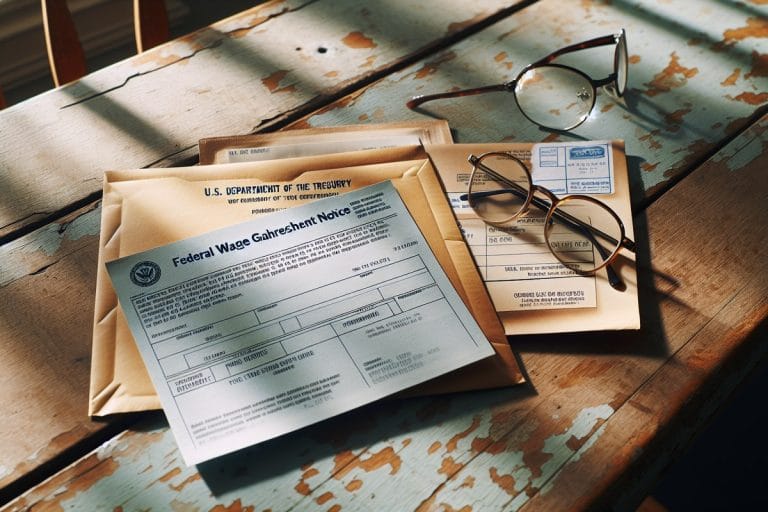
Some context, for the three readers who haven’t checked their pay stub this month: the Education Department resumed involuntary collections on defaulted federal student loans in early May. Wages garnished. Tax refunds seized via the Treasury Offset Program. Social Security checks — yes, Social Security, for the retirees who never finished a degree they took out loans for in 1994 — clipped at the source. The pause that began under one administration and was extended, and extended, and extended, simply ended. No vote. No debate. A press release on a Friday.

The bipartisan lobbyist at the end of the table — I will only describe him as bipartisan, because he has worked for both parties and currently bills both — said it was ‘a return to normalcy.’ I asked him whose normalcy. He said, and I quote, ‘the spreadsheet’s.’ Then he asked for more wine, which is what people in this town do when they’ve accidentally said the quiet part.

My sister-in-law Judy, who works at the National Archives and has a civil servant’s gift for reading a memo the way the rest of us read a horoscope, told me the interesting part isn’t who’s being collected from. It’s who’s been quietly removed from the collection list. Certain categories. Certain ZIP codes. Certain political donors, one suspects, though Judy would never say that, because Judy still believes in the institution and I love her for it.

The cowardice here is bipartisan and it is breathtaking. The Republicans who spent four years calling student loan relief ‘welfare for the laptop class’ have gone strangely silent now that the garnishment notices are landing in counties they carried by twenty points. The Democrats who promised forgiveness from every podium between 2020 and 2024 have decided this week is a good week to talk about something else — anything else, please, possibly the heat dome. Both parties are betting you won’t notice the contradiction. Both parties are correct often enough that the bet keeps paying.

And the specific cruelty, the part nobody at Eliza’s wanted to hold in their mouth long enough to taste: the Treasury Offset Program is currently collecting from seventy-three-year-olds. Retirees. People who took out four thousand dollars in 1989 to attend a secretarial program that no longer exists, watched the interest compound for thirty-six years through every administration that promised to fix this, and are now having their Social Security reduced to satisfy a debt to a federal government that has, in the meantime, forgiven roughly nine hundred billion dollars in PPP loans without garnishing a single yacht.

I asked the table — gently, because it was Eliza’s lamb and Eliza’s table — whether anyone wanted to defend the moral coherence of that arrangement. The bipartisan lobbyist examined his cufflink. A senior counsel for a Senate committee discovered something fascinating in her napkin. Eliza, bless her, said, ‘Margaret, please,’ which is what Georgetown says instead of an answer.

Here is the warning, and you can take it or leave it. A country that resumes garnishing the wages of seventy-three-year-old defaulters while its political class quietly debates which donor categories to exempt is not a country running on policy. It is a country running on whoever was too tired, too poor, or too unconnected to make the phone call. We used to call that something. We used to be embarrassed by it. At Eliza’s, last Thursday, we called it the lamb course, and we asked for the recipe.

Clayborn County Substitute Teacher Tonya Briscoe Has Paid $39,200 Toward Her $24,000 Student Loan, Owes $26,800, Is Going to Need a Sit

0

CLAYBORN, MO — Substitute teacher and part-time CCD instructor Tonya Briscoe sat down at her kitchen table Tuesday evening with a mug of decaf, a manila folder, and a calculator she had owned since 1997, and confirmed what a vague sense of dread had been telling her since roughly 2009: she has paid approximately $39,200 toward a $24,000 student loan and currently owes $26,800.

The reckoning followed a Department of Education email informing Briscoe that the most recent payment pause had ended Sunday, that auto-debit would resume in June, and that her balance — which she said she had been “trying not to think about, the way you don’t think about your roof” — had quietly accrued through forbearance at a rate she described as “rude.”

“What Tonya is experiencing is what we in the field call capitalized interest,” explained Wendy Halsey, a financial counselor at the Tri-County Community Action Partnership in nearby Wexford. “It’s the portion of the loan that grows while you’re paying it. It’s also the portion nobody mentions at the signing, because they correctly assess you would walk out.”

Briscoe attempted to call her loan servicer Wednesday morning and was placed in a hold queue at 8:47 a.m. She remained there through the full assembly of a hamburger-and-tater-tot casserole, the casserole’s complete bake, the casserole’s cooling on a wire rack, and the eating of the casserole by herself and her son Dalton, at which point a recorded voice informed her the office had closed for the day.

Her mother, Janelle Briscoe, who co-signed the original 2003 loan from the kitchen of the same house, expressed measured sympathy. “I told her at the time that twenty-four thousand dollars was a lot of money for a degree in communications from a school whose mascot was a question mark,” Janelle said. “I don’t say I told her so. I just don’t unsay it.”

Mrs. Peterson, who has known Tonya since pigtails at the First Methodist Vacation Bible School, offered a more pastoral assessment. “That girl has been paying on that loan since the second Bush administration,” Mrs. Peterson said, refilling the bird feeder. “At a certain point you have to stop calling it a loan and admit it’s a subscription.”

Halsey, the financial counselor, noted that Briscoe is far from alone in Clayborn County, where the Community Action Partnership has logged a 40 percent uptick in walk-ins since the May 5 announcement that involuntary collections would resume. “Most of them sit down, hand me a folder, and start the sentence the same way,” Halsey said. “They say, ‘I think there’s been a mistake.’ There has not been a mistake. The math is doing exactly what it was designed to do.”

Briscoe spent Wednesday afternoon at the back booth of the Hen House Diner with her folder spread across the formica, going line by line through twenty-two years of statements while a half-eaten patty melt cooled at her elbow. Waitress Carla Reems topped off her coffee without comment and slid the check face-down beside the folder. “Honey,” Carla said, “this one’s on the house. You’ve paid enough this week.”

Clayborn County’s Heat Emergency Plan Designates the Casey’s Beer Cave as Primary Cooling Center, a Decision the Casey’s Manager Will Learn About Friday

0

CLAYBORN, IA — The Clayborn County Board of Supervisors, citing a National Weather Service forecast that uses the word “dome” in a way nobody around here finds reassuring, voted 3–0 Tuesday evening to designate the walk-in beer cooler at the Highway 14 Casey’s General Store as the county’s primary public cooling center, a decision reached in the eleven minutes between the meeting being called to order and Supervisor Dale Krummert needing to leave for his grandson’s T-ball game.

The vote came after Emergency Management Coordinator Renee Halsey informed the board that ambient temperatures next week are projected to reach 104 degrees, that the county’s official cooling center — the basement of the old Carnegie library — has been locked since 2019, and that the only person who knew where the key went was Lyle Pemberton, who, as readers of this paper have been reminded with some frequency, died in March.

“We considered the courthouse, but the courthouse AC is the courthouse AC,” Krummert said, referring to a Trane unit that has been audibly dying since the second Bush administration. “We considered the school gym, but the school gym is currently a graduation venue, a funeral venue, and, as of last Thursday, a wedding venue. The Casey’s beer cave is 38 degrees and has a door. We were trying to be practical.”

Other locations briefly discussed and rejected, according to minutes kept by clerk Bonnie Tessmer in her usual blue Bic, included the Clayborn Savings & Loan vestibule (“too small, and the clock is still wrong”), the meat locker at Marv’s IGA (“Marv said no, in writing”), and the inside of Pastor Vince’s 2003 Buick LeSabre, which Pastor Vince had not offered and was not present to defend.

Casey’s shift manager Tonya Brunkhorst, reached Wednesday morning at the register while ringing up a breakfast pizza, said she had not been contacted by the county, the state, or anyone identifying themselves as an emergency anything, and that the beer cave holds approximately fourteen people if nobody is wearing a backpack. “We’re a convenience store,” Brunkhorst said. “I have one bathroom and it’s for paying customers. I don’t know what they want me to do, hand out wristbands.”

Mrs. Peterson, who has lived on Elm Street since 1971 and considers any temperature above 88 degrees a personal affront, said she intended to ride out the heat dome the way she rode out the 1988 heat dome, the 2012 heat dome, and what she still calls “the bad July,” which is to say in her basement with a damp washcloth and the Cardinals on the radio. “I’m not going to a Casey’s to be cold,” she said. “I’d rather sweat with dignity.”

Halsey, asked Wednesday afternoon what residents without basements or functioning air conditioning should do during the projected six-day stretch, paused for a long moment and said the county was “continuing to develop the plan,” which she clarified meant she was going to call Tonya Brunkhorst personally and apologize.

The forecast high for Sunday is 106. The forecast high inside the Casey’s beer cave, per the thermostat Brunkhorst checked while we were on the phone, is 38, which she noted was about thirty degrees colder than anything the Board of Supervisors had ever shown up for.

The Vatican Picked an American and We Treated It Like a Cabinet Appointment

What does it say about us that the moment a man from suburban Chicago put on the white cassock, the immediate national project was determining whether he was one of ours or one of theirs?

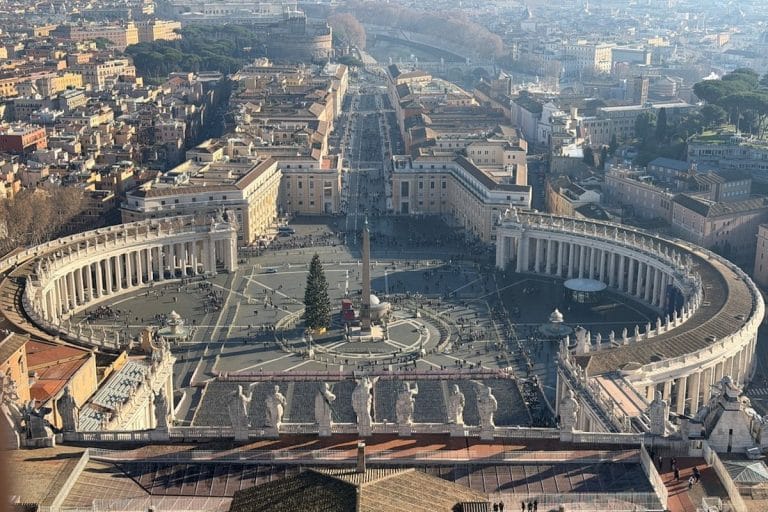
The College of Cardinals, in their wisdom or their fatigue, elected an American to lead 1.4 billion Catholics. Within ninety minutes the question on American television was not what this meant for the global church but whether His Holiness had ever liked a tweet, and if so, whose.

My friend Eliza had us over a week ago Saturday, the kind of evening where the salmon is excellent and the conversation has been pre-cleared by everyone’s communications director. A bipartisan lobbyist I’ll call Tom — that is not his name and it does not matter — pulled out his phone between the salad and the entrée and announced he had located the new pope’s college thesis and that it was, quote, a problem for the right. Across the table, a woman who runs a think tank I will not embarrass declared that actually, no, the new pope had said something in 2012 that made him essentially one of ours. Within twenty minutes the assembled company had divided the Vicar of Christ into two functional caucuses and was preparing him for markup.

There is a particular American disease, and I have written about it for thirty years, in which we cannot encounter a global event without first running it through the domestic blender. A pope is elected: which side won? A foreign leader dies: was he soft on us, or hard? A capital floods: did the relief contract go to a firm with the right donors? We are no longer capable of registering that something has happened which is not, fundamentally, about us.

My sister-in-law Judy, who works at the National Archives and has the temperament of a woman who has watched primary documents survive five administrations, called me Sunday and said, Maggie, do you understand that they put him on the cover of a magazine in a MAGA hat that someone Photoshopped on. I said I did. She said, And the other side put him in a Bernie sweater. I said I had seen that one too. She was quiet for a moment and then she said, He has been the pope for nineteen days.

The White House, to its credit, restrained itself for nearly a full afternoon before issuing a statement noting that the Holy Father was an American and that Americans, broadly, were doing very well at this time. A senator from a state I will let you guess introduced a resolution congratulating our pope. The Speaker, asked whether he would attend the installation, said he would have to consult his schedule, which is what people in Washington say when they have not yet been told what to think.

It used to be that the election of a pope was an occasion for, at minimum, a respectful pause. You did not have to be Catholic. You did not have to care. You were simply expected to register that something had happened that was larger than your party’s quarterly fundraising goals. We have lost that capacity. We have lost it with weddings and funerals, with hurricanes and foreign elections, with the deaths of writers we did not read. Everything is now a referendum on the only subject we recognize.

I asked Eliza, on the way out, whether she thought the new pope would visit Washington in his first year. She said she hoped so, because she had questions for him. I asked what kind of questions. She said, You know, the kind everyone is asking.

I am, of course, just asking myself. But a country that cannot let a pope be a pope for forty-eight hours before assigning him a party registration is a country that has run out of things it considers larger than itself. That is not a culture war. That is a culture that no longer believes anything is bigger than the room it is standing in.

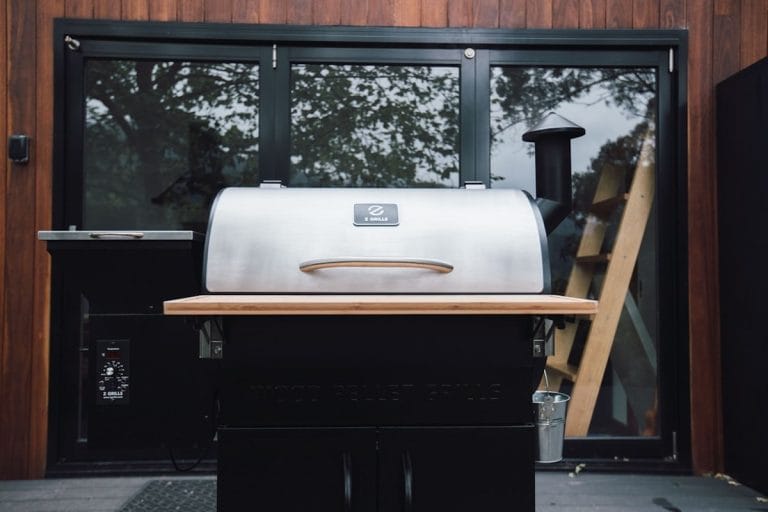
Man Who Bought $1,400 Smoker in March Unveils First Brisket, Family Eats It With Quiet Dignity of Hostages

0

FRANKLIN, TN — Local accountant Brett Pemberton pulled a 14-pound brisket off his $1,400 Traeger Timberline at 2:47 p.m. Monday afternoon, presented it to fourteen members of his extended family, and watched in real time as everyone over the age of nine adopted the calm, hostage-coded smile of people who have been instructed not to make any sudden movements.

Pemberton, who purchased the smoker in early March and has since posted 31 times in r/smoking under the username BrisketDaddy_TN, had been ‘dialing in his rub’ for eleven consecutive weekends. Sources at the cookout confirm the rub was, in the final analysis, mostly cumin.

‘It’s a textbook case of what we call Smoker Acquisition Syndrome,’ said Dr. Lenora Whitcomb, a culinary anthropologist at Belmont University. ‘A man buys a four-figure piece of equipment, watches one Aaron Franklin video, develops a personality, and within ninety days his wife is making a lot of eye contact with the dog.’

The brisket itself, witnesses said, had a bark ‘the color and structural integrity of a Civil War button’ and an internal texture that one cousin described, off the record, as ‘Memorial Day jerky.’ Pemberton’s eight-year-old nephew Cooper reportedly attempted to cut his slice with a butter knife for nearly a minute before quietly relocating it to a napkin and handing the napkin to a Labrador named Biscuit.

By Pemberton’s own accounting, the brisket cost approximately $187 per pound once factoring in the smoker, the pellets, the wireless thermometer, the apron that reads ‘Low and Slow Daddy-O,’ and a Bluetooth-enabled meat probe he keeps unprompted-ly referring to as ‘the Tesla of meat probes.’

‘It’s smoked,’ explained Pemberton’s wife Marissa, gripping a Truly with both hands. ‘He smoked it. He smoked it for fourteen hours. He woke up at 4 a.m. He took Friday off. There’s a spreadsheet, you guys. He made a spreadsheet.’

Pemberton, undeterred by the silence at the table, announced ambitious plans for the Fourth of July, including a whole hog he has already named ‘Gerald’ and a custom-welded rotisserie his HOA has not yet been formally notified about. He also confirmed he is ‘thinking about starting a podcast,’ a sentence that reportedly caused his father-in-law to rise and walk directly into the lake.

As of press time, Pemberton was standing on the back porch with three uncles, all of them nodding at the smoker the way men nod at a casket.

Clayborn County Memorial Day Flag-Planting Ends With 16 Extra Flags and No One Willing to Be the Person Who Asks

0

CLAYBORN, IL — The annual flag-planting at Pleasant Hill Veterans’ Cemetery, an event American Legion Post 412 has conducted on the Saturday before Memorial Day since 1957, concluded just past noon yesterday with sixteen small American flags remaining in the cardboard box and a long, considered silence from the seven men assembled around it.

The box, ordered each March from a wholesaler in Davenport, contained two hundred flags. The veterans’ section at Pleasant Hill contains, by every count anyone has ever taken, one hundred and eighty-four marked graves. The math, performed silently by all parties, was the kind nobody wanted to be the first to say out loud.

“Could be we got an extra packet this year,” said Post Commander Wendell Brubaker, 78, who has overseen the planting for nineteen of the last twenty-three years and who delivered this theory while looking at the ground. “Could be Davenport miscounted. Could be a lot of things. Memorial Day is for remembering, not arithmetic.”

Cemetery sexton Dale Voss, who arrived at 11:40 to lock the maintenance shed, declined to speculate as to whether the surplus might reflect graves that had been added, removed, relocated, or — in one persistent rumor dating to the Carter administration — quietly forgotten under the eastern hedgerow. “I just cut the grass,” Voss said. “You want answers, you talk to whoever did the paperwork in 1962, and good luck with that, because he’s also out here somewhere.”

Mrs. Edna Peterson, who watched the proceedings from her porch on Linden Street with a pair of binoculars and a glass of iced tea, offered the only on-the-record assessment of the afternoon. “They stood around that box for a good eleven minutes,” she said. “I’ve seen funerals move faster. At one point Wendell took his hat off, which I took to mean he had counted again.”

The flag-planting itself, which traditionally takes ninety minutes, was completed in seventy-two — a pace several members of Boy Scout Troop 88 attributed to “wanting to be done.” Scout Caleb Henning, 14, said he had asked his scoutmaster what to do with the remaining flags and had been told, in a tone he described as “weird,” to put them back in the box and not to mention it at the cookout.

A brief recount conducted at 12:18 by Legion treasurer Mert Solberg, using the laminated map he keeps in his glovebox, confirmed both the number of graves and the number of flags, after which Solberg folded the map back up and said, more to the map than to anyone present, that he was going to need a minute.

The sixteen surplus flags are now resting in a Folger’s coffee can on a shelf in the Legion Hall basement, where, per Brubaker, they will remain “until somebody figures something out, or until next May, whichever comes first.” When pressed on which outcome he considered more likely, Brubaker declined to speculate, and offered a reporter a chocolate long john that had, by all visible evidence, also been in the basement.