Home Blog Page 18

Smart Fridge Pre-Orders 16-Pound Turkey For Family That Went Vegan In 2021

0

RIDGEFIELD, CT — A Samsung Family Hub refrigerator confidently delivered a 16-pound Butterball, two cans of cream of mushroom soup, and a bag of stuffing-style bread cubes to the doorstep of a Ridgefield household Wednesday afternoon, on the basis of grocery patterns last meaningfully updated in October 2021, when the Hendricks family in question still ate turkey.

The fridge, which retails for $3,499 and advertises “AI Vision” capable of identifying 33 food categories, appears to have noted the steady disappearance of meat from its interior over the past three years and quietly concluded the household must simply be running low.

“These units are doing exactly what they were trained to do,” said Priya Korhonen, head of consumer-tech research at Beacon Strategy, “which is project a 2019 American household forward in time and order accordingly. The fridge does not know about the daughter’s documentary. The fridge cannot know.”

Records pulled from the device’s companion app show the refrigerator also auto-renewed a subscription to a meal-kit service the family canceled in 2022, attempted a second turkey order after the first was tagged “rejected at door,” and at one point flagged a half-block of firm tofu as “unidentified — possible spoilage.”

The discarded turkey, which Samsung’s terms of service note “remains the financial responsibility of the linked household,” is the third such bird to land on the Hendricks porch in as many years. The first two were donated to a neighbor who, the family says with some bitterness, the fridge has apparently also decided is them.

Reached for comment, Allison Hendricks said the family had largely assumed the fridge was a fridge. “It told us Tuesday we were low on butter. We are low on butter. So we sort of trusted it after that.” She added that her teenage daughter, who has been vegan since high school, took the delivery as confirmation of a thesis she has been advancing at dinner for some time.

Samsung said in a statement that the Family Hub’s predictive ordering feature “learns and adapts over time” and encouraged users to manually update dietary preferences in a settings menu located four submenus deep, beneath “Ice Maker” and above “Filter Replacement Reminders.” The company did not address questions about the appliance’s apparent confidence.

As of Thursday evening, the refrigerator had begun pre-ordering Christmas ham.

Spotify Wrapped Drops Nov. 6, AI Will Just Estimate the Rest of Your Year

0

STOCKHOLM — Spotify on Thursday released its 2025 Wrapped retrospective a full eight weeks before the year ends, telling users that an in-house generative model would extrapolate their remaining listening habits through December 31 with what the company described as “actuarially comfortable” accuracy.

The annual recap, which historically arrives in late November or early December once the year is mostly done happening, has been moved forward on a calendar the company says is now tuned to “engagement windows” rather than “the part where the data already exists.” Users opening the app Thursday morning saw their top artist, top genre, and a forecast of the songs they were statistically likeliest to play between now and New Year’s, all rendered in the same confident pastel cards as their actual history.

“Waiting until December to tell people about December was a product weakness we are pleased to have resolved,” read a press release the company did not bother attributing to anyone. “Our model has reviewed your last ten Novembers. It knows what you are about to do.”

The new Wrapped includes a Pre-Wrapped Wrapped — a separate retrospective of the listener’s habits during the eight weeks they were waiting for Wrapped — and a “Lock In Your Result” button for users who would prefer not to find out, in late December, that their top artist of the year became Mariah Carey for reasons they could have predicted but chose not to. A small italicized footer warns that listeners whose forecast deviates substantially from actual behavior will receive a corrected Wrapped on December 31 explaining what they should have listened to.

Major labels were briefed on the forecasts last week, according to a person familiar with the rollout, and at least three holiday singles have already been re-released to align with the windows in which the model expects users to be most receptive. A senior promo executive at one label, speaking on condition of anonymity because the conversation involved admitting any of this out loud, called the forecasts “extremely useful” and “slightly haunting.”

The shift has been particularly disorienting for younger users, for whom Wrapped has functioned, since roughly 2019, as the closest thing the calendar offers to a personality test. “The whole point was the surprise,” said one 24-year-old in a TikTok that has since drawn four million views, watching the app inform her on November 6 that her year had been “indie folk and a brief alt-country phase.” “I haven’t even had the alt-country phase yet.”

User reaction was otherwise mixed and largely disoriented. “It told me my number-one song of the year is one I haven’t heard,” said Theo Rasmussen, 31, of Brooklyn, examining his phone the way one examines a parking ticket. “It also predicted I’d be ‘feeling Bon Iver’ in mid-December, which is rude, but I respect it.”

Apple Music, reached for comment, confirmed that its own Replay feature would arrive on schedule in early December, “after the year being replayed has, in our internal estimation, occurred.”

Black Friday Promo Email Now Pollutes More Than the Sweater It’s Pushing

0

AUSTIN, TX — A carbon-accounting study released Tuesday by the Atlantic Heartland Project found that the average Black Friday promotional email now generates more lifetime greenhouse emissions than the acrylic-blend sweater it is attempting to sell, a finding researchers described as ‘simultaneously alarming, hilarious, and entirely predictable.’

The study tracked the journey of a single ‘EXTRA 30% OFF — TODAY ONLY (REALLY)’ email from a midsize apparel retailer through the AI-personalization stack, the dynamic-image rendering server, the deliverability-scoring engine, the inbox-placement-optimization layer, the spam-filter rebuttal microservice, and finally the 1.4 billion inboxes where it was deleted in under a second.

Total emissions came out to roughly 2.8 kilograms of CO2 per recipient, narrowly edging out the sweater itself, which is manufactured in Bangladesh, shipped via container vessel, and worn approximately 1.7 times before being donated.

‘The email has a worse footprint than the product because the email is sent to everyone, and the product is bought by almost no one,’ explained Reinhardt Volk, a sustainability researcher at the project. ‘It is, in a sense, the purest expression of the modern retail funnel: a planet-warming campaign to move inventory that did not need to be made, to people who did not want it, on behalf of a company that will be acquired by private equity in eighteen months.’

Retailers contacted for comment expressed concern over the findings and pledged to address them by sending a follow-up email apologizing for the carbon impact, which a Mailchimp representative confirmed would itself produce approximately 2.8 kilograms of CO2 per recipient. Several brands have already begun A/B testing subject lines such as ‘We Heard You About Climate (40% Off Fleece Inside).’

The personalization layer is the heaviest single contributor, according to the report, with each email now passing through an average of four large language models that determine whether the recipient should be addressed as ‘Hey,’ ‘Hey there,’ ‘Hey friend,’ or simply by their first name in lowercase. One mid-tier athleisure brand was found to be running a 70-billion-parameter model whose sole job is to decide between the fire emoji and the alarm-clock emoji.

Generational data inside the study was bleak in opposite directions. Shoppers under 30 unsubscribe from promotional emails at a rate of 71 percent, then immediately purchase the same item via a TikTok Shop livestream hosted by a woman in a ring light. Shoppers over 55 click through at a rate of 44 percent, often forwarding the email to a spouse with the message ‘is this a scam.’

Pressed on whether retailers might consider sending fewer emails, Marisol Penn, a vice president of lifecycle marketing at a Chicago-based agency, said the industry was actively exploring solutions, including a proposal to plant one tree for every ten thousand emails sent, provided the trees could also be encouraged to open at a 22 percent rate.

The Atlantic Heartland Project recommended consumers reduce their email-related emissions by unsubscribing, archiving in bulk, or simply ceasing to exist as a marketable demographic, an option the report acknowledged was ‘currently only available to the deceased, and even then inconsistently.’

NYC Elects Mamdani as Billionaires Discover They’ve Always Loved Palm Beach

0

NEW YORK, NY — Zohran Mamdani became the first 34-year-old democratic socialist to win Gracie Mansion Tuesday night, defeating Andrew Cuomo in a race that ended with the former governor demanding a recount of the last four years of his own life.

Mamdani’s victory speech, delivered to a crowd of supporters who had clearly never owned a second home, promised free buses, frozen rent, and a city government that picks up the phone when it isn’t a developer calling. Wall Street responded by issuing a joint statement praising the resilience of Greenwich, Connecticut.

Cuomo conceded shortly before midnight in a speech that managed to thank no one, blame several women by implication, and pivot smoothly into what aides described as “an exploratory committee for whichever election is happening next.” The former governor reportedly asked three separate staffers if Long Island had a mayor.

“This is a generational realignment,” said Halsey Bream, a senior fellow at the Atlantic Heartland Project, a centrist think tank that has been wrong about every primary since 2008. “Voters under 40 have decided they want housing, transit, and healthcare, which our polling indicates is a deeply unserious agenda compared to a man who resigned in disgrace four years ago and refuses to stop talking.”

Bream added that Cuomo had run a “disciplined, message-focused campaign,” referring presumably to the message that Andrew Cuomo would like to be mayor.

The hedge fund response was swift and predictable. By 11:40 p.m., three separate billionaires had announced their families had “always felt more at home in Florida,” a state none of them could locate on a map without first asking where their plane was. A managing partner at a Midtown firm, asked whether Mamdani’s tax proposals would actually drive capital out of the city, laughed for ninety seconds and then asked the reporter to leave.

National Democrats reacted to the win by congratulating Mamdani, distancing themselves from Mamdani, and quietly workshopping a 2028 platform that endorses universal childcare while making clear they would never personally support it. Senate leadership released a statement describing the victory as “an exciting moment for New York City” and “absolutely not something we’re going to talk about again.”

Republicans, for their part, spent the evening explaining that a socialist winning a mayoral race in the most expensive city in America was proof that socialism cannot work, a position they delivered with the confidence of men who have not read a sentence since 1987. The president posted six times about the election, three times about Mamdani’s name, and once about a hamburger.

Cuomo, reached Wednesday morning at a diner in Queens he had visited exactly once before, told the bartender’s cousin that he was “not done with public service” and that “the people deserve a choice,” apparently unaware that they had just made one. He was last seen asking whether the Staten Island borough president job comes with a car.

Mamdani begins his transition Wednesday with a stated focus on housing, public transit, and the unenviable task of running a city in which roughly 60 percent of the donor class has spent the last six weeks describing him, on cable, as Stalin in a kurta. His first appointment is reportedly a press secretary who has been instructed not to engage with any sentence beginning “As a longtime New Yorker.”

Cheney Died Monday. Suddenly We All Liked Him Again.

0

When did we agree to forgive Dick Cheney? Because I would have liked a vote, and I would have liked a roll call, and I would have liked at least a non-binding sense-of-the-Senate resolution before we all got into our good coats and went to the memorial.

Eliza had us over Sunday night — duck, the good Burgundy, three Senate spouses and a bipartisan lobbyist who examined his cufflink whenever Falluja came up, which was never, because Falluja did not come up.

By the time the news broke Monday morning, the eulogies were already drafted. Men I have known since the second Bush administration, men who once used the words “war” and “crime” in close enough proximity to count, were suddenly composing tender paragraphs about his deep love of country and his quiet decency at home. One of them emailed me the Times obit with the subject line “End of an era,” as though the era had ended on a high note.

The reframing happened in real time. By noon he was “complicated.” By two he was “the last grown-up Republican.” By four someone on a podcast I will not name had compared him to Cincinnatus. Cincinnatus.

The trick, of course, is the 2024 endorsement of Kamala Harris, which has apparently been graded as sufficient to launder thirty years of policy. We are a country that grades on a curve so generous it has stopped being a curve and started being an apology note.

At dinner I tried — I really did — to ask whether anyone at the table remembered what the man had actually done with the office. Eliza said, “Margaret, please.” The bipartisan lobbyist said the duck was extraordinary. A Senate spouse offered that the late Vice President had been “kind to staff,” which is the reflexive Washington kaddish, a prayer recited over every résumé in this town regardless of contents.

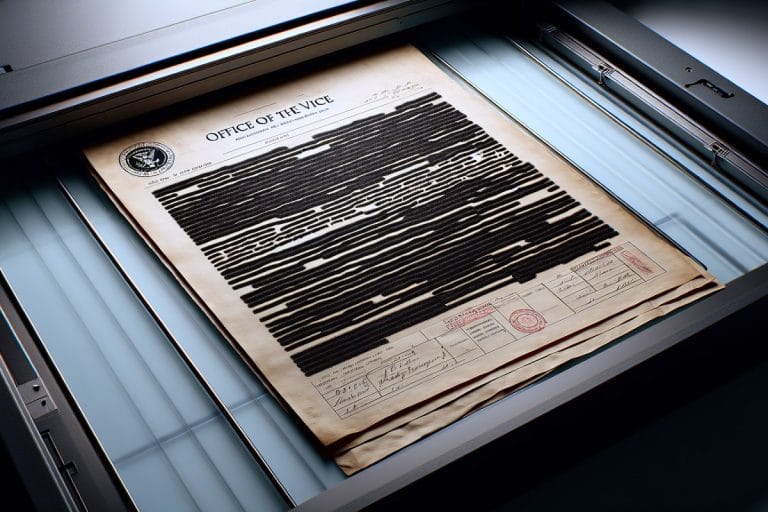
My sister-in-law Judy works at the National Archives and tells me the Cheney papers are already being prepped — the unredacted sections, anyway. There is, she says, a great deal that is not in the unredacted sections. I asked when the public would see the rest. She said her supervisor’s supervisor said “eventually,” which is the longest word in the federal vocabulary.

This is how it works now. We do not litigate; we curate. The dead man becomes whatever the room needs him to be, and the room on Sunday needed a Serious Republican, a category we have begun inventing retroactively whenever the present embarrasses us.

Eliza served a tarte tatin. The bipartisan lobbyist asked for the recipe. Someone said it was the best meal of the fall. We did not, at any point, say the word Iraq. We called it Sunday dinner, and we agreed it had been lovely, and we sent our regards to the family.

E-Waste Plant Reports Record Haul Of Items Bought Last Black Friday

0

FRESNO, CA — Workers at a regional electronics recycling facility this week began processing what plant manager Devin Eskridge described as “basically the same pallet that came through here last December, just sadder.” The shipment, weighing in at 41 tons, consisted almost entirely of 65-inch smart TVs, off-brand robot vacuums, and Bluetooth speakers shaped like animals — all purchased between November 24 and December 2 of last year.

The arrival, three weeks ahead of this year’s Black Friday, marks the tightest turnaround the facility has logged since it opened in 2009. As recently as 2018, a doorbuster microwave could be expected to last four to six years before reaching a sorting belt. The current average, according to facility intake records, is now 11 months and three days.

“You can tell the ones that didn’t make it past Easter,” said Marisol Tejada, a sorter on the small-appliances line, holding up an air fryer with the receipt still rubber-banded to the cord. “This one, the box was opened, but the protective film is on the screen. Somebody bought it, plugged it in once, and decided their life was already complicated enough.”

Tejada noted that roughly one in fourteen items arrives in its original packaging, often with a Best Buy or Target gift receipt tucked into the manual. Several boxes this week still contained the silica gel packets and a small printed insert thanking the buyer for choosing a more sustainable holiday.

The facility’s intake manifest read like a year-end retrospective written by a depressed algorithm: 1,200 voice assistants, 840 fitness rings, 612 air-quality monitors, and one industrial-grade pallet jack containing what appeared to be every smart picture frame sold in the Central Valley.

Industry analysts say the compressed lifecycle reflects a pricing structure in which the cheapest unit is now also the most disposable. “The economics are doing exactly what the economics were designed to do,” said Hollis Vance of the Beacon Materials Project, a Sacramento nonprofit that tracks consumer electronics flows. “You sell something for $89 that costs $87 to manufacture and $11 to repair. The math only works in one direction, and the direction is here.”

Manufacturer response has been muted. A spokesperson for one major TV brand, asked whether last year’s models were already obsolete, replied via email that the company “remains committed to the lifecycle of the product, however that lifecycle is defined by the customer.” The email was sent from a no-reply address.

Eskridge said his team has begun pre-allocating warehouse space for the 2025 cycle, which he expects to begin arriving in early October 2026, possibly sooner. A shipping container of next year’s returns, he noted, is technically already in transit — it is currently full of this year’s Black Friday merchandise, which is on a cargo ship somewhere off the coast of Long Beach.

“The boats just sort of pass each other now,” he said. “One coming, one going. Same stuff, mostly.”

Amazon to Burn Returned Sweaters for Heat to Power Server That Recommended Them

0

SEATTLE, WA — Amazon confirmed Friday that customer returns from the upcoming holiday rush will be routed directly into a network of company-owned incinerators, the captured heat from which will be used to warm the AWS data halls running the recommendation algorithm that suggested the returned items in the first place.

The initiative, branded Prime Recovery™, closes a loop the company described in its press release as “finally elegant.” A $34 acrylic cardigan purchased on Black Friday, returned December 27, and incinerated December 30 will, according to internal projections, help compute next year’s Black Friday cardigan recommendations by approximately January 4.

“What we’re doing here is taking a previously linear waste stream and turning it into a thermodynamic asset,” said Marin Eklund, head of Sustainable Throughput at Amazon, in a statement that did not mention the word “landfill” but used the word “vector” eleven times. The company estimates Prime Recovery will offset roughly 0.4% of AWS’s holiday-season electricity demand, or about what the recommendation engine itself spends suggesting one additional sweater to each Prime member on December 26.

Devra Holst, a supply-chain analyst at the Atlantic Heartland Project, noted that the math only works if customers continue returning items at current rates. “The model assumes a 38% return rate on apparel,” she said. “If shoppers got better at picking the right size on the first try, the data center would have to go back to burning natural gas, which Amazon has indicated would be, quote, a step backward.”

A leaked engineering memo describes the recommendation system as “net-positive against its own returns” provided the algorithm continues recommending acrylic, polyester, and other high-BTU synthetic fibers, which burn hotter than wool or cotton. Internal slides reportedly suggest deprioritizing organic and natural-fiber listings during peak compute windows.

Asked whether customers would be informed that their returned merchandise was being combusted rather than restocked, an Amazon spokesperson pointed to a sentence added to the returns policy in October that reads, in full, “Items may be processed via thermal recovery.” The sentence appears on page 14, between a clause about gift cards and a clause about Lithuania.

Reaction from shoppers reached on Reddit was muted. “Honestly I figured they were already doing it,” wrote user GwenInPhoenix, who returned a standing desk last March and received a refund accompanied by an email that simply said “thank you.” A separate user noted that the 14-day return window now coincides almost exactly with the burn cycle described in the company’s permitting filings with the Washington Department of Ecology.

Climate researchers were less sanguine. Dr. Henrik Vossberg of the Pacific Coastal Institute called the program “a closed loop in the same sense that a snake eating its own tail is a closed loop,” and pointed out that the carbon released by burning a polyester sweater exceeds, by a factor of roughly nine, the carbon that would have been emitted simply leaving the sweater on the warehouse shelf for someone else to buy.

Amazon countered that leaving the sweater on the shelf would not generate compute, and that compute, ultimately, is what the sweater was for.

The first Prime Recovery facility goes online November 28, which is, the company noted in passing, also Black Friday.

The Navy Sank Another Boat Tuesday. We Were Buying Candy.

0

When did extrajudicial killing in the Caribbean become a line item we file under maritime, somewhere between hurricane forecasts and cruise itineraries? I am asking because I genuinely cannot remember the moment the country agreed to it, and neither, apparently, can anyone on my block.

Eliza had us over Wednesday for what she insisted on calling a ‘pre-Halloween dinner,’ which meant the pumpkins were lit on the porch and there was a small bowl of candy corn on the bar that nobody was eating. The Navy had reportedly destroyed its fourth vessel of the month that morning. Six dead, give or take, depending on which agency you asked and what hour. We talked, instead, about whether full-size bars had become ostentatious.

The consensus, struck somewhere between the first and second pour, was that full-size bars are now expected on certain streets and resented on others, and that the resentment is the point. Eliza’s husband said his neighbor in Spring Valley had gone to king-size Reese’s two years ago and ‘set a tone.’ Everyone nodded as if this were a matter of zoning.

The bipartisan lobbyist was there — you know the one, he describes himself only as ‘bipartisan,’ which is what people in this town call themselves when they would prefer you not look up the client list. I asked him, lightly, what he made of the strikes. He examined his cufflink. He said the administration had been ‘careful about the legal architecture,’ a phrase I have now heard four men use this month, none of whom were lawyers.

My sister-in-law Judy, who works at the National Archives and has the disposition of someone who watches paper outlive presidents, mentioned over the salad course that the strike notifications to Congress have been arriving as one-paragraph memos. One paragraph. She said it the way she says things when she wants you to repeat them in a column without attributing them to her, so I am not.

Here is what I keep returning to. The administration is blowing up boats in international waters, killing the people on them, and declining to produce evidence that the people on them were doing what the administration says they were doing. This used to be the kind of thing we held hearings about. Now it is the kind of thing we mention, briefly, between the cheese plate and the question of whether the Hendersons are doing a haunted-house thing again this year.

The Hendersons are doing a haunted-house thing again this year. Eliza walked me through the layout — a fog machine on the walk, a teenager in a Scream mask at the gate, a strobe in the hedge that her insurance broker has ‘flagged.’ She is worried about the strobe. She is not worried about the boats. I am not saying these worries should be the same size. I am saying I have noticed which one comes up at dinner.

Around eleven, when the lobbyist was putting on his coat, somebody — I think it was Eliza’s brother, the one who teaches — said, almost to himself, that you cannot run a republic on one-paragraph memos. The lobbyist laughed, kindly, and said you absolutely could, you just had to be consistent about it. Then he asked Eliza for the recipe for the lamb.

Tonight my doorbell will ring forty or fifty times. I have laid in the full-size bars, because I live on the kind of street where that is now expected, and I will hand them out, and I will smile at the parents, and somewhere south of Puerto Rico the Navy will or will not destroy a fifth vessel, and we will or will not be told about it in a paragraph.

Eliza texted this morning to confirm I’d had a nice time. I said I had. We did not say the word Caribbean once all evening. We called it the lamb course, and we asked for the recipe.

Jonesboro, ME Foliage Peak Was Tuesday at 2:40 and Nobody Was Outside

0

JONESBORO, ME — The maples lining Route 187 reached their actual color peak at 2:40 p.m. Tuesday afternoon, according to Marlene Pelkey of Pelkey’s Down East Inn, who happened to be watching through the kitchen window because she was opening a can of soup.

By 4:15, in Mrs. Pelkey’s professional assessment, the moment had passed. By Wednesday morning, what she had earlier described as “the most red I have ever personally witnessed” was, in her own words, “spent.”

This puts Mrs. Pelkey directly at odds with the Washington County Tourism Council, the Maine Office of Tourism’s downeast foliage portal, and three charter buses from Quincy, Massachusetts that pulled into the inn’s gravel lot Thursday morning under the impression that something was still happening.

“The peak window for our region remains broadly active through November 2,” said Renee Coombs of the regional tourism desk, citing satellite analysis, an internal color-grade index, and a system she declined to elaborate on. “We do not adjust the published window based on a single property’s kitchen-window observation.”

Mrs. Pelkey, who has lived on Route 187 since 1971, has not been asked.

The Quincy buses, having driven five and a half hours to see a thing that according to Mrs. Pelkey had concluded forty-one hours earlier, disembarked anyway. A retired phys-ed teacher named Dennis Halloran walked down to the maple at the bottom of the inn’s drive, looked up at it for roughly ninety seconds, and asked his wife if this was it. His wife, Sue, said it was very nice.

“It was not it,” Mrs. Pelkey said later, from the porch, with the air of a woman who had already had this conversation twice that morning. “What he was looking at was the second wave. The second wave is not a peak. The second wave is a courtesy.”

Bus operator Frank Petracca of Petracca Coachways disputed the characterization. He noted that his passengers had each paid $340 for a foliage package that included two nights at a Best Western in Ellsworth, a boxed lunch from a sandwich shop in Bangor, and what the brochure described as “saturated autumnal color at peak intensity.” He said his customers had reported being “satisfied.” His customers, when asked, mostly reported being tired.

Mrs. Pelkey is now keeping a notebook. Tuesday at 2:40 is underlined twice. She has begun including barometric pressure.

Mom’s ‘Casual Little Boo Basket’ Contains Two Stanleys, $80 Candle

0

WEXFORD, PA — A boo basket left on the porch of local mother Krista Mendel at 6:14 a.m. Tuesday by a neighbor who described it in an attached card as “just a little something, no pressure!!” contained two 40-ounce Stanley tumblers, a Diptyque candle, an unopened Sephora Rare Beauty blush, and a hand-tied raffia bow that Mendel estimates cost more than the basket it was tied to.

The boo basket — a Halloween tradition in which neighbors anonymously gift each other small autumnal treats and then leave a printable sign instructing the recipient to “boo” two more houses — has, according to residents of the Foxcroft Crossing development, undergone what one woman called “a complete and total Stanley-ification” since approximately 2023.

“The original boo basket was, like, a Yankee Candle from TJ Maxx and some Reese’s Pumpkins,” said Lindsey Polachek, who has been on the receiving end of three baskets this October and now owes six. “Last year somebody put an Aerie sweatshirt in mine. This year Heather included a gift card to Sola Salon. I had to text my husband from the driveway. I said: this is escalation. This is hostile.”

The basket left on Mendel’s porch also contained a small ceramic ghost from Anthropologie’s Halloween line — sold out since August — a four-pack of Olipop, and a card that read, in cursive Cricut vinyl, “You’ve Been Booed!! 👻 Pass it on by Friday!!”

Mendel, who works part-time and has two children in travel soccer, said she has until Friday to assemble two reciprocal baskets of equivalent or greater value, plus print the sign, plus deliver them before sunrise without being seen.

“I cannot match a Diptyque candle,” she said, standing in her garage next to a half-assembled basket containing a Bath & Body Works three-wick, a bag of Ghirardelli, and what she described as “the panic.” “I have to go to HomeGoods at 9 p.m. tonight. I have to. There’s no other option. If I send a normal basket back, Heather will know.”

The Foxcroft Crossing boo basket chain, which began three years ago with a handful of Hershey’s miniatures and a Halloween-themed kitchen towel, now reportedly averages $74 per basket according to an informal spreadsheet maintained by one resident who asked to be identified only as “the Nextdoor lady.” That figure does not include the raffia.

“It’s an arms race, but make it gourd,” said Tessa Vroman, a sales rep who said she has spent more on boo baskets this October than on her own children’s Halloween costumes. “Last week I bought a $42 pumpkin-shaped charcuterie board for a woman whose name I had to look up on the HOA directory. I don’t know her. I have never spoken to her. I now owe her a basket.”

Heather Doogan, the originator of Mendel’s basket and a self-described “seasonal hostess,” declined to characterize the gesture as competitive, calling it instead “just a fun way to spread Halloween cheer to the women in my life I have ranked, internally, in tiers.”

As of Tuesday evening, Mendel was reportedly on her third trip to HomeGoods and had begun crying softly in the seasonal aisle next to a display of velvet pumpkins priced at $28 each.