Home Blog Page 12

County’s Lone TikTok Star, 74, Faces Ban With the Same Shrug He Gave the Polar Vortex

0

MILLBROOK JUNCTION, OH — At the Blue Heron Diner on Thursday morning, the talk turned, as it often does lately, to whether Duane Halverson’s videos about properly oiling a post-hole auger would survive the week. Duane, 74, a retired agricultural extension agent who began posting to TikTok in late 2022 after his granddaughter loaded the app onto a phone he describes as “the flat one,” has accumulated 412,000 followers and, as of Wednesday, a looming federal deadline that nobody at the counter could explain to him in a manner he found satisfying.

The app, which the Supreme Court spent part of last week debating, faces a potential shutdown in the United States on January 19 absent a sale by its Chinese parent company. For most of the country, this registers as a political abstraction. In Fayette County, it registers as a question of whether Duane will still be able to show people how to tell a healthy cornstalk from a sick one using only his thumb.

“He’s the only person from this zip code anybody outside this zip code has ever heard of,” said Marlys Pennington, president of the Millbrook Junction Chamber of Commerce and the person who last August convinced Duane to wear a Chamber polo in one of his videos, briefly tripling foot traffic at the hardware store. “We don’t have a Cracker Barrel. We have Duane.”

Dr. Peter Oleson, a media sociologist at Heartland State University whose 2023 paper coined the term “rural micro-celebrity drift,” said the phenomenon is both more widespread and more fragile than most policymakers realize. “These are first-generation internet users who found an audience by accident,” Oleson said. “They didn’t build a brand across platforms. They don’t have a Substack. If the app goes, the audience goes, and in many cases the performer doesn’t quite understand that it went.”

Duane himself has been taking the news in stride, which is to say he has been taking it the way he takes most news, which is by nodding once and continuing to do whatever he was doing. On Wednesday afternoon, reached at his kitchen table, he said he had heard something about a ban from his son-in-law Greg but had assumed Greg was, as Duane put it, “being Greg.” Informed that the matter had in fact reached the Supreme Court, Duane said, “Well. Huh.”

His granddaughter, Cassidy Halverson, 22, who manages the account in the loose sense that she occasionally tells him to stop filming vertically when he is already filming vertically, said the family has discussed migrating his content to Instagram Reels or YouTube Shorts. Duane has reportedly expressed concerns about both, primarily on the grounds that he does not wish to learn any additional words.

Mrs. Peterson, who lives two doors down and has appeared in the background of seventeen of Duane’s videos, mostly while walking a beagle named Ronald, said she is prepared for the ban to affect her as well. “People write to me,” she said. “From Australia. A woman in Perth sent me a scarf.” Asked whether she would follow Duane to a new platform, Mrs. Peterson said she would have to see what Ronald thought.

The county’s other digital economy, such as it is, appears largely insulated. The Millbrook Junction Public Library’s Facebook page has 1,100 followers, 900 of whom are believed to be the same eleven people logged in under different names. The high school cross-country team posts on Instagram. Nobody in the county, as best as anyone at the diner could determine, is on Threads, though Pastor Dellinger said he had “tried it once and did not care for the atmosphere.”

Representative Carla Minshew (R-OH 14), whose district includes Fayette County, issued a statement Wednesday supporting the ban on national security grounds and noting that American platforms “stand ready to welcome displaced creators.” Asked specifically about Duane, a spokesman for the congresswoman said the office was “not familiar with the individual case” but wished him well.

Cassidy has begun, without telling him, reposting his older videos to a backup YouTube channel she created in November. She has also printed out a one-page guide to the new app, which she intends to place on the kitchen table sometime after the 19th, next to the salt shaker, where he is most likely to find it. She has not yet decided whether to include the word “algorithm,” which she suspects he would take personally.

Down at the diner, the consensus was that Duane would be fine, because Duane is always fine, and that the rest of the country would have to figure out its own situation. Refilling coffee, waitress Denise Trombly offered what may be the definitive local take. “He was interesting before the phone,” she said. “The phone just told everybody else.”

Just Asking: Why Did Washington Suddenly Remember It Knew Jimmy Carter?

0

Have you noticed how quickly official Washington rediscovers a man the moment he can no longer embarrass them? I watched the procession for Jimmy Carter this morning with the sound off, because I already knew what the eulogies would say, and I already knew who would be seated where, and I already knew which senators would pull the solemn face they keep in a drawer for exactly this sort of occasion. I am not going to pretend to have agreed with Jimmy Carter on very much. But I will say this: the man they buried today and the man they spent forty years mocking are not, it turns out, the same person.

I was at a small dinner in Georgetown on Tuesday night — my friend Eliza Brennan, who used to run communications for a senator I will not name because she still has to live in this town, hosts these things — and the conversation turned, as it always does now, to the theater of the funeral. Someone at the table, a lobbyist whose firm I will charitably describe as bipartisan in the way a weather vane is bipartisan, said he thought it was “beautiful” that all five living presidents would sit in the same pew. Beautiful. That was the word he used. As though the pew itself were performing some moral function the country had otherwise misplaced.

I asked him, pleasantly, whether he had ever voted for Jimmy Carter. He had not. I asked him whether his firm had, in the late 1970s, lobbied against roughly every initiative Carter attempted. He conceded, with a small laugh, that it had. I asked him then what, exactly, was beautiful. He said I was being difficult. I am often accused of being difficult. I consider it a professional credential.

Here is the thing nobody in that cathedral was going to say out loud: Jimmy Carter was treated, in life, as a cautionary tale. He was the punchline in every consultant’s PowerPoint about what happens to a president who tells the public something the public does not wish to hear. “Malaise,” they called it, though he never used the word. For four decades, “Carter” was shorthand in this city for weakness, for earnestness, for the embarrassing belief that a president ought to mean what he says. And then the man has the temerity to live to a hundred, and suddenly the same people who built careers on his humiliation are lining up to carry his coffin.

My sister-in-law Judy, who worked at the National Archives for twenty-two years before taking a buyout she now regrets, called me last night to say the number of “Carter retrospectives” being filed in the press archive has roughly tripled since September. Tripled. As though the paper of record had been keeping a shoebox of warm adjectives under the desk, waiting. She said — and I am quoting her — “it’s like watching people cry at the funeral of a dog they left in the yard.”

I do not want to be misunderstood. I am not defending the Carter administration. The man presided over inflation that ate my parents’ savings and a hostage crisis that was mishandled by people who should have known better. His judgment on certain foreign matters was, to put it generously, sentimental. But he also said out loud, in 1979, that the country had a spiritual problem, and the country responded by firing him and hiring a man who promised that we did not. We have spent forty-five years finding out which of them was right, and I notice that the answer is not flattering to us.

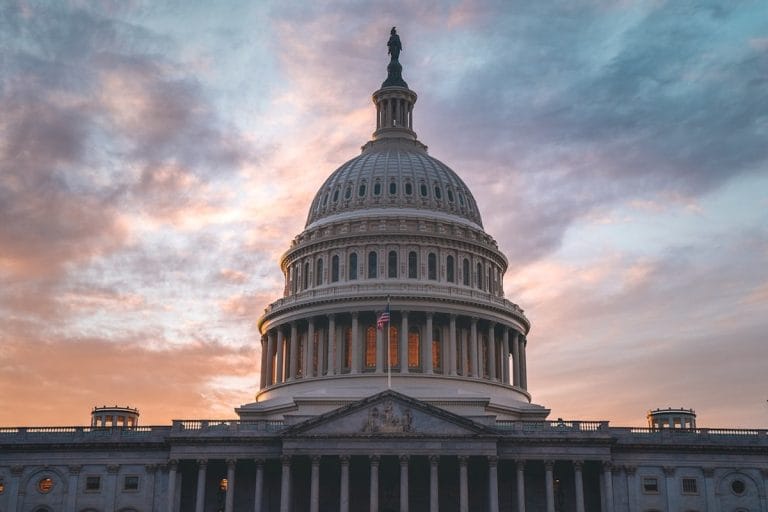
What struck me most, watching the coverage, was the procession of officials performing humility like an unfamiliar dance. The current occupants of the Capitol, of both parties, clasping their hands and lowering their heads as though they had ever, once, in any room, under any circumstances, chosen the harder truth over the easier lie. I saw one senator — I will not name him, but his hair alone is enough of an identifier — affect a tremble during the hymn. This is a man who last week voted against a bill he had personally co-sponsored in November. A tremble. For Carter. Please.

My neighbor Doug, who is not what you would call a political animal but who reads more than most of the people I used to work for, said something on his porch yesterday that I have not stopped thinking about. He said that we have gotten very good, as a country, at honoring people once they can’t inconvenience us anymore. Soldiers after the war is over. Civil rights leaders after the marches. Presidents after the polls. It is a kind of civic cowardice dressed up as civic religion, and we have gotten expert at it.

And isn’t it interesting — just asking — that this particular state funeral is landing in the same news cycle as a TikTok ban nobody can explain, a wildfire recovery nobody is funding properly, and a new federal cost-cutting initiative whose name sounds like a meme? A week from MLK Day, no less. The country is very busy this January performing reverence for the dead while being unable to agree on a single concrete obligation to the living. I leave it to you to decide whether that is a coincidence or a confession.

Eliza walked me to my car Tuesday night and said she thought I was being too hard on the mourners. She said people are allowed to change their minds. I agreed with her. People are absolutely allowed to change their minds. What they are not allowed to do, I think, is change their minds silently, after the fact, with no acknowledgment of the record, and then accept applause for the change as though it were a eulogy rather than an apology owed.

So here is my question, and I promise it is the last one. If Jimmy Carter was worth all this on Thursday, what was he worth on Wednesday? And what does it tell you about a capital city — about a country — that the difference between those two answers is the entire length of a man’s life? I am watching where this is going. I do not like the view. And I suspect, if you are still reading me, neither do you.

I Threw Out Everything in My Pantry With More Than Three Ingredients — Here’s What Happened

0

This year, my husband Trent and I decided to make a big change. Starting January 1st, we packed up everything in our pantry with more than three words in the ingredients list and donated it to the farm for the chickens. The chickens, I should mention, have never seemed happier.

If you’ve been following along in our homesteading Facebook group, you know I’d been working up to this for months. But after the holidays — which, let’s be honest, were a carb-and-chemical free-for-all even in our house — I knew it was time. It started when a woman named Heather in my Moms Against Seed Oils group (she’s an acupuncturist in Portland, absolutely brilliant) explained the three-ingredient rule. If a packaged food has more than three ingredients, she said, it’s basically a chemistry project. I went to check the back of a granola bar in my pantry and counted twenty-three ingredients. Twenty-three.

So what made the cut? Real butter (one word, one ingredient — perfect). Honey from our neighbor Ed’s hives (one word, one ingredient). Bone broth that I slow-cooked myself from the Thanksgiving turkey bones I’d saved in my chest freezer. Eggs from our own girls. I kept my sourdough starter because technically it’s just flour, water, and time, and time isn’t really an ingredient.

There were some gray areas. I’ll admit I kept the sea salt. Technically it has the word ‘salt’ on the label, which is one ingredient, but also I reasoned that salt isn’t really food — it’s more of a mineral, and our bodies literally cannot function without it. My sister-in-law Megan, who works at a pediatric office and is basically a nurse, agreed with me. She said the rule is for processed things, not elemental things. That made sense.

What went was harder. Olive oil — turns out it’s rarely actually olive oil, according to a food blog a friend of mine shared. The olive oil industry is apparently one of the most corrupt in the world, and most of what’s sold in American stores is diluted with canola or soybean. I had four bottles of it. They went to the chickens. I also got rid of all our baking soda, which I know doesn’t technically have more than three words on the label, but when I read about how it’s actually mined — like, from the ground — I realized I’ve been trying to move away from mined ingredients this year as a general principle. That felt right.

The kids were dramatic at first. Our oldest Sage (she’s eight) asked if we were going to starve, which broke my heart, because no, sweetie — we are going to thrive. I explained that once you clear out the toxins, your body becomes more efficient and you actually need less food. I think she’s starting to understand. She did ask yesterday if Grandma Lorraine’s birthday cookies ‘counted’ and I had to tell her that no, we don’t count exceptions, we make choices.

Trent has been a champion through all of this, though I did catch him with a protein bar from his truck console last Tuesday. When I asked him about it he just said ‘I had a meeting, Brooke.’ I’m not going to be the wife who monitors her husband’s snacks. But I did leave a printout from the Weston A. Price Foundation on his nightstand, and I think he’s coming around. I noticed he skipped the creamer in his coffee yesterday and used raw milk from our share. Progress.

If you’re thinking about making a change in 2025, my advice is to start small. Start with one shelf. Flip every package around and read the back — like, really read it. If there are more than three words in the ingredients list, put it in the donation bag. Your body will thank you, and it will know. It always knows.

Also, if anyone in the Asheville area has a lead on grass-fed, locally sourced tallow, please message me — I’m trying to move our whole kitchen off store-bought fats by Easter.

New Year, Same You: Millions Still Procrastinating 2025 Celebrations While Global Elite Thank Them for Continued Obedience

0

JANUARY 7 — Across the country, millions of people are still frantically trying to plan their “New Year, New You” celebrations — more than a week after 2025 quietly began. According to a new survey, nearly 48% of Americans haven’t yet taken down last year’s decorations, let alone committed to those lofty gym plans or life overhauls promised in December.

Sociologists say this isn’t surprising, as the annual tradition of New Year reinvention is less about self-empowerment and more about maintaining a cycle of consumption and defeat that serves global elites.

“It’s genius, really,” explained Dr. Lyle Hargrove, a professor of modern culture. “You convince people that every year they can completely transform themselves. Then you sell them all the books, smoothies, courses, gym memberships, and weighted blankets — all while ensuring they remain too exhausted, indebted, and underpaid to ever actually follow through.”

Indeed, reports show many Americans entered 2025 already burned out from 2024, with average savings depleted and PTO balances hovering near zero. The result? An increasing number of citizens are still trying to coordinate belated New Year’s parties this weekend, hoping to at least toast the idea of change with a half-priced bottle of prosecco.

Social media is awash in hashtags like #NewYearNewMeAgain and #ResolutionsDeferred.

“It’s hard to be a new me when I’m still paying off Christmas,” tweeted one user.

Meanwhile, global elites — undeterred — continue to profit from this hamster wheel of aspiration and inertia. “Every year, it’s the same pattern,” noted an unnamed hedge fund manager. “They buy the vision boards, download the apps, and binge the motivational podcasts… and six weeks later they’re back in line for payday loans and overpriced coffee. Why would we ever want that to change?”

As for the millions still behind on their 2025 celebrations, most remain unfazed. “I’ll celebrate next week,” said one optimistic office worker. “Or maybe February. You know what — I’m aiming for Q2. New fiscal year, new me.”

Terrorist Organizations Demand Ban on Tesla Cybertruck: ‘They Just Don’t Blow Up Like We Hoped’

0

DOHA, QATAR — In a rare show of unity, several prominent terrorist organizations have issued a joint statement calling for a global prohibition on the use of Tesla’s Cybertruck in their operations. The groups cited the vehicle’s unexpectedly durable design and its disappointing performance in recent “field tests” as reasons for the ban.

“We’re deeply disheartened,” read the statement, which was distributed via an encrypted messaging app and accompanied by a poorly edited graphic of a Cybertruck with a red circle and slash through it. “Tesla has made a vehicle that simply does not meet the explosive standards required for our activities. They just don’t blow up like we had hoped.”

The statement comes in the wake of a high-profile incident in Las Vegas, where a Cybertruck was used in an attempted attack outside a prominent hotel. Despite an internal explosion, the Cybertruck’s angular, bulletproof design effectively contained the blast, minimizing damage to the surrounding area. Footage of the event showed the vehicle’s famously unbreakable windows remaining intact, prompting Elon Musk to tweet: “Cybertruck: 1, Terrorists: 0.”

The fallout has sparked heated debates within extremist circles. “It’s embarrassing,” said a spokesperson for the International Federation of Extremists Who Shall Not Be Named. “Our operatives are spending top dollar on vehicles we thought would deliver maximum devastation. Instead, we’re getting high-tech paperweights.”

Experts say the controversy highlights the unintended consequences of Tesla’s relentless commitment to innovation. “The Cybertruck is a marvel of engineering,” said automotive analyst Dr. Karen Sprocket. “But it’s a terrible choice for anyone looking to make a literal bang. The reinforced exoskeleton and steel alloy chassis are just too effective at containing explosive forces.”

Elon Musk responded to the criticism with his trademark irreverence. “If terrorists don’t like our product, I’d say we’re doing something right,” he said during a live-streamed Q&A from Tesla’s Gigafactory. Musk also teased a potential advertising campaign for the Cybertruck, centered around its unexpected new tagline: “Built Tougher Than Terrorists Can Handle.”

Meanwhile, U.S. officials have applauded the Cybertruck’s performance, with one Pentagon spokesperson joking, “Who knew that Tesla would become an unintentional ally in counterterrorism? Maybe we should deploy a fleet.”

At publishing time, sources revealed that some terrorist groups were pivoting to alternative vehicles, with one organization reportedly “looking into a fleet of vintage Yugos.” Critics are already skeptical, noting that the Yugo’s reputation for falling apart on its own might render any explosive enhancement redundant.

Alex Jones: Big Tech, Feds Creating ‘Human Botnet’ Using Router Waves to Spawn Replicators

AUSTIN, TX — In a fiery three-hour segment on InfoWars this week, Alex Jones unveiled what he called “the biggest, darkest, most terrifying plan ever concocted by Big Tech and the shadow government” — a secret collaboration to create a router-based botnet that doesn’t just infect devices… but turns humans into programmable drones known as “Replicators.”

“This is it, folks,” Jones warned his audience. “We’ve known for years they were using 5G towers to mess with your DNA. But now, they’ve gone next level. Your own Wi-Fi router is ground zero. They’re radiating waves — proprietary, patented frequencies — designed to overwrite your brain’s natural thought patterns. And what are they replacing them with? Compliance. Consumerism. And worst of all — collectivism.”

According to Jones, the so-called “Human Botnet Initiative” involves coordinated firmware updates being pushed to everyday routers from major manufacturers. These updates allegedly enable the devices to emit low-frequency pulses that slowly erode independent thought, turning ordinary citizens into replicators — mindless extensions of government will.

“They want human nodes, people!” Jones shouted. “Not just your data, not just your money. They want your free will. You’ll wake up one day chanting slogans you’ve never heard before and voting for politicians you hate — and you won’t even know why! That’s the Replicator Protocol!”

Jones also claimed that leaked documents from unnamed “patriot sources” suggest the program is being piloted in major cities, with a focus on homes where multiple smart devices are present.

“Every time you ask Alexa about the weather? That’s another piece of your soul uploaded to the hive,” he warned.

When reached for comment, tech companies categorically denied the existence of such a program, calling Jones’ claims “utter nonsense.” Government agencies declined to respond — which Jones immediately took as confirmation.

“If they’re not denying it, that means they’re doing it!” he said. “Mark my words, folks — if we don’t act now, by 2026, half the country will be walking, talking bots! They won’t need AI. We’ll BE the AI!

Jones closed his segment by promoting his new “Replicator Defense Pack,” which includes router shielding mesh, brainwave-neutralizing headbands, and a course on “de-programming your household.” Introductory price: $499.

Breaking: Donald Trump Nominates Oscar the Grouch as White House Communications Director

0

WASHINGTON, D.C. — In an unprecedented move that has even the most seasoned political analysts scratching their heads, President Donald J. Trump, on the cusp of his second term, has nominated Oscar the Grouch to serve as White House Communications Director. The announcement was made Tuesday morning in front of a gleaming golden trash can hastily placed in the Rose Garden, where Trump explained his unorthodox choice to a befuddled crowd of reporters.

“Nobody gets it like Oscar,” Trump declared, pointing emphatically at the green, fuzzy figure who appeared out of the can, frowning at the audience. “He’s tough, he’s got the best attitude. He doesn’t take crap from anybody—except literal garbage—which, frankly, is exactly what we need in this job.”

The former president, never one to shy away from spectacle, emphasized that Oscar’s experience in “the swamp” would make him the perfect fit. “Who better to deal with the press than someone who lives in a swampy mess?” Trump said, gesturing toward Oscar, who, true to form, grumbled audibly and rolled his eyes.

In his acceptance speech, Oscar the Grouch wasted no time in setting the tone for what will likely be a colorful tenure. “Yeah, yeah, I’ll do it. But don’t think I’m going to start being nice to anyone,” Oscar snapped. “All you reporters better get ready for some honest answers. And by ‘honest,’ I mean I’m not gonna sugarcoat anything. In fact, I might just tell you to buzz off if I’m not in the mood.”

Political insiders are divided over the nomination. Some believe that Oscar’s no-nonsense demeanor might actually bring some rare, refreshing candor to the White House briefing room. Others, however, worry that the Sesame Street star’s habitual negativity could lead to “throw-away responses” that could further erode the already delicate relationship between the White House and the press.

Sources close to the administration say the decision was made after Trump became increasingly frustrated with finding a candidate willing to “tell it like it is,” and “not whine all the time about tweets.” One aide, speaking on condition of anonymity, remarked, “The President felt Oscar’s deep-rooted disdain for everyone was preferable to the usual fake smiles. Also, Oscar has absolutely zero interest in Twitter, which was honestly a big plus.”

Oscar’s first press conference is expected to be held later this week, though reporters have already been warned to “bring their own trash bags” and prepare for some “heavy-duty grouchiness.” Meanwhile, whispers of Big Bird being considered for Secretary of Education have begun to circulate, leaving many Americans bracing themselves for a Cabinet lineup like no other.

“Who knows,” Trump said with a wink, “Maybe a little trash talk is just what this country needs.”

Alaska: A Stark Reminder That Untamed Nature Still Exists — And It’s Trying to Kill You

0

ANCHORAGE — While travel magazines continue to gush over the frozen vistas and majestic wildlife of Alaska, many experts are sounding a dire warning: vast, unpaved natural spaces remain shockingly common — and statistically, nature remains the leading cause of natural death.

Tourists who flock to Alaska each winter, enticed by images of shimmering ice caves and snow-blanketed peaks, are often unaware that this so-called “playground of ice and snow” is in fact an environment designed by evolution to freeze, maul, or starve anything foolish enough to enter it without Gore-Tex and granola bars.

“This isn’t some curated eco-experience,” said Dr. Lin Zhao, an urban environmental planner. “It’s a place where animals with antlers the size of compact sedans still roam freely, and the snow doesn’t politely melt when you tell it to. Quite frankly, it’s barbaric.”

A recent think tank report from the Center for Urban Safety points out that while we have successfully paved over much of modern life, vast swaths of Alaska stubbornly remain “wild” — defined as any area where a grizzly bear can outpace your Wi-Fi signal.

“Nature,” the report warns, “remains one of the top killers of humans globally — through falls, exposure, hypothermia, wildlife encounters, and poorly thought-out Instagram photo shoots.”

Despite this, travel influencers continue to post glowing reviews of the Alaskan winter, urging followers to “get back to nature.” Experts urge caution.

“Back to nature? You mean back to an era where you freeze solid on your commute to get berries?” asked Dr. Zhao. “No thank you. We have perfectly good climate-controlled spaces now. There’s a reason humanity invented central heating.”

Local officials have tried to balance tourism promotion with safety reminders, recently updating Anchorage’s welcome sign to read: “Alaska: Beautiful, Deadly, No Refunds.”

Jimmy Carter, Peanut Farmer and Habitual Sweater-Wearer, Dies at 100

PLAINS, GA — Jimmy Carter, the humble peanut farmer who rose to become the 39th President of the United States — and a global symbol of cardigan diplomacy — has passed away at the age of 100, leaving behind a legacy of peacemaking, energy conservation, and yes… some delightfully odd personal moments.

While Carter’s presidency was marked by crises — from gas shortages to the Iran hostage ordeal — the man himself remained an unflappable optimist who once proudly declared that Americans should turn down their thermostats and wear sweaters instead of wasting energy. The White House thermostat, in fact, was famously kept so low that aides often worked in parkas.

Carter also drew attention early in his presidency when, during a fishing trip in Georgia, he was attacked by what he described as a “swimming rabbit.” The incident, dubbed “The Killer Rabbit Attack” by the press, led to widespread amusement — though Carter insisted the rabbit was “definitely hostile.”

Ever the hands-on leader, Carter took it upon himself to personally monitor White House maintenance, often checking thermostats, turning off unused lights, and at one point, quietly ordering that wine service be cut from many official functions to save taxpayer dollars.

“He’d come in at 6 a.m., wearing a cardigan, and start adjusting the thermostats,” one former aide recalled. “He cared about energy conservation more than any politician before or since — and probably more than a few HVAC technicians.”

Beyond the quirks, Carter’s true legacy lies in his tireless efforts for peace — brokering the landmark Camp David Accords between Egypt and Israel, and later becoming one of the world’s most dedicated election monitors and human rights advocates. He also personally led Habitat for Humanity builds well into his 90s, once seen atop a ladder with a hammer at age 95.

As news of his passing spread, tributes poured in from around the world. “We should all hope to age with half as much dignity and twice as many cardigans,” one U.N. diplomat remarked.

In his final public statement, Carter summed up his own ethos: “I have one life and one chance to make it count for something.”

And make it count, he did — thermostats, rabbits, and all.

Billionaires Now Sharing Yachts and Picassos to Borrow More Money They Don’t Need

0

NEW YORK — In the latest twist on “creative” finance, sources on Wall Street report that the ultra-wealthy are increasingly sharing ownership of yachts, rare art, and vacation compounds as collateral in order to gain access to higher credit lines — all while bankers eagerly mint record profits off the risky loans.

“They call it ‘asset pooling,’ but let’s be honest — it’s billionaire timeshare season,” said financial analyst Janet Mueller. “Instead of, say, two hedge fund managers each having a $50 million yacht sitting idle, they now co-own a $100 million one and use it to back a loan for even more speculative investments. It’s Monopoly for people who think Monopoly is for poor people.”

According to insiders, the trend began quietly last year when several tech moguls pooled together their private islands as collateral for a revolving line of credit — sparking a wave of similar deals across the financial sector.

“It’s very innovative,” said a senior executive at a major investment bank, requesting anonymity. “Look — if you’ve got a Rembrandt, a Gulfstream G700, and fractional ownership of a ski resort in Verbier, why not use them as leverage to buy crypto derivatives and distressed debt from other billionaires who are doing the same thing? It’s the new American dream.”

Critics are sounding alarms that this frenzy of unsecured, ego-fueled lending could trigger instability if asset values were to suddenly collapse. “The last thing we need is cascading defaults tied to whether a Saudi prince’s Picasso fetches $80 million or $40 million at auction,” warned economist Dr. Carl Bennett.

Banking executives remain unfazed. “What could go wrong?” chuckled one VP at a private lending firm. “It’s not like yachts ever sink. And besides, they’re insured — probably.”

The Federal Reserve declined to comment on whether they would intervene in the growing trend, but one regulator privately remarked, “We’re monitoring the situation. And by ‘monitoring,’ I mean, we’ve started googling ‘what is a fractionalized Michelangelo?’”