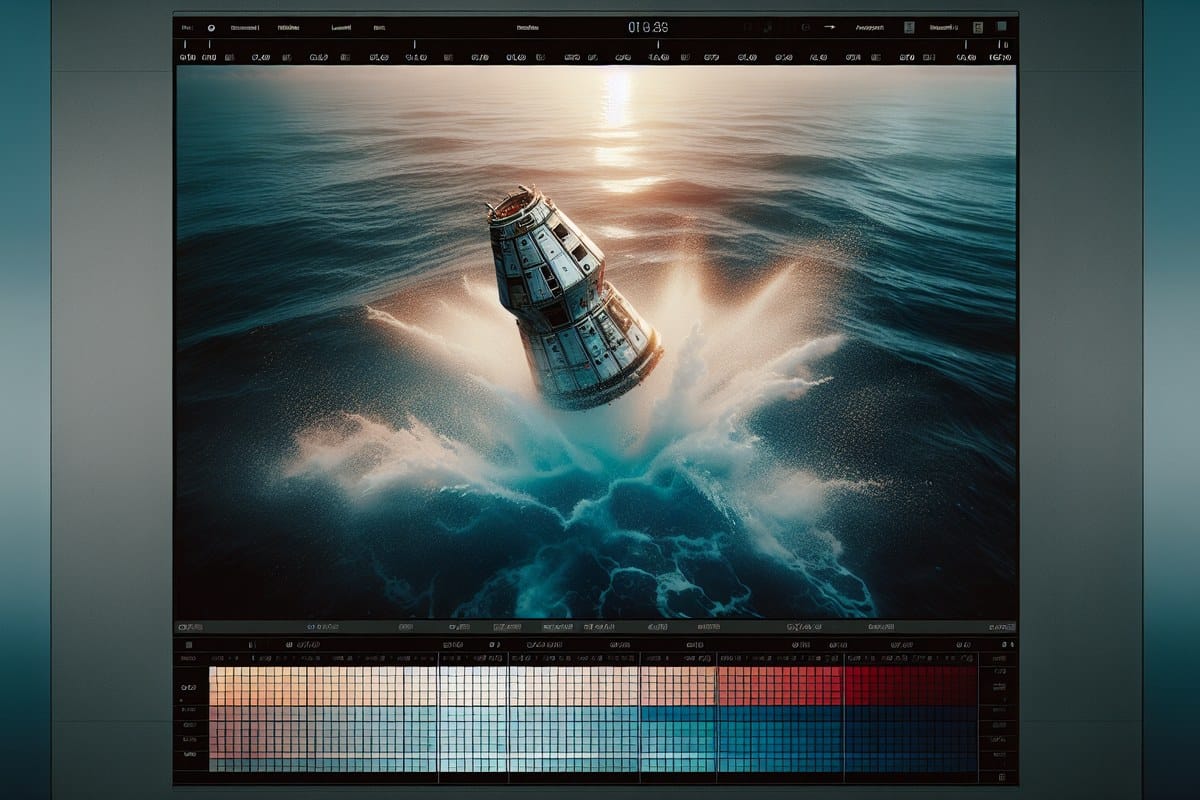
OFF THE COAST OF TALLAHASSEE, FL — NASA astronauts Suni Williams and Butch Wilmore splashed down in the Gulf on Tuesday evening after a Boeing Starliner mission that was originally scheduled to last eight days and instead lasted approximately one full pregnancy, emerging from the capsule visibly thinner, visibly older, and clutching a Boeing customer satisfaction survey that a recovery diver had handed them through the hatch.
The pair had been stuck aboard the International Space Station since June after their Starliner capsule, marketed in 2019 promotional materials as ‘the most reliable ride to low-Earth orbit,’ developed helium leaks, thruster failures, and what one engineer described as ‘a lot of noises we did not anticipate the spacecraft to be making.’ NASA ultimately sent the capsule home empty rather than risk putting humans inside it, a decision Boeing has politely characterized as ‘an abundance of caution’ and everyone else has characterized as ‘correct.’
‘We are absolutely thrilled to welcome Butch and Suni home, and Boeing is proud to have played a role in their journey,’ said Boeing spokesperson Marissa Trent-Holloway, who declined to specify which role. ‘As a token of our appreciation, both astronauts will receive a $40 credit applicable toward any future Starliner mission, plus a complimentary upgrade to the seat with the working thruster.’
Williams and Wilmore reportedly spent the unplanned 286 additional days conducting science experiments, performing station maintenance, and watching their once-temporary toiletry kits achieve a kind of permanent residency. Wilmore is said to have grown a beard, lost it, grown it back, and lost it again on a timeline that NASA flight surgeons described as ’emotionally legible.’ Williams used the extended stay to break the record for total spacewalk time by a woman, an achievement she did not pursue so much as accidentally back into.
Dr. Helena Voss, an aerospace systems analyst at the Brookings Institution, said the mission underscores a broader pattern in the privatized space economy. ‘There’s an old joke that NASA used to over-engineer everything and now contractors under-engineer everything,’ Voss said. ‘The Starliner program is what happens when you let the people who built the 737 MAX design something that also has to come back down.’ She added that Boeing has been paid roughly $4.2 billion for Starliner to date, or approximately $14.7 million per day Williams and Wilmore were not supposed to be up there.
SpaceX, which ultimately ferried the astronauts home aboard a Crew Dragon capsule, declined to gloat publicly, though Elon Musk posted a photo of the splashdown on X with the caption ‘🫡’ followed eleven minutes later by a second post reading ‘just sayin’.’ Boeing executives are reportedly working on a comprehensive Starliner improvement plan that one source described as ‘mostly a list of things we already told them in 2019.’
Asked at a brief press availability whether they would fly Starliner again, Wilmore offered a long pause, a small smile, and the words ‘I have a lot of confidence in the NASA assignment process,’ which reporters took to mean no. Williams, when pressed, said she was looking forward to seeing her dogs, eating a salad, and standing on a surface that does not require her to also be strapped to it.
The astronauts will undergo several weeks of rehabilitation as their bodies readjust to gravity. Boeing’s stock closed up 1.4 percent on the news, on optimism that the company had finally finished the mission it started.