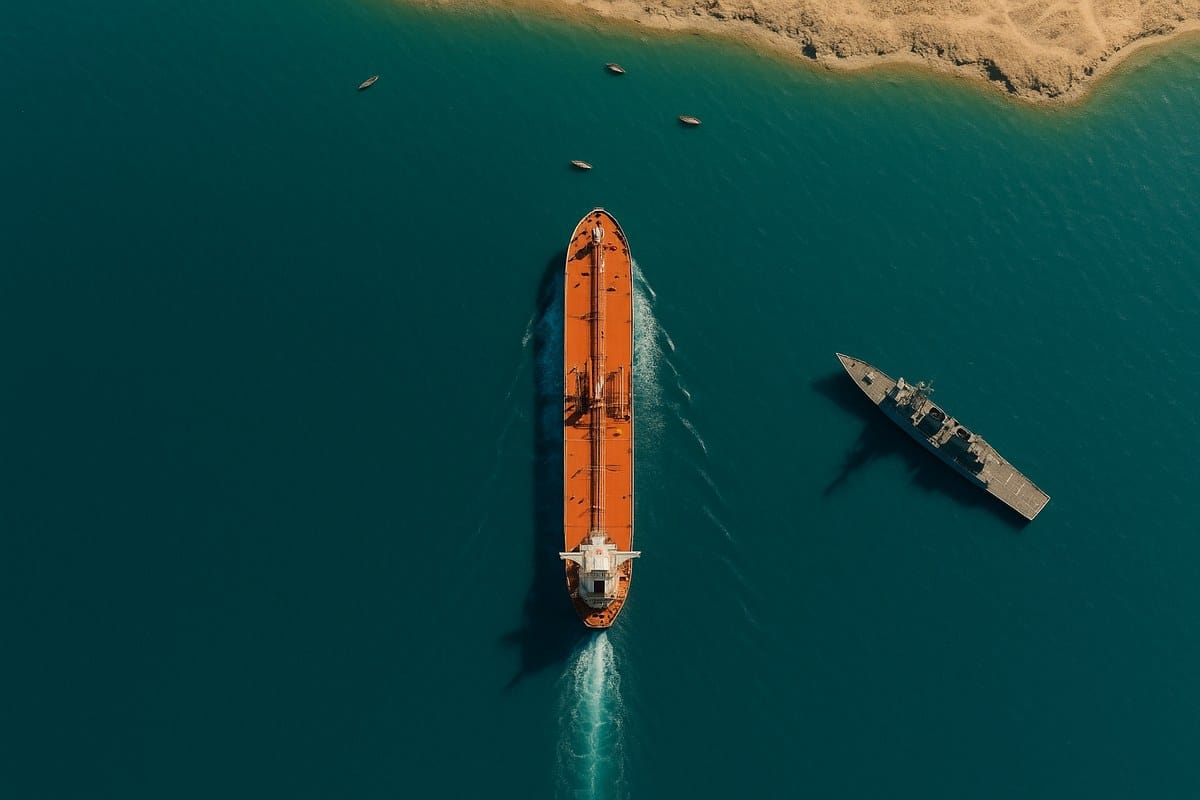
WASHINGTON — The United States and the Islamic Republic of Iran signed a fourteen-day ceasefire Friday morning, reopening the Strait of Hormuz and granting both militaries the precise amount of time necessary to take inventory, place new orders, and remember which coastline was theirs.
The agreement, negotiated in Muscat over what one participant described as “a very productive plate of dates,” runs through April 24, at which point both governments will either extend the ceasefire, quietly ignore it, or resume hostilities with the enhanced equipment they will have purchased in the interim. Officials confirmed the two-week window was chosen because three weeks “felt like a commitment.”
A freight broker at the Port of Fujairah, reached by phone during his lunch, said tanker traffic resumed almost immediately. “Everybody’s moving. The Saudis are moving, the Chinese are moving, and there’s a U.S. destroyer parked out there that hasn’t stopped waving at us since sunrise,” he said. “You can tell it’s peace because the insurance premiums only doubled.”
Under the terms of the deal, Iran agrees not to mine the strait, seize commercial vessels, or fire on U.S. assets, in exchange for which the United States agrees to describe all of the above as “regional de-escalation” for the next fourteen days. A senior administration official, speaking on background because he had not yet been assigned talking points, called the framework “the most durable ceasefire we’ve ever built with an expiration date printed on it.”
President Trump celebrated the agreement Friday afternoon in the Rose Garden, telling reporters the deal was “the best ceasefire, probably ever, and it only took two weeks, which is a lot faster than the longer ones.” Pressed on what happens on day fifteen, the President said he had “a lot of options,” gestured vaguely at an aide holding a folder, and moved on to a question about the Michael Jackson biopic.
Iranian state media hailed the arrangement as a decisive victory secured through the courage of the Iranian people and the strategic patience of the Supreme Leader, who is, per U.S. officials, still dead. A spokesman for the Iranian foreign ministry clarified that the country’s negotiating posture had not been affected by “minor personnel developments” and that any successor, once named, would honor the deal for as long as it remained convenient.
Analysts at MERIDIAN-3, a Beltway policy shop that exists primarily to be quoted on days like this, noted that fourteen-day ceasefires historically produce one of three outcomes: extension, collapse, or a second fourteen-day ceasefire that pretends the first one worked. “This is what we call a rolling peace,” said senior fellow Amara Doss. “It’s peace in the same way a rental car is your car.”
Shipping insurers, oil traders, and every foreign ministry between Ankara and New Delhi spent Friday afternoon quietly modeling what April 25 looks like. Pentagon planners, reached for comment, said they were focused on the ceasefire itself and had not begun preparing for its conclusion, a statement no one in the room believed, including the person making it.
The State Department confirmed that Secretary Rubio would travel to the region next week to shore up the agreement, meet with Gulf partners, and stand near enough to the Strait of Hormuz to be photographed with it. Asked whether the trip constituted a vote of confidence in the ceasefire’s durability, a spokeswoman said the Secretary had booked a return flight, which she described as “one data point.”