NEW YORK — U.S. equity markets opened the 2026 trading year Friday morning to the same dull hum of seven mega-cap tech tickers carrying the index on their backs, while the other 493 names in the S&P 500 reportedly spent the session checking their phones and waiting for someone to notice them.
By 10:15 a.m., Nvidia, Microsoft, Apple, Alphabet, Amazon, Meta, and Broadcom accounted for roughly 78 percent of the day’s gains, a figure traders described as ‘healthy,’ ‘concentrated,’ and ‘almost certainly fine.’ The remaining tape moved sideways with the energy of a man eating a salad he didn’t want.
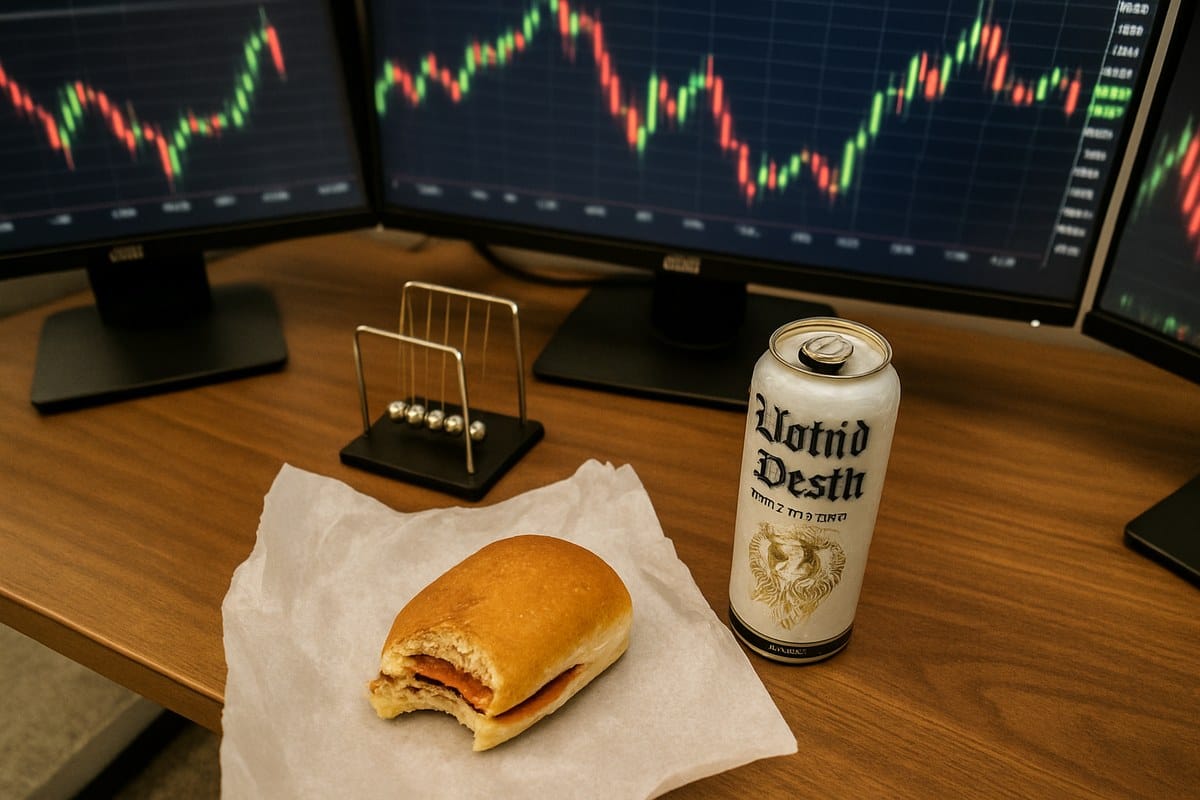
On the desk at a mid-tier broker-dealer in Midtown — beige carpet, one dead ficus, a Bloomberg terminal still set to the previous occupant’s color scheme — a senior equity strategist named Pat Reilly arrived at 7:40 a.m. carrying a turkey-bacon-on-a-roll and the same 2026 Outlook deck he had finished in November. ‘The thesis is durable,’ Reilly said, opening a Liquid Death and clicking past a slide titled Soft Landing, Now With Even More Soft. ‘AI capex remains the through-line. The through-line remains AI capex. It’s a circular argument and that’s actually a feature.’
The morning’s only macro event was a Fed funds futures repricing that moved the implied March cut probability from 41 percent to 43 percent, a development that two analysts at a research shop called Beacon Strategy described as ‘a meaningful shift in the path’ and one junior analyst, off the record, called ‘literally nothing.’
Traders said the day carried the unmistakable feel of a January 2 — the kind of session where everyone is back at the desk physically but spiritually still in a rental house in Vermont. One options market-maker was overheard asking a colleague whether ‘last year’s risk limits roll automatically or if we have to like, sign something.’ Nobody knew. A compliance officer was paged. She did not respond.
The Magnificent Seven, for their part, traded as a single organism, which has been the case for so long that several quant funds have stopped pretending otherwise and now run a model that treats them as one ticker, internally nicknamed MAG. MAG was up 1.2 percent at the open. Everything that was not MAG was up 0.08 percent and felt bad about it.
Tech earnings season, which begins in three weeks, was already being characterized by sell-side desks as ‘the most important earnings season in a generation,’ a phrase used to describe the previous four earnings seasons and also a 2018 episode of Mad Money. The bar, per a Goldman note that recycled three charts from October, is ‘high but achievable,’ which is finance for ‘we don’t know.’
At a hedge fund in Greenwich whose Form ADV still claims a New York address, a portfolio manager spent the morning rotating a Newton’s cradle on his desk and watching CNBC on mute. His P&L was up 14 basis points. He described it as ‘a strong start.’ His Bloomberg chat was open to a window where a friend at another fund had typed only the word ‘lol’ at 9:31 a.m. and not followed up.
By the close, the S&P 500 was up 0.31 percent, the Nasdaq up 0.58 percent, and the Russell 2000 down a hair, which strategists characterized as ‘consolidation’ and which small-cap managers characterized by going to lunch at 11:45 and not coming back. The 2026 trading year, in other words, had begun exactly like the 2025 one ended, only with new wall calendars.