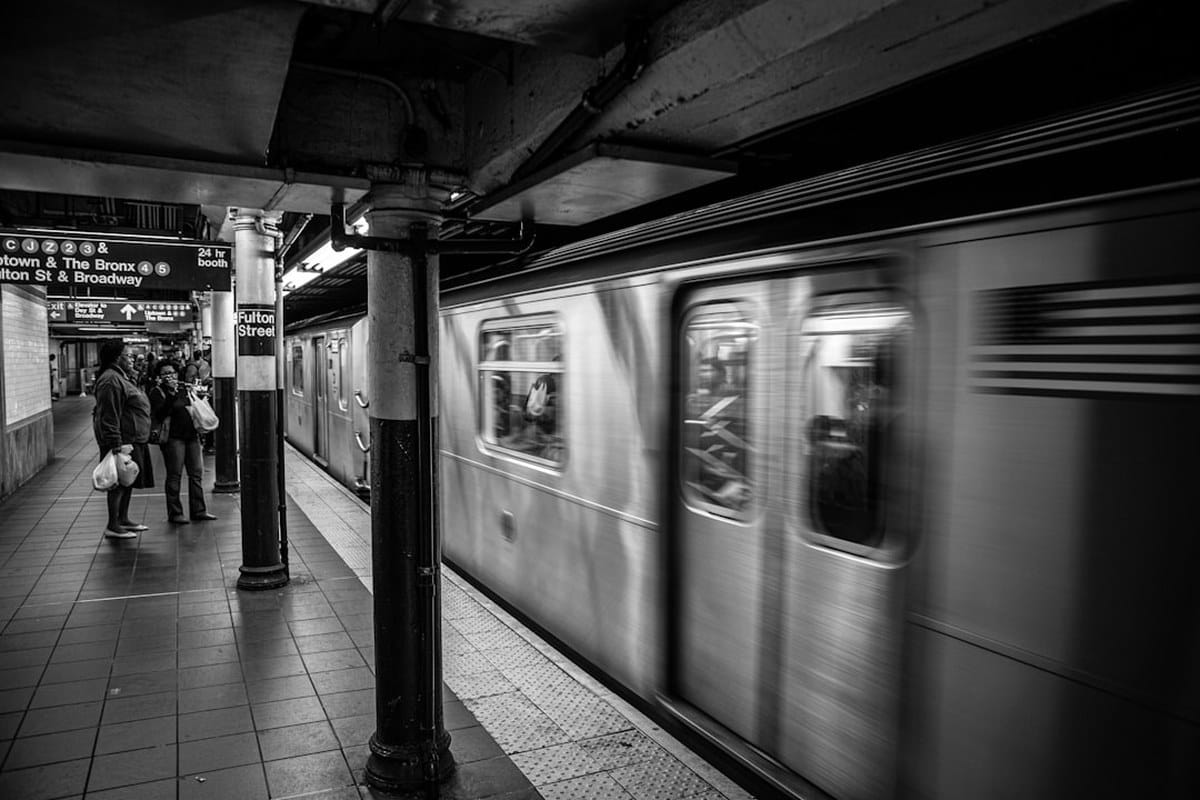
Who decides what a city means? In the country I grew up in, it was the people who lived in it. In the country I cover now, it was decided Tuesday at Eliza’s, between the cheese course and the espresso, by seven people who have not taken the 7 train in their adult lives.
Zohran Mamdani announced his transition team Tuesday afternoon. By Tuesday evening, Eliza’s dining room had announced its objections. The television in the kitchen was muted. The objections were not.
The bipartisan lobbyist — and I’ll call him bipartisan because his firm has billed both sides of every fight since 1998 — examined his cufflink and explained Queens to the room. He has been to Queens once, for a wedding, in 2009. The wedding was in Long Island City, which he kept calling “the bridge area.” He spoke for eleven minutes without interruption, because nobody at the table wanted to admit they had also never been.
Eliza, who has a house in Amagansett and a deep, theoretical concern for the working class, explained that the working class would not stand for it. By “it” she meant the transition team. By “the working class” she meant a doorman she once tipped generously at Christmas. The doorman was not consulted, but I have seen him, and I suspect he would have surprised her.
My sister-in-law Judy, who works at the National Archives and who had been seated next to a man explaining cap rates to her since the soup, texted me from across the table. “He thinks DSA is a credit rating.” I wrote back, “Don’t engage.” She engaged. It went poorly for the cap-rate man, who had not anticipated that a woman in a cardigan might have read a primary source.
There was, as there always is, one actual New Yorker at the table — a woman who grew up in Astoria and now teaches at Georgetown. She tried, twice, to describe what the campaign had felt like from inside the borough. She was politely contradicted on both attempts by men who had read a Substack about it that morning. By the second contradiction she had stopped trying, which is, I have noticed, the standard arc of an actual New Yorker at a Georgetown dinner party.
The name itself was pronounced six different ways across the evening. Mam-DAH-nee. MAM-da-nee. Mom-DON-ee. The lobbyist favored a clipped, vaguely irritated “Mamdani” that suggested he had decided not to learn it on principle. Nobody asked the woman from Astoria how she said it.
The actual concern, when it finally surfaced somewhere around the second bottle, was not about Queens. It was about Tribeca, where the lobbyist’s daughter lives in a one-bedroom he co-signed, and about the marginal rate, and about a resale value that has tripled since 2014. These anxieties were described, with feeling, as concerns about “the city.” The city, in this telling, was a portfolio.
By the cranberry course we had reached unanimous consent that New York had made a mistake, that we knew this because we had been there, and that the country was now headed somewhere alarming. The country, in this conversation, never includes the people who voted. Eliza brought out a pumpkin tart with candied ginger. It was extraordinary. We agreed about that, at least, and we asked for the recipe.