WASHINGTON, DC — The Supreme Court convened Monday to hear oral arguments in a landmark challenge to the Voting Rights Act, primarily to confirm the statute was still technically alive and to find out whether it had anything it wanted to say before the Court got on with things.
The case, the latest in a thirteen-year project to whittle the 1965 law down to a souvenir, asks whether Section 2 — the part Chief Justice John Roberts has not yet personally signed for — places an undue burden on states by requiring them to not openly cheat. Most observers expect the Court to rule that it does, on grounds the Court has been workshopping since roughly 2008.
Justice Samuel Alito opened questioning by leaning forward, folding his hands, and asking the petitioner’s attorney the single word “Why,” which legal analysts described as the most engaged Alito has appeared during a voting rights case in over a decade.
“He’s clearly invested in the process,” said Tomás Brennan, an elections law fellow at the Hartwell Institute. “Usually he doesn’t even bring the binder. Today he brought the binder. That tells you he’s already written something.”
Justice Clarence Thomas, who has been openly calling for Section 2 to be struck down since the Reagan administration, asked no questions, in keeping with his long-held position that asking questions implies the matter is undecided. He instead spent the morning passing a folded note to Justice Gorsuch, who read it, nodded, and slid it back.
Chief Justice Roberts, the architect of the 2013 Shelby County decision that disabled the law’s preclearance regime by declaring racism had been adequately handled, struck a more measured tone, repeatedly asking the government’s attorney whether Section 2 was “really still necessary, given how nicely everyone has been behaving.” When informed that fourteen states had passed restrictive voting laws within ninety days of his last ruling, Roberts said he wasn’t sure that was responsive.
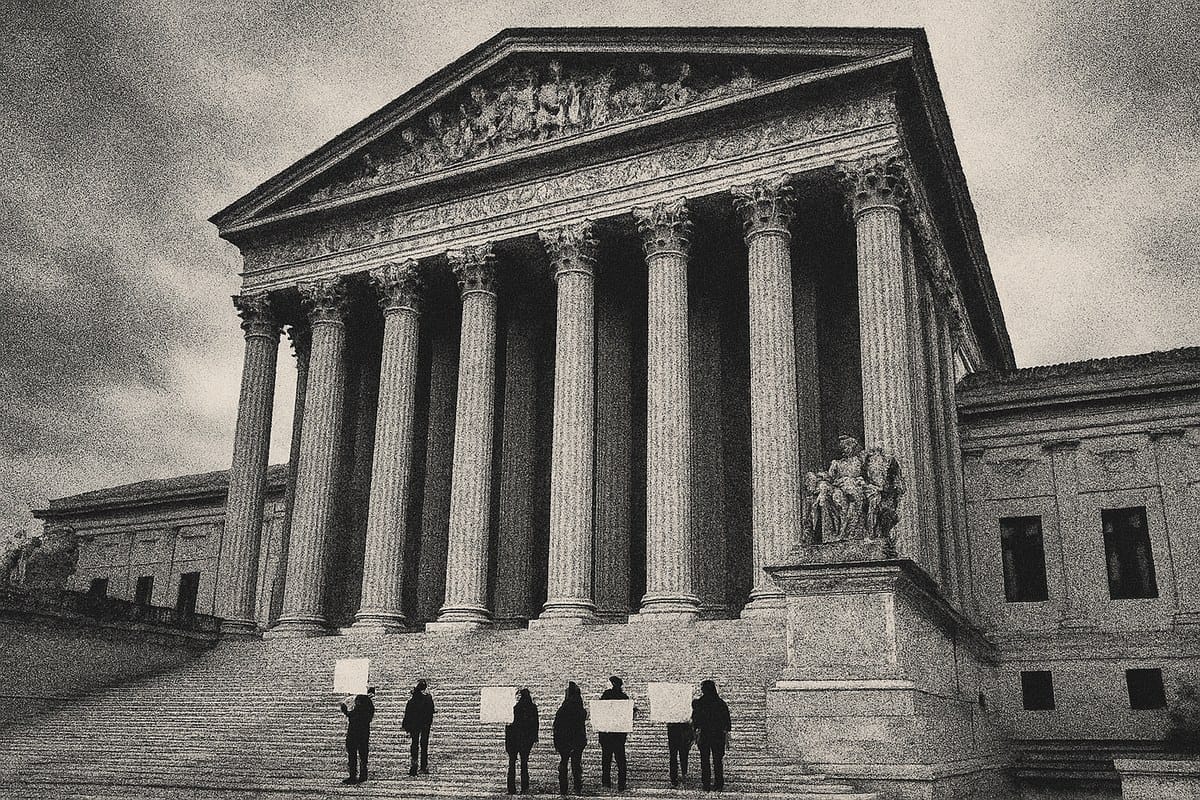
Outside the building, voting rights advocates gathered on the steps holding signs and chanting, an activity the Court has repeatedly clarified does not appear in its calculus. “We are watching the slow public dismantling of the most important civil rights law in American history,” said Yolanda Reaves of the Southern Coalition for Fair Elections. “And we are watching it be done by six people who keep telling us the patient looks fine.”
Justice Sotomayor’s dissent, expected to run roughly forty pages, is reportedly already drafted, as it has been since November. Justice Kagan was seen mouthing portions of her own dissent during oral argument, occasionally checking a paper copy under the bench.
The ruling is expected in late June, timed to coincide with the start of the midterm redistricting cycle, which Court observers describe as either an extraordinary coincidence or the entire point. Either way, several states have already begun drafting the maps they intend to use once the decision arrives, on the theory that there is no reason to wait for paperwork that has, in a meaningful sense, already been filed.